US-Israel conflict on Iran: 45-day ceasefire deal underway; Abu Dhabi ICAD interception incident injures one; Day 38 latest updates
Follow below for live updates.

Follow below for live updates.
Israel reportedly struck a major petrochemical facility at Iran’s South Pars natural gas field – the world’s largest, shared with Qatar – destroying what Defence Minister Israel Katz described as “the largest petrochemical facility in Iran,” responsible for half the country’s petrochemical production.
Israeli military spokesperson Lt. Col. Nadav Shoshani warned there would be “no immunity” for Iran as talks progress, while explosions rang out across Tehran and low-flying jets were heard for hours, with thick black smoke rising near Azadi Square after a strike hit the grounds of Sharif University of Technology.
Among those killed was Maj Gen Majid Khademi, head of intelligence for the Revolutionary Guard, along with Asghar Bakeri, commander of the Quds Force’s undercover unit. Iranian missiles meanwhile struck the northern Israeli city of Haifa, killing four people found in the rubble of a residential building.
The strikes cast doubt over ongoing ceasefire negotiations, coming just as Trump’s deadline for Tehran to reopen the Strait of Hormuz looms and mediators scramble to broker a deal. After a previous Israeli strike on South Pars in March, Trump had said Israel would not attack it again, but warned the US would retaliate if Iran continued striking Qatar’s energy infrastructure.
Kuwait, the UAE, and Saudi Arabia all activated air defences to intercept incoming Iranian missiles and drones, as soaring global energy prices continued to reflect the strain on regional infrastructure and the Strait of Hormuz.
The United States and Iran have received the framework of a plan to end their five-week conflict, though Tehran has refused any immediate move to reopen the Strait of Hormuz, Reuters reported.
President Donald Trump has threatened to rain “hell” on Tehran if it does not reach a deal by Tuesday at 8:00 PM Eastern Time – midnight GMT on Wednesday – that would allow traffic to resume through the waterway, which serves as a conduit for approximately a fifth of the world’s oil and natural gas supply.
Speaking to Fox News on Sunday, Trump said Iran was negotiating and that a deal was possible by Monday.
The plan emerged from contacts conducted through the night and proposes an immediate ceasefire, followed by negotiations on a settlement to be concluded within 15 to 20 days, according to a source with knowledge of the proposals.
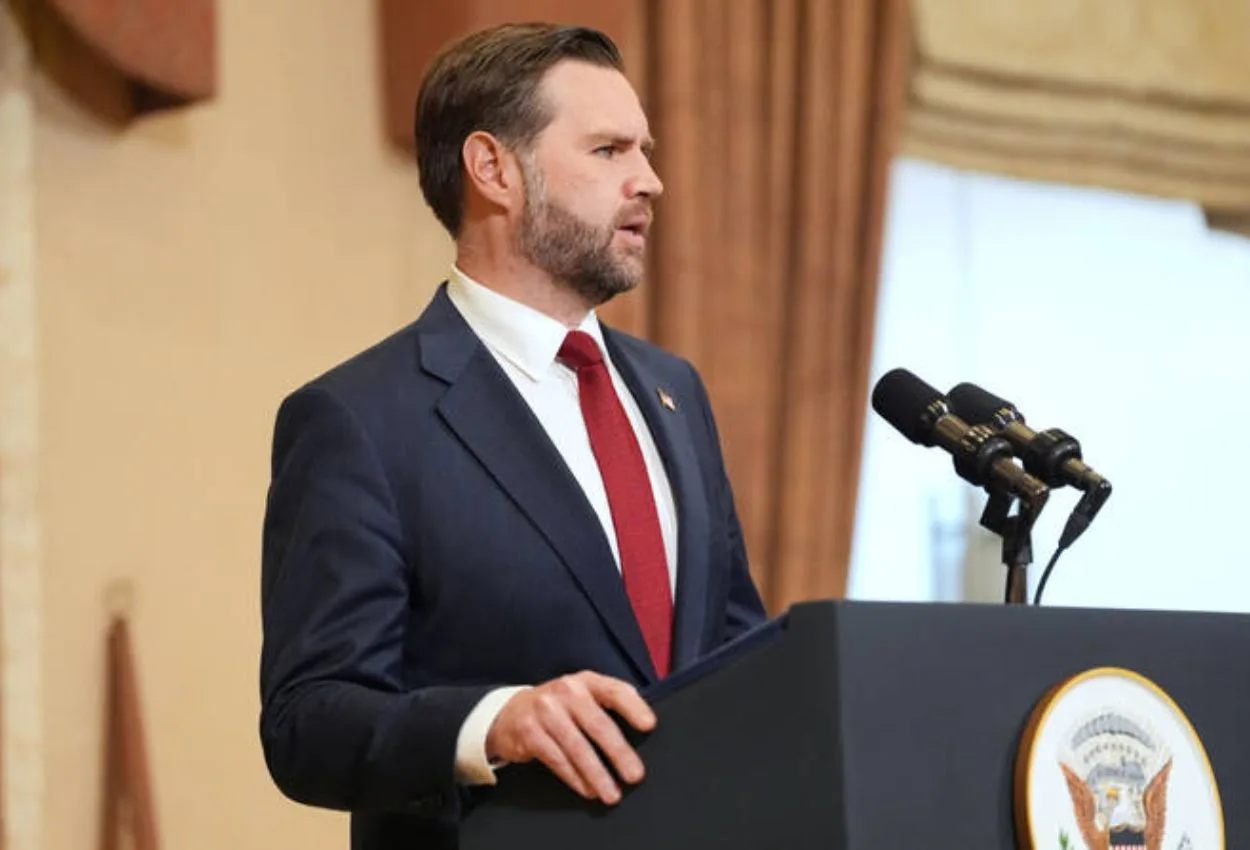
Pakistan’s army chief, Field Marshal Asim Munir, was in contact “all night long” with US Vice President JD Vance, special envoy Steve Witkoff and Iranian Foreign Minister Abbas Araqchi, the source said.
Iran’s foreign ministry confirmed on Monday that Tehran had formulated positions and communicated them through intermediaries in response to ceasefire proposals. Ministry spokesperson Esmaeil Baghaei said details would be announced in due time, but added that negotiations were “incompatible with ultimatums and threats to commit war crimes.”
“Iran does not hesitate to clearly express what it considers its legitimate demands and doing so should not be interpreted as a sign of compromise, but rather as a reflection of its confidence in defending its positions,” Baghaei told a press conference. He said earlier US demands, including a 15-point plan, had been rejected for being excessive.
A senior Iranian official told Reuters earlier on Monday that Iran would not reopen the Strait as part of a temporary ceasefire, nor would it accept deadlines or pressure. The official said Washington was not ready for a permanent ceasefire.
Axios reported on Sunday, citing US, Israeli and regional sources, that the US, Iran and regional mediators were discussing a potential 45-day ceasefire as part of a two-phase deal that could lead to a permanent end to the war.
Anwar Gargash, an advisor to the president of the United Arab Emirates (UAE), said any settlement must guarantee access through the Strait of Hormuz. He warned that a deal which failed to address Iran’s nuclear programme and its missiles and drones would lead to “a more dangerous, more volatile Middle East.”
Aerial strikes continued across the region on Monday, more than five weeks since the US and Israel began operations against Iran in a war that has killed thousands and pushed up oil prices.
Iranian state media reported that Majid Khademi, head of the Revolutionary Guards’ intelligence organisation, had died. Israel claimed responsibility for his death on Monday.
Israel and the US have carried out the killings of Iranian leaders since the war began on 28 February, including Supreme Leader Ayatollah Ali Khamenei, who was replaced by his son, Mojtaba.
A US-Israeli attack struck the data centre at Sharif University of Technology in Tehran, damaging infrastructure supporting the country’s national artificial intelligence platform and thousands of other services, according to Fars News Agency.
Israel’s Defence Minister Israel Katz on Monday threatened to destroy Iran’s infrastructure and hunt down its leaders “one by one.”
Trump has repeatedly warned Iran that he could expand US strikes to include civilian infrastructure such as power plants and bridges. Experts say such attacks could constitute war crimes, though the International Criminal Court lacks jurisdiction as none of the countries involved are members.
The Geneva Conventions require parties in a conflict to distinguish between civilian objects and military objectives, with attacks on civilian objects prohibited.
Iran carried out strikes on petrochemical facilities and an Israeli-linked vessel in Kuwait, Bahrain and the UAE at the weekend, demonstrating its capacity to retaliate despite Trump’s claims to have eliminated its missile and drone capabilities.
Iran responded to the February attacks by the US and Israel by closing the Hormuz waterway and targeting Israel, US military bases and energy infrastructure across the Gulf, the Reuters report said.
According to US-based rights group HRANA, approximately 3,540 people have been killed in Iran since the start of the war, including at least 244 children.
At least four Israelis were killed in a missile attack on a residential building in Haifa overnight, according to Israeli emergency service MDA, bringing the total number of Israeli civilian deaths from Iranian and Hezbollah attacks to 23.
Israel has also invaded southern Lebanon and struck Beirut in operations against Iran-backed Hezbollah militants, in what has become the conflict’s most violent spillover. Lebanese authorities report 1,461 people killed, including at least 124 children.
Thirteen US service members have died, with hundreds more wounded.
Israeli Prime Minister Benjamin Netanyahu announced the elimination of two senior Iranian officials, saying “another central arm of the Iranian terror regime has been severed.”
Netanyahu said Israel killed Majid Khademi, head of the Intelligence Division in the Revolutionary Guards, who had only recently assumed the role after his predecessor was also eliminated, as well as Asghar Bakri, commander of Unit 840 in the Quds Force, who Netanyahu said was responsible for attacks against Jews and Israelis around the world.
“Whoever acts to murder our citizens, whoever directs terror against the State of Israel, whoever builds the Iranian axis of evil — their blood is upon their head,” Netanyahu said, adding that Israel would “continue with full force, on all fronts, until the threat is removed and all the war’s objectives are achieved.”
UAE Air Defence Forces intercepted 12 ballistic missiles, 2 cruise missiles, and 19 drones launched from Iran on April 6, 2026, with four individuals sustaining injuries ranging from minor to severe.
Since the start of Iranian attacks, the UAE has cumulatively intercepted 519 ballistic missiles, 26 cruise missiles, and 2,210 drones.
The cumulative toll since the onset of attacks stands at two armed forces members martyred, a Moroccan civilian contracted by the military, and ten civilians of Pakistani, Nepali, Bangladeshi, Palestinian, Indian, and Egyptian nationalities killed. The total number of injured has reached 221 among nationals from dozens of countries including the UAE, Egypt, Sudan, Ethiopia, the Philippines, Pakistan, Iran, India, Bangladesh, Morocco, Russia and others.
The Ministry of Defence affirmed it remains fully prepared to counter any threats and will firmly respond to anything that undermines the country’s security, sovereignty, and stability.
Bahrain’s General Command of the Bahrain Defence Force announced that air defences have intercepted and destroyed 188 ballistic missiles and 468 drones since the onset of Iranian aggression, according to the Bahrain News Agency.
The BDF emphasised that the use of ballistic missiles and drones against civilian areas and private property constitutes a flagrant violation of international humanitarian law and the UN Charter, adding that the indiscriminate attacks represent a direct threat to regional peace and security.
Kuwait’s Health Ministry spokesman Dr. Abdullah Al-Sanad announced that debris falling in a northern residential area due to Iranian aggression caused a number of injuries in the early hours of Monday, with all six cases reported as stable.
Paramedic teams treated two injured women on site without the need for hospital transfer, while a third was transferred to Jahra Hospital for further evaluation.
Additional cases made their way independently to Jahra Hospital’s emergency department, bringing the total number of cases handled to six. No serious complications were recorded, according to the Kuwait News Agency.
Fujairah authorities announced they are responding to an incident in which an Iranian drone targeted a du telecommunications building in the emirate. No injuries were reported, according to the Fujairah Media Office.
The US, Iran, and regional mediators are in discussions over a potential 45-day ceasefire that could lead to a permanent end to the war, Axios reported, citing four US, Israeli, and regional sources familiar with the talks, according to Reuters.
The proposed deal is structured in two phases, with the first being the 45-day ceasefire during which a permanent end to the war would be negotiated. The ceasefire could be extended if additional time is needed for talks, the report said.
The development comes as President Trump told the Wall Street Journal on Sunday that his deadline for Iran to open the Strait of Hormuz or face strikes on critical infrastructure is Tuesday evening. Reuters said it could not immediately verify the report, and the White House and State Department did not immediately respond to requests for comment.
Abu Dhabi authorities responded to an incident in which debris from a successful air defence interception fell on Raneen Systems company in ICAD, Musaffah, resulting in moderate injuries to a Ghanaian national.
The public was reminded to obtain information from official sources only and to avoid spreading rumours or unverified information.
Day 26 – US-Israel conflict on Iran enters Day 26: Trump says war is ‘won’, in talks with ‘right people’, Kuwait airport hit, latest updates
Day 6 – US-Israel conflict on Iran: Fresh strikes on Tehran, UAE flight status, latest updates
Day 5 – US‑Israel conflict on Iran: UAE affirms right to self‑defence, latest updates
Day 4 – US-Israel strikes on Iran: Latest updates – everything you need to know
Day 2 – Israel-US strikes Iran: Latest updates
Day 1 – Israel launches ‘pre-emptive attack’ on Iran as explosions hit central Tehran

Subscribe to our free newsletter