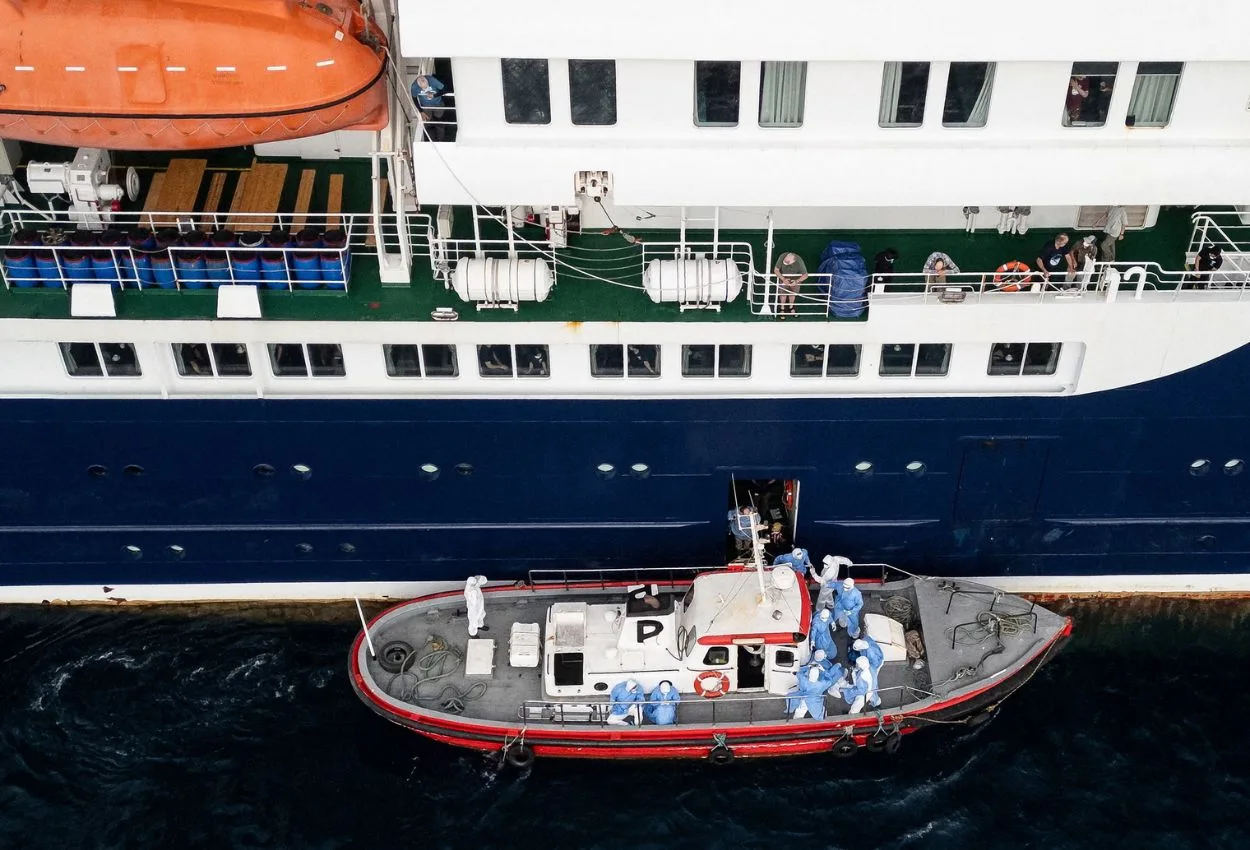
Three passengers aboard the expedition cruise ship MV Hondius have died and several others have fallen ill in a hantavirus outbreak that has prompted an international medical response at sea.
The World Health Organization(WHO) said four additional people were sickened, including one in critical condition, while the vessel’s operator, Oceanwide Expeditions, confirmed hantavirus in two cases.
In the latest update, medicalised aircraft are taking off to transfer three infected patients – along with the ship’s doctor after his condition improved – to the Netherlands for treatment.
The incident has drawn attention to hantavirus, a virus considered rare in humans.
What exactly is hantavirus and how does it spread?
“Hantavirus is a virus primarily transmitted to humans through contact with infected rodents, particularly via their urine, droppings, or saliva,” Dr Pavithra V Reddy, Specialist in Internal Medicine at Prime Medical Center (Motor City Branch) told Lana.
The virus can lead to illnesses affecting the lungs or kidneys. One of the most serious conditions linked to the infection is Hantavirus Pulmonary Syndrome (HPS), which causes fluid accumulation in the lungs and breathing difficulty.
However, there is currently no specific antiviral cure for hantavirus infection, Dr Suha Alsheikh Suleiman, Specialist in Pulmonology at Burjeel Medical Center, Al Shamkha added.
“Treatment is mainly supportive and may require hospitalisation,” she said. “In severe cases, patients may need oxygen therapy or mechanical ventilation.”
Both doctors said early diagnosis and prompt medical treatment play an important role in improving outcomes. And while the overall public health risk remains low, UAE doctors stressed on the importance of awareness, prevention and what early medical care should be.
Early symptoms often resemble flu
Doctors said the early signs of hantavirus can resemble common viral illnesses, making early detection difficult.
Symptoms that may appear within one to two weeks include fever, chills, fatigue, muscle aches, headache, vomiting and diarrhoea. Dr Reddy said muscle aches are commonly felt in the back and thighs.
Later symptoms, which may develop four to 10 days after the first signs of illness, include cough and shortness of breath caused by fluid buildup in the lungs.
Patients may also develop low blood pressure and shock in severe cases.
“The illness can progress rapidly within three to five days after initial symptoms,” Dr Reddy said.
Dr Suleiman added that patients can deteriorate within 24 to 48 hours once respiratory symptoms begin.
“This stage can lead to significant lung involvement and respiratory failure. Early medical evaluation and hospital care are essential to manage the condition effectively and reduce the risk of complications,” she explained/
Who is more vulnerable?
Doctors said hantavirus can affect healthy adults as well as vulnerable groups.
However, elderly individuals, immunocompromised patients and people with chronic diseases may face poorer outcomes if infected.
Dr Suleiman noted that people with chronic respiratory or cardiovascular conditions may also face a higher risk of severe illness.
How can infection be prevented?
Medical experts said prevention depends mainly on avoiding exposure to rodents.
Recommended measures include:
- Keeping homes and workplaces clean
- Sealing entry points that allow rodents inside
- Storing food properly
- Ventilating enclosed spaces
- Avoiding sweeping or vacuuming rodent droppings
“When cleaning areas that may be contaminated, such as storage spaces, it is important not to sweep or vacuum as this can release particles into the air. Instead, surfaces should be disinfected using appropriate cleaning agents while wearing protective gloves and, if needed, a mask,” Dr Suleiman explained.
What should people do after possible exposure?
Doctors advised anyone who suspects exposure to monitor symptoms for up to six weeks.
“If they develop fever, muscle aches, or any respiratory symptoms, they should seek medical care promptly,” Dr Suleiman said.
“Inform the doctor about possible rodent exposure or travel history. Early disclosure helps doctors act quickly,” Dr Reddy added.
The cruise ship cases have also raised concerns about whether hantavirus can spread between people. However, doctors said person-to-person transmission is uncommon.
“Hantavirus is not typically transmitted from person to person,” Dr Suleiman said. “Most infections occur through environmental exposure to infected rodents.”
“The recent cruise ship situation suggests a rare possibility linked to a specific strain (Andes virus), and only under close, prolonged contact. For the general public, the risk remains very low,” Dr Reddy added.
“For the general public, the risk remains very low,” she said.
UAE residents advised to remain cautious while travelling
Doctors said there is no need to avoid travel because of hantavirus concerns.
However, travellers were advised to take precautions in rural or wilderness areas, particularly in parts of South America where cases have been reported.
Recommendations include avoiding rodents, staying in maintained accommodation and following hygiene measures during outdoor activities such as camping and hiking.
“There are currently no widespread travel restrictions related to hantavirus,” Dr Reddy said.
“While media coverage can raise awareness, it may also lead to unnecessary concern. Hantavirus infections are relatively rare, and the overall risk to the general population remains low. The focus should be on awareness, preventive measures, and early recognition of symptoms rather than fear,” Dr Suleiman concluded.