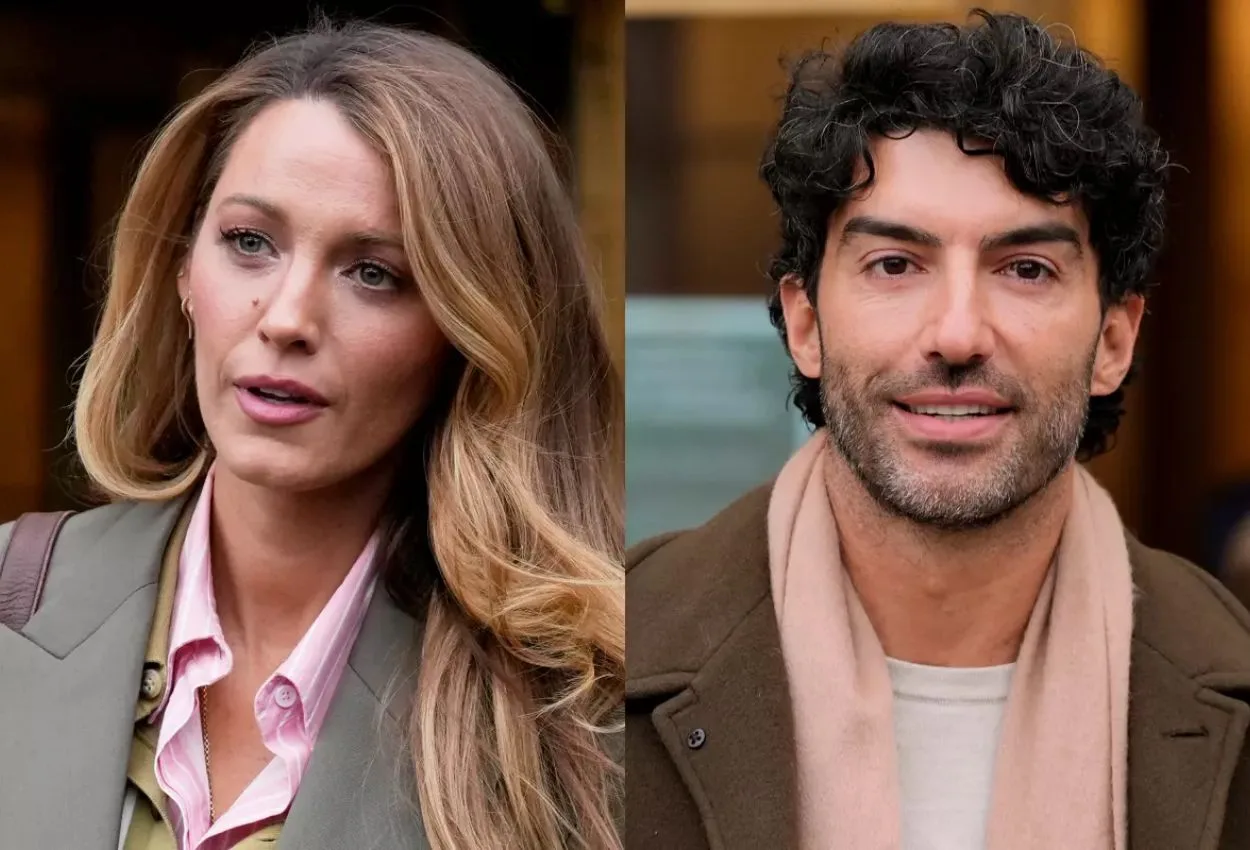
Blake Lively has reached a settlement with Justin Baldoni’s production company, ending a legal battle that had gripped Hollywood for more than two years.
The agreement was announced in a joint statement on Monday, days before a trial was due to begin on May 18 in Federal District Court in Manhattan.
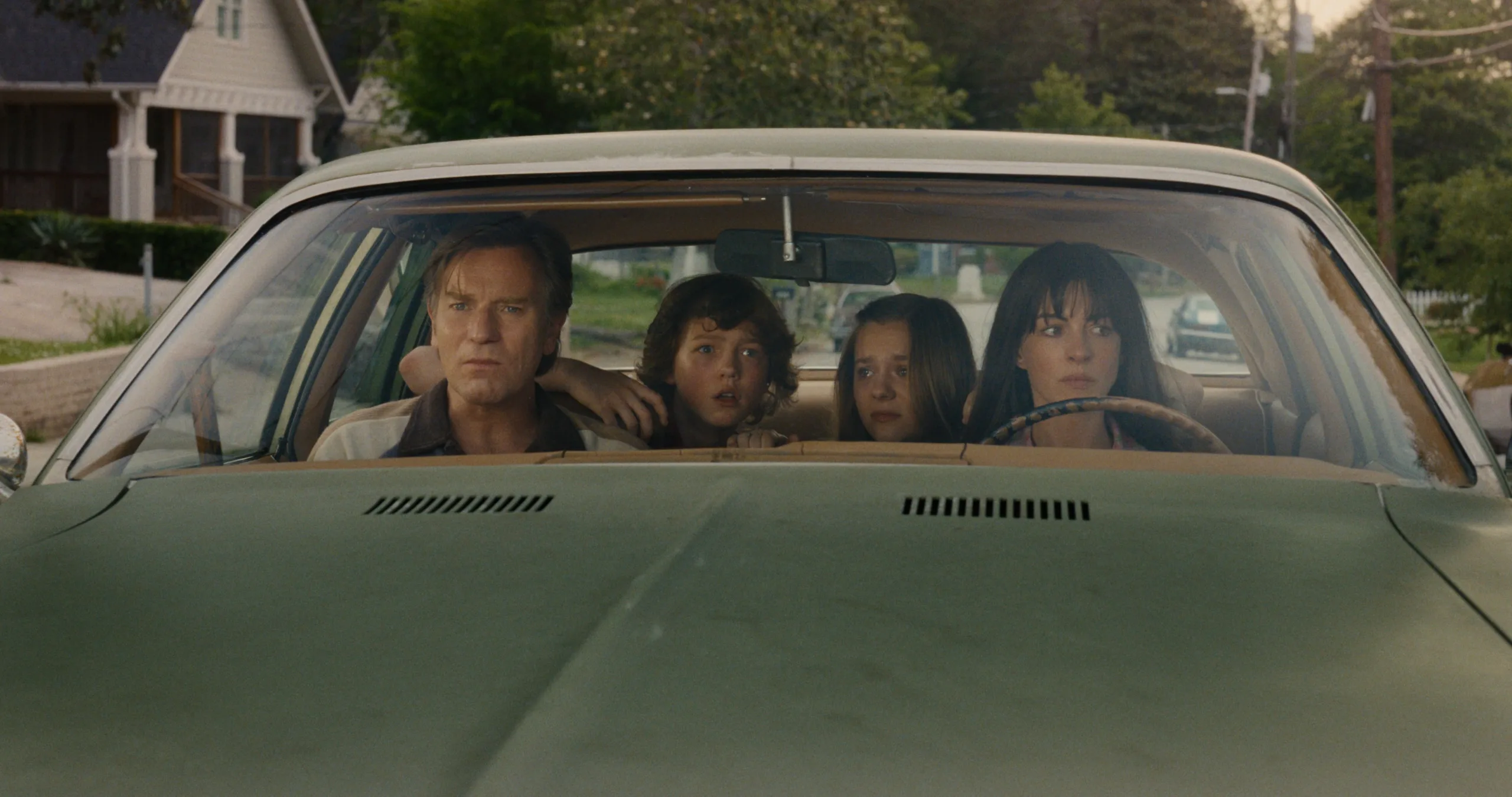
The conflict between the two actors stems from their collaboration on the 2024 film It Ends With Us, an adaptation of Colleen Hoover’s novel about domestic violence. What began as a working partnership descended into a series of accusations and counter-accusations that played out in courts and across the press.
Lively alleged that Baldoni had made comments about her appearance on set, including that she had “never watched pornography” and describing her as “pretty hot.”
She also alleged he had leaned in to nuzzle and kiss her without her consent during a slow dance scene, and that Jamey Heath, the chief executive of Baldoni’s co-producing company, had stared at her in her make-up trailer.
In a text message to a friend during the first week of filming, Lively wrote: “They’re just being creeps. Like keep your hormones to yourselves.”
Baldoni denied the allegations of sexual harassment. His lawyers characterised the incidents as “at most, awkward comments or fleeting mishaps,” and accused Lively of leveraging the complaints to seize control of the film.
“Apparently not content to have wrested directorial and editorial control from Baldoni,” his lawyer wrote in court papers, “Lively set out to destroy his reputation and alienate him from his own film.”
A judge dismissed Lively’s sexual harassment claims on the grounds that, under federal and state law, she was classified as an independent contractor rather than an employee. However, her retaliation claim was permitted to proceed to a jury.
Lively’s legal team argued that, from 2023, individuals hired by Baldoni and his company engaged in a coordinated effort to manipulate media coverage and social media in order to damage her reputation before any allegations about his conduct could become public.
Baldoni’s team maintained that no such smear campaign existed, and that he had hired crisis public relations professionals only to protect himself from what he believed would be false allegations.
Central to the case was a company called The Agency Group PR, hired by Baldoni in 2024. The firm compiled a “scenario planning document” that included messaging focused on highlighting Baldoni’s standing as a “longtime activist and advocate of and for women in Hollywood” and, by contrast, Lively’s “less than favourable reputation in the industry.”
After Baldoni expressed dissatisfaction with the document, Melissa Nathan, the company’s founder, wrote to his publicist: “Imagine if a document saying all the things that he wants ends up in the wrong hands,” adding, “you know we can bury anyone.”
In the weeks around the film’s premiere, commentary critical of Lively surged online, with critics suggesting she had struck too light a tone during a press tour for a film centred on domestic violence. The trial would have examined whether that commentary arose on its own or was seeded and amplified by Baldoni’s team.
The judge overseeing the case, Lewis J. Liman, found that certain conduct by those hired by Baldoni’s company “at least arguably crossed the line.”
He cited messages in which a publicist confirmed the team was “amplifying” a video that portrayed Lively as insensitive to domestic violence victims. He also highlighted the team’s involvement in pitching an article to the Daily Mail, which published a piece echoing those ideas and calling the film’s release an “unmitigated disaster.”
In late 2024, Lively filed an administrative complaint against Baldoni in California, which formed the basis of a report by The New York Times.
Baldoni subsequently sued both Lively and The Times, alleging defamation. Both sets of claims were dismissed by Judge Liman. Ahead of the trial, the judge also dismissed Baldoni, Heath, Nathan and other individuals as defendants, leaving the claims to proceed against companies including Wayfarer Studios, Baldoni’s production company, and The Agency Group PR.
The trial had been anticipated not only because of the prominence of those involved – text messages from Taylor Swift to Lively had been gathered as evidence – but also because it was shaping up as a test case for how courts grapple with the manipulation of public opinion online.
The terms of the agreement were not disclosed. A joint statement released by both sides’ lawyers acknowledged that “the process presented challenges” and said “concerns raised by Ms. Lively deserved to be heard.”
It added: “We remain firmly committed to workplaces free of improprieties and unproductive environments. It is our sincere hope that this brings closure and allows all involved to move forward constructively and in peace, including a respectful environment online.”
In a final note, the statement described the completed film as “a source of pride to all of us who worked to bring it to life.”