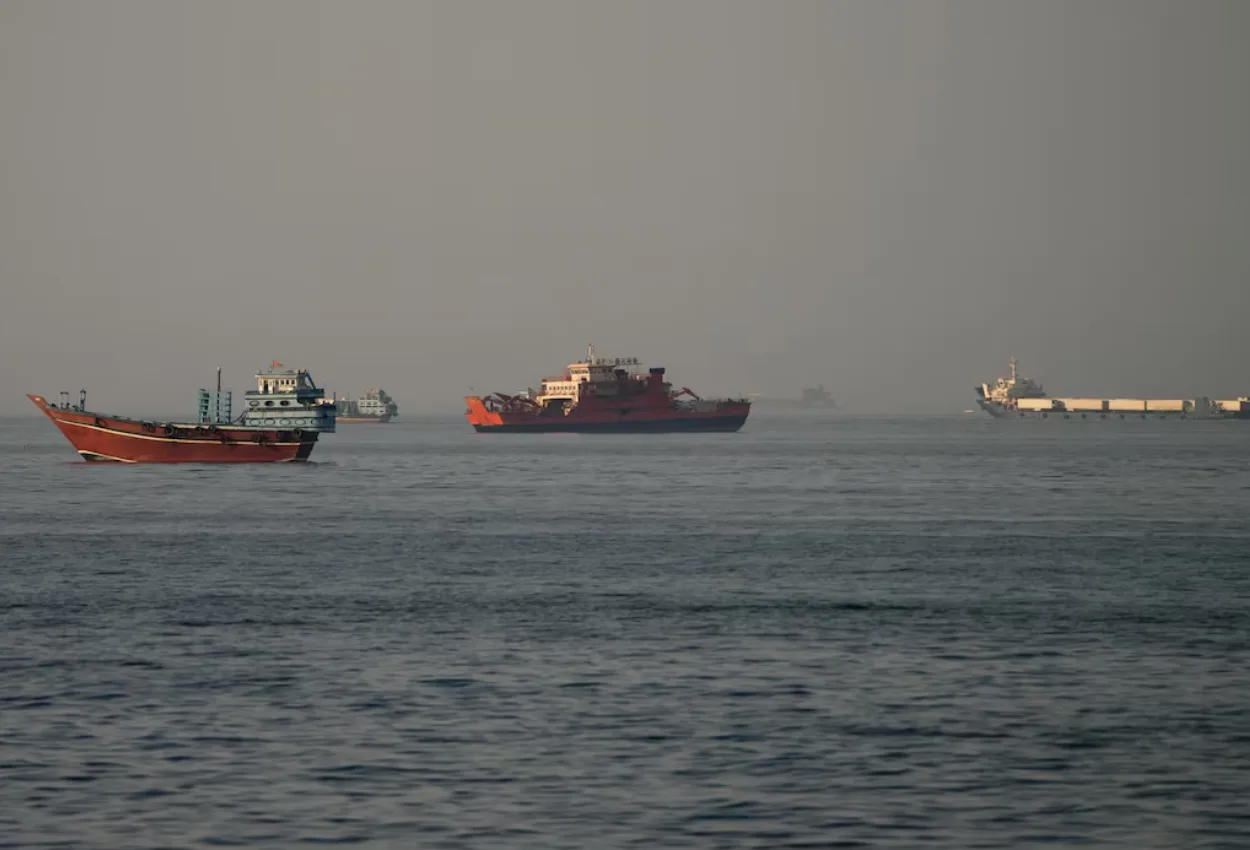
The UAE is pushing ahead with an ambitious infrastructure programme aimed at reducing its reliance on the Strait of Hormuz, even as a draft US-Iran peace agreement raises hopes the waterway will soon reopen to normal traffic.
“We’re moving toward having zero Hormuz dependency and that’s regardless of whether it’s open or not,” Dr Thani Al Zeyoudi, Minister of State for Foreign Trade of the United Arab Emirates said in a Bloomberg interview. “It’s going to open and we hope that will happen quickly, but we will not stop the new plan.”
The centrepiece of that plan is a major expansion of the eastern ports of Dibba, Fujairah and Khor Fakkan, all of which sit on the Gulf of Oman coast outside the strait, the report said. At least one additional harbour will be built along the same coastline, Al Zeyoudi said, alongside significant investment in new pipelines, rail and road networks to better connect those ports to the country’s oil and gas fields and petroleum facilities.
Abu Dhabi National Oil Co. is accelerating construction of a second pipeline to Fujairah that would double the UAE’s Hormuz-bypass crude export capacity to 3 million barrels a day, with completion targeted for 2027, according to a statement from Abu Dhabi’s media office.
A third petroleum pipeline is also under consideration, and the country is exploring options to route petrochemicals, LNG and other energy products around the strait as well. Al Zeyoudi declined to give costs or a full timeline, acknowledging the projects were still in feasibility, but said they would probably require many billions of dollars.
“The direction is already there, we’re doing the whole feasibility studies to move on,” he said. “During those tough times, you always identify your gaps and you start working on it.”
The existing 1.5 million barrel-a-day pipeline from the oil fields to Fujairah has already proven its worth. Since the US and Israel began striking Iran in late February, prompting Iran to effectively close the strait, the UAE has relied on that link to keep crude moving. Some oil cargoes have also passed through Hormuz in recent weeks, with ships going dark to avoid detection.
Roughly a fifth of the world’s crude and LNG passed through the strait before the war. Its closure has pushed up inflation and disrupted global supply chains for commodities well beyond oil, including fertilisers, helium and aluminium.
Redirecting everything will not be straightforward, the report said. Pipelines can move crude, but shifting LNG and aluminium around the strait is harder. The UAE also depends heavily on Jebel Ali, the world’s largest container hub outside Asia, for imports – and trucking goods from eastern ports to Dubai and Abu Dhabi will cost more. Al Zeyoudi said a major railway expansion would help contain those costs, and that Jebel Ali and Abu Dhabi’s Khalifa Port would remain central redistribution hubs.
The country has also been absorbing a significant security shock. Iran fired close to 3,000 drones and ballistic missiles at the UAE, more than at any other country, though the vast majority were intercepted. Some strikes did damage energy and port facilities, including at Fujairah. Air cargo and pre-clearance at ports in countries like Egypt and India helped fill some of the gap.
The UAE has consistently called on Iran to reopen Hormuz to free navigation and, along with the US, Europe and other Gulf states, is resisting Iranian assertions that it can charge shipping fees even after the war ends. The “uninterrupted flow of traffic through the Strait of Hormuz,” the UAE said this week, is essential for “advancing security, stability, and economic prosperity at both the regional and global levels.”