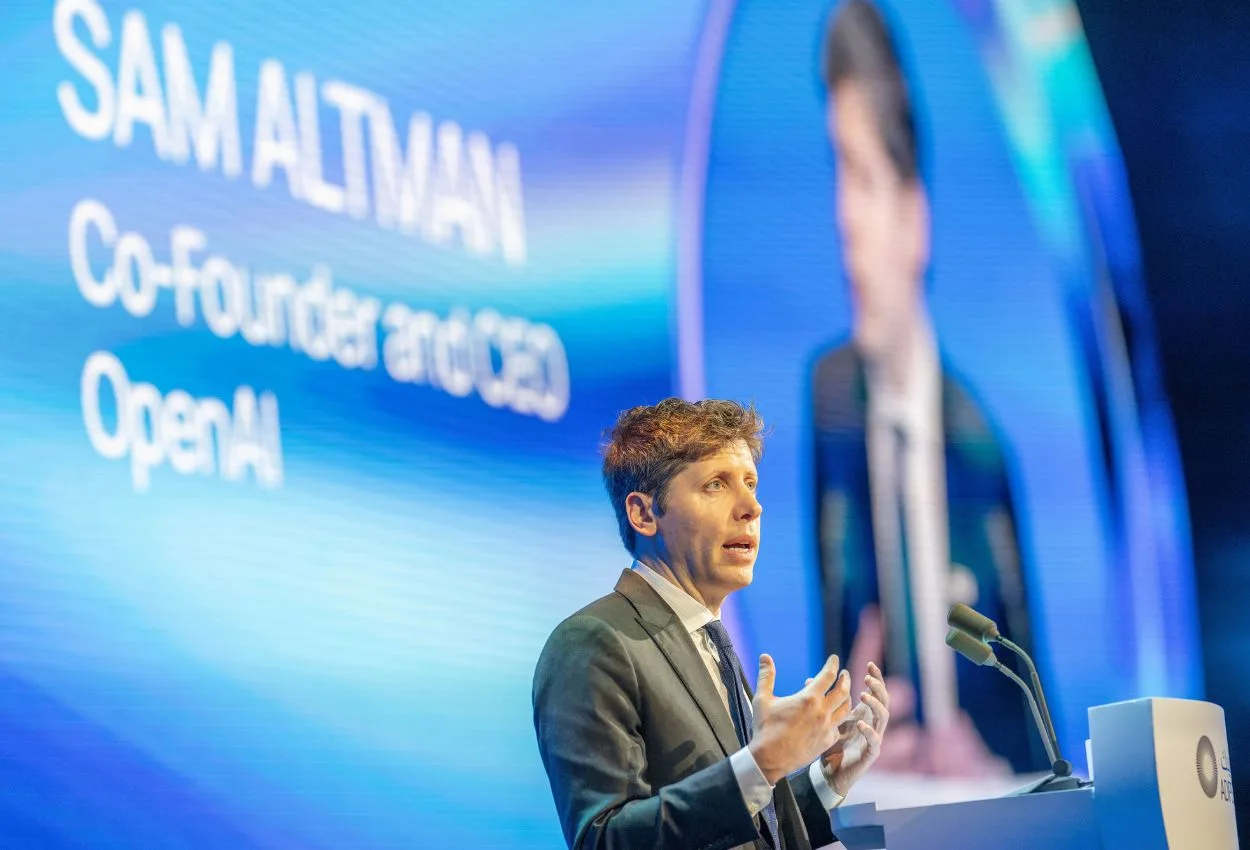
Sam Altman, CEO of OpenAI, has described the UAE as the world’s most forward-looking country for artificial intelligence adoption, speaking at the Abu Dhabi International Petroleum Exhibition and Conference (ADIPEC 2026).
Altman was addressing a panel discussion that touched on agreements involving OpenAI, ADNOC and G42. He said the three-way partnership would help shape how artificial intelligence is applied across the energy sector.
On the current state of the technology, Altman said tools such as ChatGPT are already changing how people work, with some users treating AI as a colleague rather than a software product.
He said the shift is most visible in white-collar roles, where AI can now handle meaningful portions of certain jobs, though he expressed confidence that societies would adapt.
He stressed the importance of keeping humans in control of decisions, and said AI should function as a tool that serves people rather than one entrusted with choices about their futures.
What excites him most, Altman said, is AI’s potential in scientific discovery. Over the past few months, he noted, AI systems have begun solving mathematical problems that had previously defeated human researchers.
He suggested those capabilities could extend into other scientific fields and eventually bear on complex challenges in energy production.
On the energy demands of AI itself, Altman acknowledged that each query requires less power as efficiency improves, but said lower costs are driving greater overall use.
He said he hoped AI applications in the energy sector would generate enough value to offset the technology’s own consumption and, over time, help expand global energy availability.