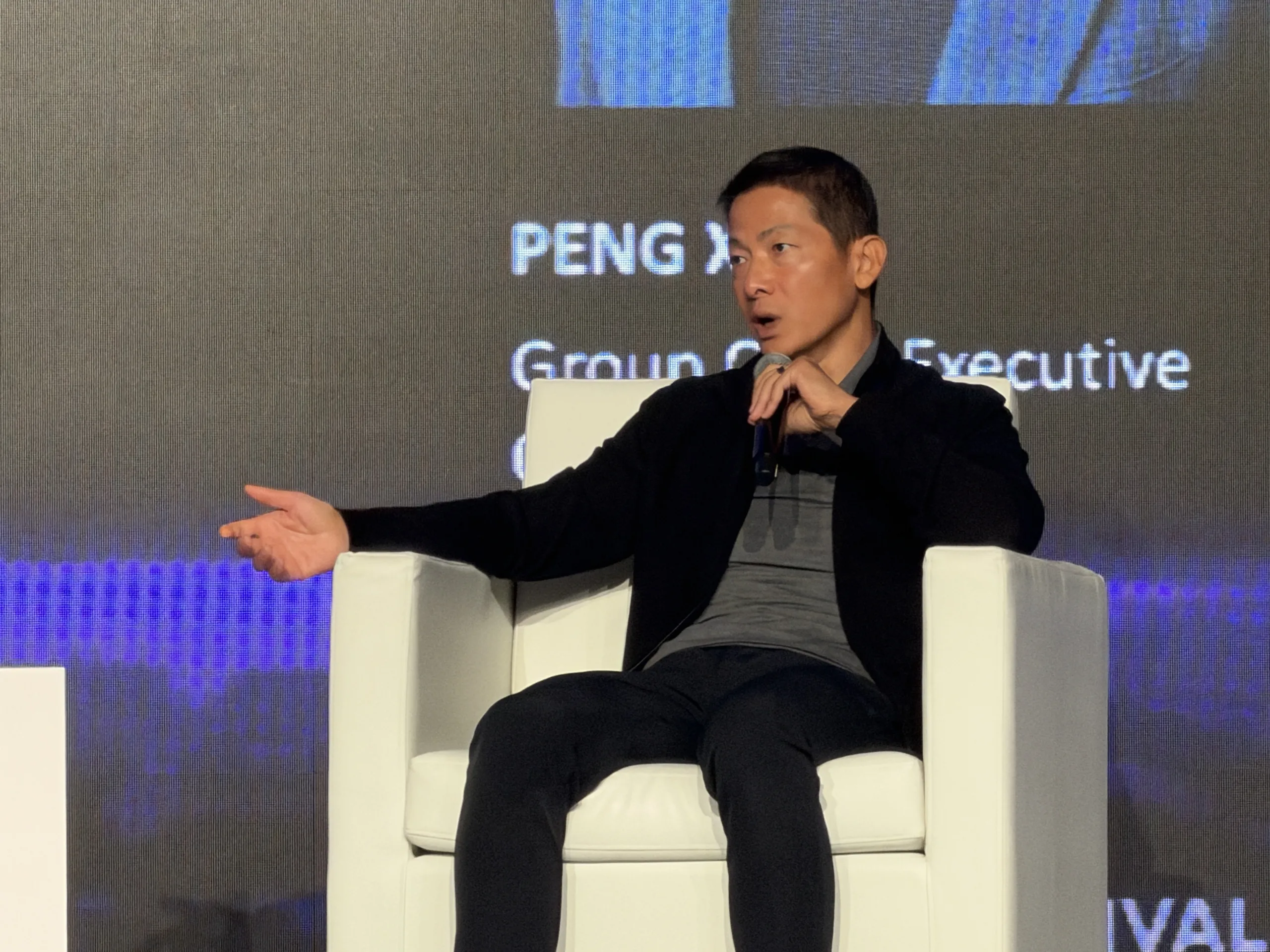
The UAE aims to shift from exporting energy to exporting artificial intelligence as it builds computing infrastructure capable of producing trillions of AI tokens per day, according to Peng Xiao, Group Chief Executive Officer of G42.
Speaking at Dubai AI Festival 2026 on Monday, Xiao said the relationship between energy and intelligence was changing as nations invested in computing capacity to support AI development, deployment and adoption.
“I think our ambition is to go from an energy exporter to become an intelligence exporter,” he said during a fireside chat.
UAE token factories to link energy with AI intelligence
Xiao said the token had become a unit for measuring the output of AI systems, with demand driven by people asking questions, assigning tasks and using AI agents to carry out work. These requests are processed through AI models operating on graphics processing units (GPUs) and other accelerators, which depend on electricity.
He said the UAE’s position as an energy producer provided an opportunity to develop infrastructure that could supply AI intelligence to users beyond its borders. “As we witnessed in the past several years, the gap between energy and intelligence is closing,” he said, adding that the cost of producing intelligence, measured through tokens, could eventually become linked to the cost of energy.
He pointed to the development of token factories, where computing infrastructure converts energy into AI processing capacity for services, applications and industries.
G42’s 5GW Abu Dhabi AI campus targets users across continents
Xiao highlighted G42’s role in developing a five-gigawatt AI campus in Abu Dhabi, saying the project could eventually produce trillions of tokens per day.The UAE-US AI Campus was announced with technology partners from the United States.
Xiao said the infrastructure could serve users as far away as Singapore and Italy, citing network round-trip latency of less than 60 milliseconds.
He argued that such connectivity could support AI inference, allowing users in different countries to receive responses and carry out tasks without relying on computing infrastructure within their own borders.
He also referred to the UAE’s telecommunications networks as part of the infrastructure required to deliver AI services across markets.
Speed to market will determine AI competition, says G42 CEO
Xiao said the ability to deliver computing capacity and intelligence services would influence competition between AI companies and nations.
“At G42, speed is life,” he said, describing speed to market and speed of delivering intelligence as factors shaping the decisions of AI companies.
According to Xiao, technology companies from the United States were increasingly turning to the UAE to access computing capacity. He said the country’s ability to provide that capacity without delays was attracting partners seeking infrastructure for AI development and deployment.
In addition, Xiao said countries should focus on adopting AI rather than waiting for the next generation of models to arrive. He argued that humanity already had access to more intellectual capacity through AI than was available during the Industrial Revolution.
“We already, as humanity, have enough intellectual horsepower in our hands now, more than what we had to enable the entire Industrial Revolution,” he said.
While referring to anticipation surrounding forthcoming AI models and developments in the technology sector, Xiao said governments and companies should concentrate on using the capabilities available today. He said the UAE had adopted AI across sectors rather than delaying implementation. “We did not hesitate. We embraced this new technology and we began to use this across different sectors,” he said.
According to Xiao, only two countries were currently leading the development of frontier AI models. “The more you use AI, the more you interact with it, the more you are actually helping to shape it. Therefore, adoption is a form of AI creation as well,” he said.
Cleveland Clinic Abu Dhabi AI usage rises to billions of tokens per day
Xiao cited Cleveland Clinic Abu Dhabi as an example of how AI adoption was increasing within organisations. He said the hospital, which forms part of G42’s wider investment portfolio through M42, had expanded its AI usage over the past year.
When AI solutions were first deployed at scale in 2025, the hospital was processing approximately 100 million to 150 million tokens per day, according to Xiao.
During a board meeting held the week before the festival, he said the hospital reported throughput of multiple billions of tokens per day. He linked the increase to the hospital’s use of AI to support its operations and services for patients.
Xiao, who is also Chairman of Cleveland Clinic Abu Dhabi’s Board of Directors, pointed to the hospital as evidence of how organisations could integrate AI into their work.
“I think nations that want to lead – and we should be very frank – in terms of creating [AI] models, we need to really focus on adoption. The more you use AI, the more you interact, the more you actually help shape it,” he said.
Recursive self-improvement could mark the next AI inflection point
Looking beyond the deployment of AI, Xiao identified recursive self-improvement, or RSI, as a development that could shape the next phase of the technology.
He said AI systems were becoming capable of contributing to their own research and development, allowing one generation of models to support improvements in the next. “I think RSI is already taking place among the frontier labs in the US, and also even to some extent in the open-source community,” he said.
Xiao argued that AI-assisted research could accelerate the development of systems with capabilities beyond those of existing models.
He also highlighted research at the Mohamed bin Zayed University of Artificial Intelligence (MBZUAI) in Abu Dhabi, where researchers are developing world models. Unlike language models, these systems are designed to represent and understand physical environments.
He said researchers were incorporating techniques associated with recursive self-improvement into model development, including work intended to support robotic operations in physical environments and across industries.
Xiao identified this shift towards AI systems participating in their own development as a potential inflection point for nations and organisations investing in the technology.
AI could change education from acquiring knowledge to learning how to learn
Turning to education, Xiao said AI was changing the way students access information and develop skills. He described generative AI and transformer-based language models as systems that had absorbed knowledge produced by humanity.
“Generative AI, these transformer-based large language models, in the first place, have been a distillation of the collective knowledge of humanity,” he said, acknowledging competition between AI model developers, including debates over model distillation and intellectual property.
However, he argued that the underlying technology had itself been developed through learning from humanity’s knowledge. He said AI models had subsequently progressed beyond retrieving information to reasoning and addressing problems in fields such as mathematics.
As a result, students no longer needed to travel between institutions or seek out individual experts to gain access to knowledge in a subject, he argued. Much of that information was now available through AI applications on personal devices.
“The new learning is about learning how to learn. It’s about how to use these AI tools to learn faster.”
Xiao said education should place less emphasis on mastering one subject and more on developing the ability to work across disciplines using AI tools. He described this as a shift towards producing generalists who could adapt to developments in AI and apply tools to meet their objectives.
At MBZUAI, he said, students were being encouraged to familiarise themselves with releases of AI tools and learn how to use them to access knowledge and accelerate their learning.
The approach, he said, placed the ability to use AI at the centre of education rather than relying solely on depth of knowledge in a particular field.
AI agents could turn personal computers into productivity tools
Addressing government officials, healthcare executives and industry leaders, Xiao argued that organisations needed to reconsider their assumptions about the value of human intelligence. He said humans had historically distinguished themselves through their ability to think, solve problems and use tools.
However, he claimed that AI systems had already surpassed human performance in a range of reasoning and computer-based tasks. He pointed to AI agents capable of operating personal computers, accessing files, using applications and carrying out tasks on behalf of users.
Xiao referred to computer-use features associated with GPT-6 as an example of how AI was moving beyond conversation towards operating software. He said users who authorised AI agents to access their computers could see the systems perform tasks across applications.
“Your personal computer is the most powerful tool you have in your possession,” he said.
He questioned how frequently people used their computers to full capacity, contrasting human working habits with the ability of AI agents to operate multiple programs simultaneously. “Can you run 17 programs at the same time?” he asked.
Xiao said computers in homes, offices and companies often remained idle while people attended meetings or carried out other activities. He argued that AI agents could use those devices to perform work, turning existing computing resources into sources of productivity.
The ability to use computer systems without constant human intervention, he said, could change how organisations manage workloads and deploy technology.
Human connection and creativity could gain value as AI takes over thinking tasks
In his concluding remarks, Xiao said society needed to reconsider the qualities it valued as AI systems took on tasks associated with human intelligence. He described his views as personal and acknowledged that they might generate debate.
Xiao said much of the value assigned to human work had traditionally been based on cognitive abilities, including problem-solving in mathematics, physics, engineering and space operations.
He argued that AI was increasingly capable of performing such work and could eventually undertake most thinking tasks. “AI can already outthink us,” he said.
Xiao suggested that this change could increase the importance of other aspects of human experience. “I have to suggest that human connections, creativity, are now suddenly a lot more valuable,” he said.
He urged government leaders, organisations and individuals to reconsider how people would live and work alongside AI systems.
“I think we need to think fundamentally about our lifestyle and how to coexist and also even thrive in the age where very likely AI will be doing most of the thinking for us,” he concluded.