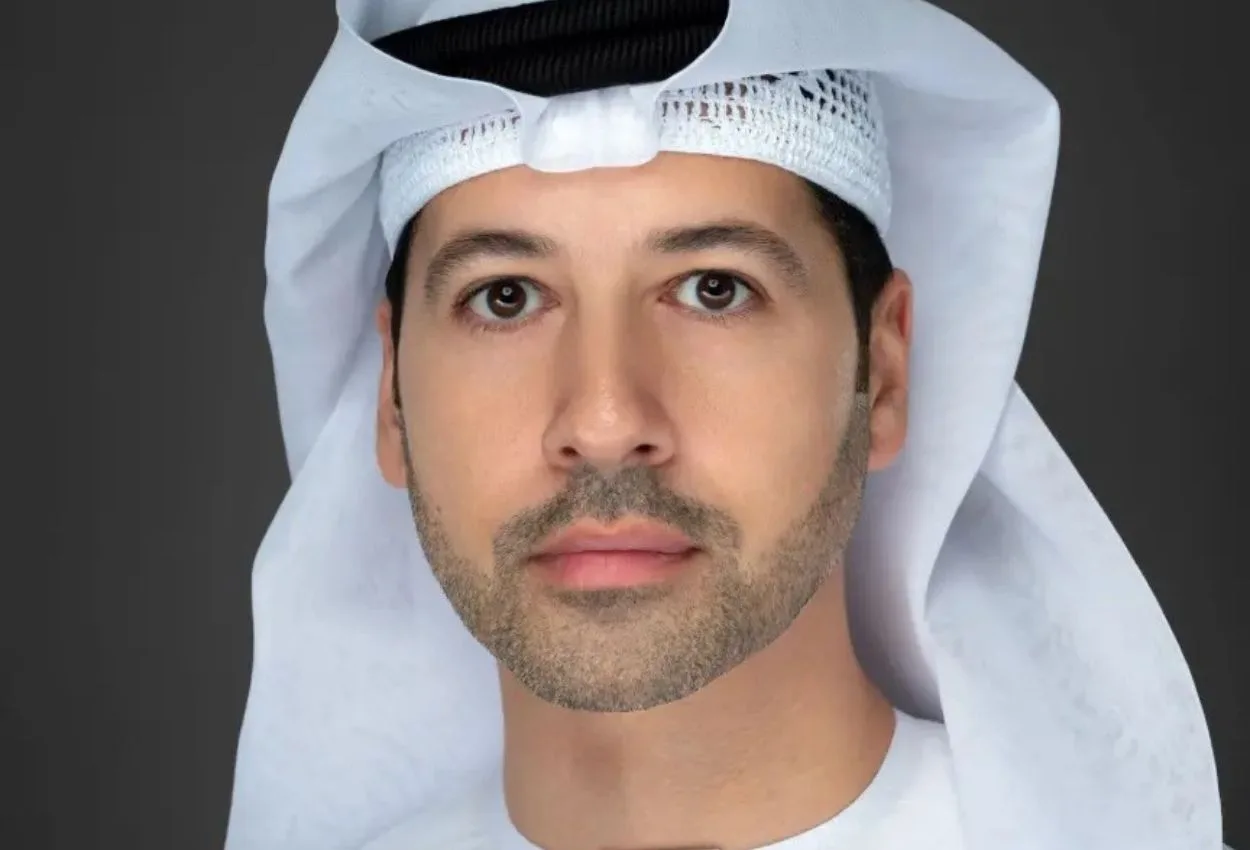
Dubai International Financial Centre (DIFC) aims to have artificial intelligence (AI) power and manage 100 per cent of its client servicing activities by the end of 2027, as it works towards becoming the world’s first AI-native financial centre, H.E. Arif Amiri, Chief Executive Officer of DIFC Authority, announced during his opening address at Dubai AI Festival 2026.
Speaking at the festival in Dubai, Amiri said AI already supports more than 30 per cent of DIFC’s client servicing activities, with the centre targeting 50 per cent by the end of 2026 and 100 per cent by the end of 2027.
“Ambition alone only matters when it becomes action, and transformation must begin with ourselves,” Amiri said. “We are building it, we are deploying it and we are scaling it,” he added, emphasising DIFC’s approach to implementing AI across its operations.
Amiri said AI was changing how people work, how businesses operate, how capital is deployed and how economies function.
“Throughout history, cities competed on geography, trade, connectivity, as well as capital. And today, there is another factor that’s become just as important: intelligence,” he said, noting that the question was no longer whether AI would transform economies, but how governments, businesses and financial centres would shape that transformation.
DIFC seeks to become world’s first AI-native financial centre
Amiri said Dubai’s approach to AI reflected more than 25 years of investment in the digital economy, including developing technology clusters, digitising government services and investing in connectivity.
While technology had evolved, he said Dubai had continued to follow an approach of building ahead of demand, attracting talent and creating conditions for ideas to become businesses and for businesses to scale.
He added that DIFC had followed the same approach since its establishment in 2004, beginning with its ambition to build for the future of finance before expanding into FinTech, digital assets, innovation and AI.
“But AI is bigger than any other technology sector,” Amiri said. “AI is becoming part of the economic architecture,” he said, explaining that the technology would influence regulation, risk management, client engagement, decision-making and how people work alongside technology.
Referring to DIFC’s announcement earlier in 2026 of its ambition to become the world’s first AI-native financial centre, Amiri stressed the distinction between improving processes through AI and redesigning institutions around the technology.
“There’s an important distinction between AI-enabled and AI-native,” he said. “AI-enables improves what already exists. AI-native asks the question: How will we design it differently from the very beginning?”
He explained that the objective was not simply to introduce AI into DIFC’s operations, but to rethink how a financial centre should function when intelligence becomes part of its operating system – responsibly, securely and with trust.
The transition, he said, would require AI to be incorporated into the way services are delivered, decisions are made and processes are managed, with responsibility, security and trust forming the foundation.
AI to support all DIFC client servicing activities by 2027
Amiri said DIFC’s transformation was already under way, with AI supporting more than 30 per cent of its client servicing activities.
The centre aims to reach 50 per cent by the end of 2026, before moving towards its goal of having AI power and manage 100 per cent of client servicing activities by the end of 2027.
He said the targets reflected DIFC’s approach to moving from AI adoption towards deployment across its operations.
The ability to transform, shape and deploy AI at scale, he added, would determine how institutions respond to the changes taking place across the economy.
Dubai AI Campus raises target to 1,800 companies and over 5,000 jobs
During his address at Dubai AI Festival 2026, Amiri also announced that Dubai AI Campus had achieved its target of attracting more than 500 companies two years ahead of schedule, prompting plans to expand the initiative.
The campus was launched in 2024 with the ambition of attracting more than 500 companies by 2028.
“We have achieved this ambition two years earlier,” Amiri said, noting that the companies operating within the ecosystem were already conducting business, attracting investment and creating jobs.
Following the achievement of its original target, Dubai AI Campus is now aiming to attract more than 1,800 companies and generate over 5,000 jobs.
Amiri said achieving targets ahead of schedule should encourage institutions to raise their ambitions rather than stop at milestones already reached. He also emphasised that the development of an AI ecosystem depended on more than the number of companies operating within it.
According to Amiri, attracting businesses must be accompanied by efforts to bring together talent, capital, ideas and trust, allowing companies to establish operations, attract investment and deploy technology.
He said DIFC’s responsibility was to bring these elements together and create an environment where innovation could scale.
Dubai AI Festival 2026 expects more than 20,000 participants
Amiri said Dubai AI Festival 2026 reflected Dubai’s approach to AI development, with more than 20,000 people from across the world expected to participate in the event.
The festival brings together entrepreneurs, investors, technology leaders, researchers and policymakers to explore AI adoption, investment, governance and deployment across sectors. However, Amiri stressed that the event’s success should not be determined by attendance figures alone.
“Success should not be only measured by how many people have actually attended. It should be measured by what happens next,” he said.
He pointed to the creation of businesses, partnerships across borders, the deployment of capital to support innovation and opportunities for talent as outcomes that would demonstrate the event’s impact. Amiri said technology should ultimately be assessed by the benefits it delivers rather than the complexity of the systems involved.
“AI should not be measured by its complexity,” he said, emphasising the importance of the value it creates for people.
Finance, technology and AI converge in Dubai’s economic strategy
Reflecting on Dubai’s development over the past two decades, Amiri said the emirate had invested in the future of the digital economy while DIFC was developing its role as a financial centre.
Today, he said, those efforts were converging, bringing together finance and technology, capital and intelligence, and human capability and AI.
Amiri said the opportunity was to build a city and financial centre in which technology amplifies human potential, businesses can implement ideas and governance provides the trust required for innovation to scale. “Where trust enables innovation to scale,” he said, highlighting the role of governance in supporting technology deployment.
He added that Dubai’s approach had always involved building for changes in the economy rather than waiting for those changes to take place. That philosophy, he said, would continue to guide its adoption of AI across finance, business and government.
Concluding his address at Dubai AI Festival 2026, Amiri said Dubai was focused on shaping the development and deployment of AI rather than simply adapting to the technology.
“The age of AI is here, and our ambition is very clear,” he said. “To shape what comes next; the next chapter will start now,” Amiri concluded.