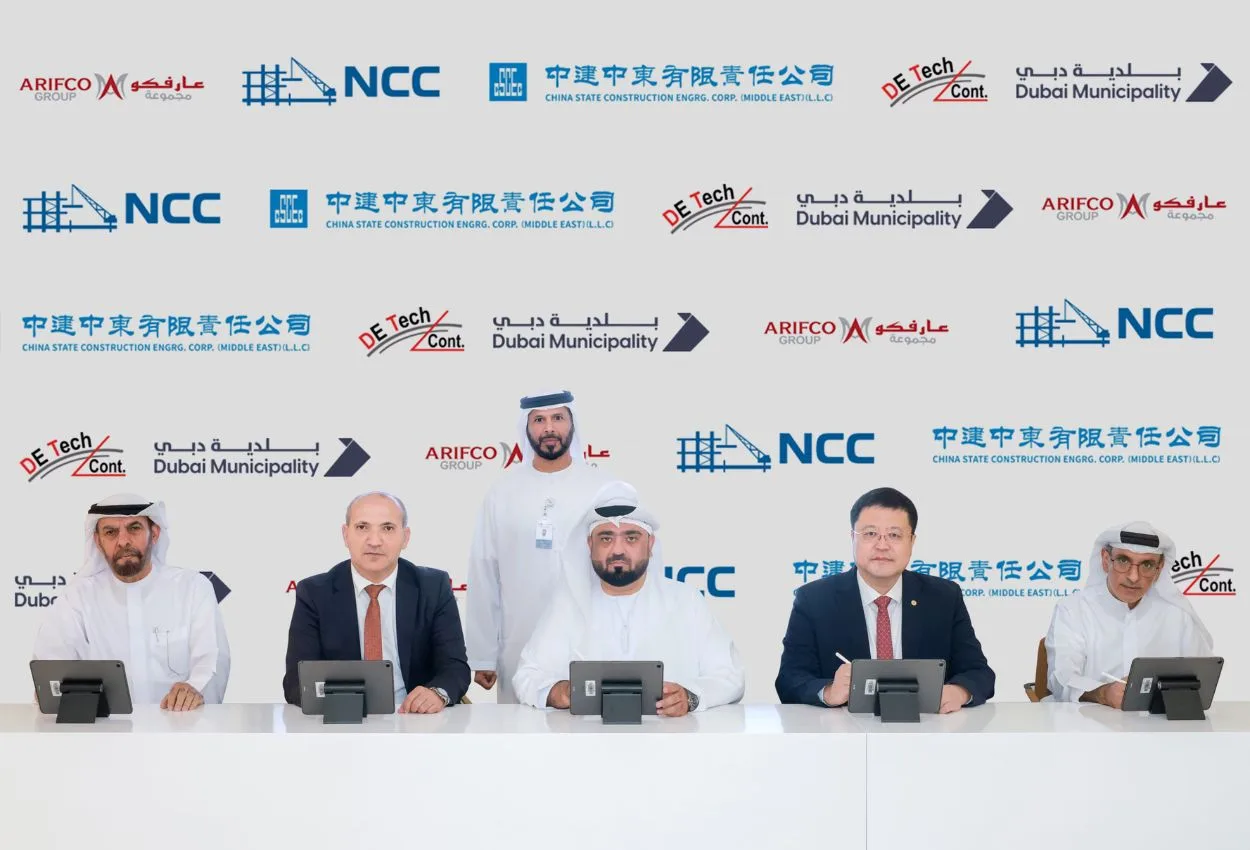
Dubai Municipality has awarded contracts worth AED 3 billion for four infrastructure projects under Phase 3 of the Tasreef Programme, the emirate’s stormwater drainage expansion initiative.
The projects will add approximately 100 kilometres of main drainage lines, with pipe diameters reaching up to 3 metres, covering nearly 100 square kilometres across some of Dubai’s most active residential and commercial districts.
Areas included are Jumeirah, Umm Suqeim, Al Safa, Al Manara, Al Quoz, Al Barsha, Al Wasl, Za’abeel, Al Bada’a, Al Satwa and Al Marmoom, all of which will be connected to the municipality’s central stormwater network.
The Tasreef Programme as a whole carries a total cost of AED 30 billion, and is described by Dubai Municipality as the largest integrated stormwater collection programme in a single system in the region.
When complete, it is expected to increase stormwater drainage capacity by 700% and cut costs related to pumping station construction, operations and maintenance by 20%.
“Dubai Municipality continues to implement the phases of the ‘Tasreef’ Programme, one of Dubai’s largest strategic infrastructure projects, enhancing its efficiency and resilience, making it more sustainable and strengthening its ability to address both future climate change and accommodate population and urban growth. Our objective is to build a comprehensive and integrated model for a leading future city, characterised by a sustainable urban system and advanced infrastructure that serve people, enhance their quality of life and well-being, and strengthen their safety and security. At the same time, it provides a stable and enabling environment for the growth of businesses and economic, commercial and tourism activities, reinforcing Dubai’s position as the world’s best city to live, work, invest and visit,” Eng. Marwan Ahmed bin Ghalita, Director General of Dubai Municipality said in a statement.
“The third phase of the Tasreef Programme’s projects will serve areas that represent vital arteries across the emirate, marking another pivotal step in developing Dubai’s stormwater drainage system as well as making it more resilient and efficient in managing rainfall under different conditions and future climate changes. We are committed to ensuring that these projects advance the broader objectives of the Tasreef Programme by reducing water accumulation, protecting residents and assets, improving the quality of services, enhancing the city’s readiness and traffic flow, and safeguarding the sustainability of its resources,” Eng. Adel Mohammed Al Marzouqi, CEO of the Waste and Sewerage Agency at Dubai Municipality added.
The four projects each target distinct parts of the city. The Jumeirah and Umm Suqeim project, described as the largest of the four, will lay 42 kilometres of drainage lines spanning communities from Umm Al Sheif to Jumeirah 3 and Al Manara along the Dubai Water Canal.
A second project between Sheikh Zayed Road and Al Khail Road will install 14 kilometres of lines serving Al Quoz Industrial Areas 1, 3 and 4, and Al Barsha 1. A third project along Al Wasl Road targets 25 square kilometres east of the Dubai Water Canal, covering Za’abeel 2, Al Satwa, Jumeirah 1 and 2, and Dubai World Trade Centre 1 and 2, with 21 kilometres of infrastructure. The fourth project will deliver 23 kilometres of drainage lines in Al Marmoom.