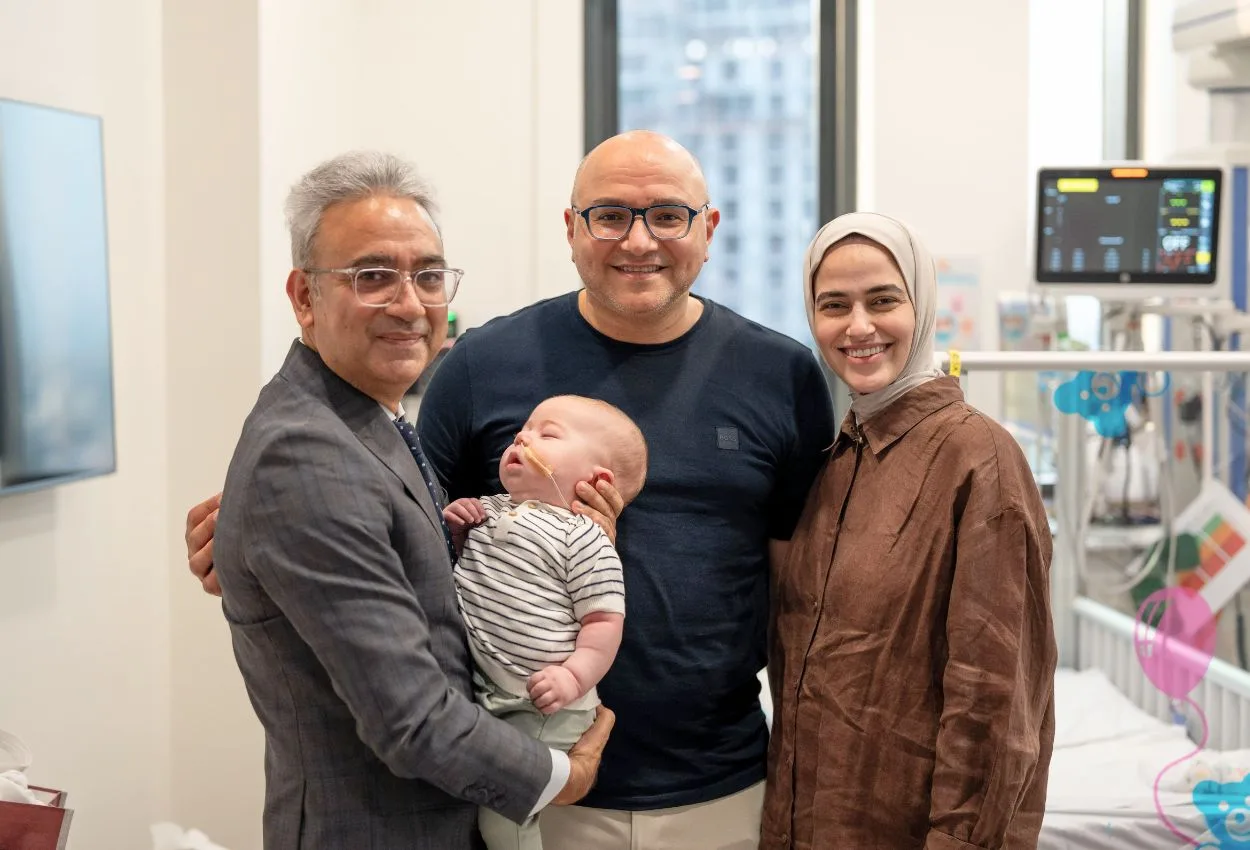
A Dubai medical team has stopped severe epileptic seizures in an infant who was experiencing around 110 episodes a day, with seizures stopping within 30 minutes of his first dose of an experimental treatment.
The patient, Adnan, suffers from an extremely rare genetic form of epilepsy. His seizures began in the first days after birth and worsened despite seven prior treatment approaches.
Whole-genome sequencing eventually identified the underlying genetic variant, allowing doctors to consider treatments targeting the specific biological mechanism involved.
The treating team, led by Professor Ubaid Shah, Consultant Paediatric Neurologist and Epileptologist at King’s College Hospital London Dubai, identified ABS-1230, an experimental oral drug that targets abnormal ion channel activity associated with the condition. The treatment remains under investigation in international clinical trials and has not been approved for commercial use.
Access was secured through a compassionate use pathway. King’s College Hospital London Dubai prepared the required documentation; the Emirates Drug Establishment assessed and approved the application; and the Dubai Health Authority coordinated between the entities involved. The medication reached Dubai within weeks of the request being submitted.
Adnan received his first dose on September 14, 2026. According to the treating team, his seizures stopped within half an hour. He was discharged on September 21, 2026, and no clinical seizures were observed during follow-up assessments up to October 11, 2026.
The hospital has since confirmed he remains seizure-free. According to data from the treatment’s developer, Adnan is the youngest patient in the world to have received ABS-1230 and only the second infant globally to be given the medication.
“We were inspired by Dubai’s spirit of action at every step. Within weeks of learning that this treatment existed, the necessary approvals were completed and the medicine arrived in Dubai, and the seizures stopped within 30 minutes of the first dose in a child who had been having around 110 seizures a day. This is an exceptional moment for us, and it highlights what precision medicine can achieve when we are able to identify the genetic cause of a disease and choose a treatment that targets the mechanism linked to it,” Professor Ubaid Shah said in a statement.
“A child born here in Dubai did not have to travel to London, Boston or Sydney to receive this advanced treatment. The treatment came to him here, which makes this case an important moment for healthcare in Dubai. Despite the encouraging response, we will continue to monitor his condition closely to assess whether the results are sustained and whether the experimental treatment is safe,” he added.
“The case reflects Dubai’s vision of placing people at the centre of healthcare development, enabling medical innovation and expanding access to advanced treatments within the emirate. It is also a practical example of integration between federal and local authorities and the private sector. Collaboration between the DHA, the Emirates Drug Establishment and King’s College Hospital London – Dubai helped accelerate the child’s access to an experimental treatment through the compassionate use pathway, following completion of the necessary medical and regulatory requirements. This collaboration demonstrates our healthcare system’s ability to combine rapid response with responsible regulation, drawing on advanced medical capabilities and expertise to make a tangible difference in patients’ lives, particularly in rare and complex cases,” Asma Al Sharif, CEO, Health Regulation Sector, DHA[BF1.1] further explained.
“Adnan’s case underlines the importance of the Establishment’s role in making promising treatment options available for exceptional medical cases and responding to unmet treatment needs by reviewing compassionate use requests in line with approved controls and safety standards. The Establishment’s approval helped make the experimental treatment available to the child within weeks, once the necessary procedures had been completed. This experience reflects the importance of integration between health entities in the UAE and the system’s ability to deal flexibly and responsibly with complex medical cases, supporting patients’ access to the treatments they need while ensuring their safety. In exceptional cases, the Establishment’s role extends to balancing rapid response with a responsible assessment of each case in line with approved frameworks, placing the patient’s needs and safety at the heart of the decision,” Ahmad Alhumairi, Director of the Import and Export Department, Emirates Drug Establishment said.
Adnan continues to receive outpatient follow-up. A multidisciplinary team is monitoring his neurological condition, brain activity, cardiac health, and development. Doctors are careful to note that the results relate to a single patient and require ongoing evaluation; the response seen in this case cannot be generalised to others with similar conditions.