

Having millions in the bank, homes across continents and access to almost anything money can buy might seem like a route to happiness. But for some of the world’s ultra-rich, accumulating money comes with a consequence that is rarely associated with financial success: loneliness.
“You really do not know who to trust,” Jan Gerber, founder and CEO of Paracelsus Recovery – a mental health treatment clinic in Zurich that works with entrepreneurs, executives and members of wealthy families – told Lana in an exclusive interview.
“You tend to be more lonely, the wealthier [you are],” he added, describing what he sees as a connection between accumulating wealth and increasing isolation.
According to Gerber, money changes relationships. Friends from childhood may approach someone for loans, while people entering their lives may be seeking access to their resources rather than friendship.
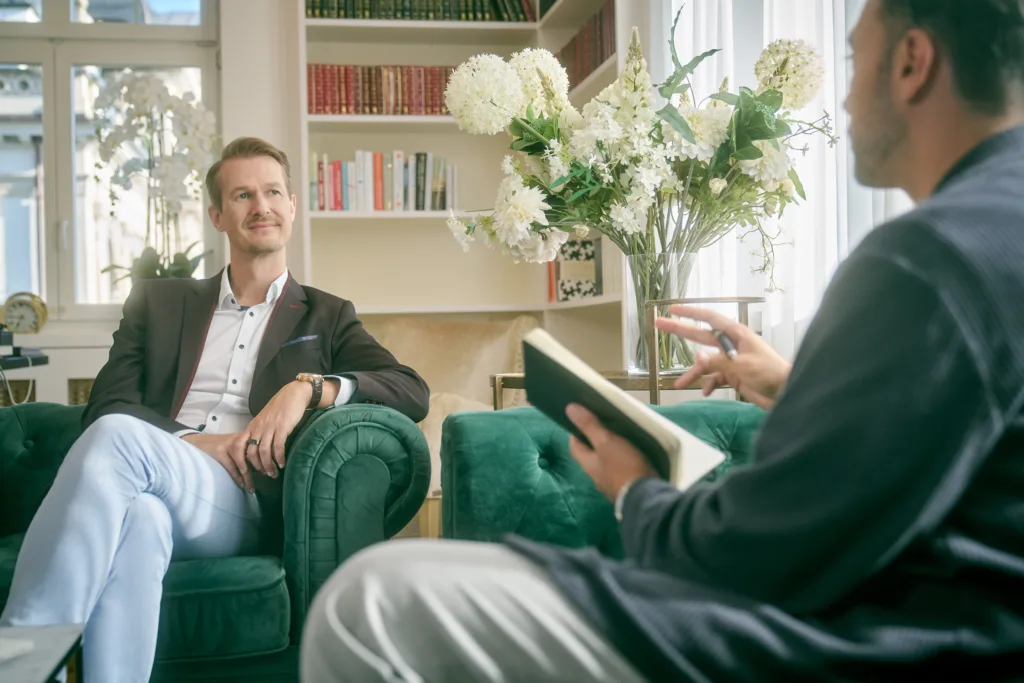
“Are people interested in me as a person, or just what I can provide or what I stand for?” he explained, describing the questions that can arise. The response, he said, is often to withdraw and stop trusting people.
For Gerber, who has spent years working with people whose fortunes can attract public attention, one of the misconceptions about wealth is that more money guarantees greater happiness. “When you are on the top, you have the most to lose,” he says. “But you cannot gain much more.”
He explained wealth can become a source of distress once it exceeds what someone needs to live without financial insecurity. That is his assessment rather than a conclusion established across all income groups.
Why the ultra-rich struggle with loneliness and trust
Gerber believes the inability to trust people is among the consequences of having wealth. “Almost everybody will have made negative experiences around trust,” he said, referring to people whose financial circumstances have changed their relationships.
Even those who built their own businesses can find that friendships take on another dimension once money enters the picture. “You kind of shut down and do not trust,” he said. “That, is not a nice place to be.”
However, he argued that the resulting isolation affects both mental and physical health. Loneliness has been associated with increased risks of illness and mortality, although individual outcomes vary.
Gerber says the problem is compounded when the wealthy feel unable to disclose their emotions, fearing that vulnerability will be interpreted as weakness. The pressure can extend beyond friendships into family relationships and business decisions.
“Pain is pain,” he said. “The human experience of pain doesn’t discriminate.”
Gerber added that society should also extend empathy to those with wealth, even when their circumstances appear to offer protection from life’s problems.
Why geopolitical uncertainty is affecting the wealthy
For business owners, the fear of losing what they have built can intensify during periods of geopolitical and economic disruption. “What we do not like, as humans, is uncertainty,” Gerber says. “We like things being predictable.”
He believes entrepreneurs, executives and families who own businesses face pressure when supply chains are disrupted, customers delay payments or operating costs remain unchanged despite falling revenue. “When the stakes are high, uncertainty can be more painful,” he explained, linking such pressure to anxiety, panic attacks and disrupted sleep.
Gerber suspects many business owners are struggling to sleep amid geopolitical developments, although he acknowledges that he does not have data to demonstrate this.
The Middle East has traditionally been Paracelsus Recovery’s largest or second-largest source of clients, depending on the year, with Saudi Arabia among its sources of patients. He has not identified a surge in demand from the region this year because the number of patients travelling from there was already substantial.
However, he recalled experiencing financial uncertainty during Covid-19, when Switzerland closed its borders and international patients could no longer travel to his clinic.
“I still had to pay staff,” he said, recalling how salaries and rent continued despite the loss of revenue. “You see, basically what you have built, is kind of shattering in front of your eyes,” he says.
And as for entrepreneurs, he explained, the loss of a business can threaten not just their financial security but also their identity, family livelihood and sense of achievement.
Why entrepreneurs may face mental health challenges
Gerber believes some of the traits that drive people into entrepreneurship may also make them vulnerable to mental health difficulties. He pointed out that people who start businesses often work longer hours and earn less, particularly in the early stages, than they might in salaried employment.
Yet, for some, independence makes the risk worthwhile.
“That sense of freedom – where its ‘I am my own boss, I don’t have to answer to any superior’ – for a lot of people, can be very, very important,” he said, revealing that he counts himself among those motivated by independence.
However, Gerber explained that some entrepreneurs are driven by experiences from childhood, including feelings of inadequacy or the need to prove their worth.
“They want to prove to the world, and ultimately to themselves, that they’re lovable,” he said, adding that the problem emerges when success fails to resolve those feelings. “You build as well for success, and you still feel inadequate.”
Gerber said mental health conditions such as ADHD, bipolar disorder and trauma can feature in entrepreneurial populations, citing research suggesting higher rates of some psychiatric conditions among business founders. Such findings do not establish that mental illness causes business success.
The mental health pressures of inheriting family wealth
However, for those born into wealth – rather than creating it themselves – can face another set of pressures. “Who are you without the family name or without the family money?” Gerber asked rhetorically.
He explained children raised in families with substantial wealth can struggle to develop an identity apart from the achievements of previous generations. “We build our self-esteem through friction,” he said, explaining that overcoming problems during childhood can help people develop confidence.
When money, connections and family influence remove those obstacles, some heirs may reach adulthood without having faced comparable challenges. The problem becomes apparent when they are expected to take control of a family business.
Am I ready? Am I really capable of doing this? Gerber said are some questions heirs may ask themselves. He believes the pressure becomes worse when parents formally hand over control but continue intervening in company decisions.
“Families do traditionally very, very poorly with wealth and power transfers,” he said, adding disagreements can involve siblings, cousins and parents, with inheritance and business control becoming sources of litigation.
Gerber referred to the HBO drama Succession, saying families he knows recognise the conflicts it portrays. In some cases, he suggests, the reality can be more complicated than fiction.
ADHD, anxiety, depression and addiction among the wealthy

Some of the conditions Gerber encounters include depression, anxiety, ADHD, bipolar disorder, borderline personality disorder and addiction. He also treats patients with schizophrenia and schizoaffective disorder, while emphasising that these conditions are not necessarily associated with wealth.
He said some people use alcohol, prescription medication or drugs to manage psychological distress. “It is actually never an issue in itself,” he said of addiction, describing substance use in many cases as an attempt “to medicate a pain.”
He believes diagnoses can help people understand behaviours they have struggled with for decades. “A diagnosis can really help. It’s not about labelling.”
Some patients reach their sixties without even understanding why attention, impulse control or relationships have caused difficulties throughout their lives. “It is never too late,” he said, adding that an explanation can help people reassess their experiences.
Paracelsus Recovery treats patients aged 14 and above. Gerber recalled diagnosing ADHD in a 15-year-old patient, while others have received diagnoses much later in life. He said similar recognition can occur with autism.
His clinic follows what he terms as a “360-degree approach” to treatment, combining psychiatry and psychotherapy with medical assessments, nutrition, lifestyle, sleep and relationships.
The approach, developed by Gerber and his family almost two decades ago, considers how physical illness, trauma and mental health can affect one another. Coordinating practitioners across disciplines makes treatment costly, contributing to the clinic’s focus on patients with substantial resources.
Treatment at Paracelsus Recovery costs approximately 100,000 Swiss francs (CHF 100,000) per week, reflecting its personalised, multidisciplinary approach to mental health care.
Why the wealthy suppress emotions
Gerber believes many people with wealth become accustomed to concealing their emotions, not only at work but also within their families. “They bottle up their emotions,” he said, explaining that previous experiences with trust can make openness feel threatening.
The absence of a way to express distress can contribute to anger, impulsive behaviour, thrill-seeking or substance use. However, when asked if separating personal and professional life is possible today, he said it is beneficial in the long run.
“We are social beings. We need human connection and we need authenticity,” he said, acknowledging that maintaining boundaries may be necessary in workplaces where people do not feel safe.
He also explained that pressures among men and women also differ, according to impressions based solely on conversations and clinical experience.
He suggested that men in wealthy families may face more pressure to demonstrate achievement, particularly when succeeding a parent, while women may experience more pressure around social expectations, appearance and fear of missing out (FOMO).
AI is creating another source of anxiety for business owners
Artificial intelligence, according to Gerber, has further introduced uncertainty across income groups. Employees may fear their jobs being replaced, while entrepreneurs worry that competitors will adopt AI faster and undermine their businesses.
“I think that applies to everybody whose work is affected or potentially affected by AI,” he said. For owners, the concern is whether competitors can cut costs and prices to levels their businesses cannot match.
At Paracelsus Recovery, Gerber said appointment scheduling can require two full-time employees even when the clinic is coordinating treatment for only three or four patients. AI could simplify the process, but he is concerned about protecting patient information.
“Our biggest concern is confidentiality, data security,” he said, also recognising the environmental pressures associated with AI infrastructure, including water consumption by data centres.
“The wealthy, they are absolutely more sheltered from basic scarcity,” he said, referring to access to water, food, medicine and healthcare. However, he believes some wealthy individuals may experience guilt when they see the consequences of shortages affecting communities without comparable resources.
Another concern among the ultra-rich is the anxiety of longevity. Gerber also questioned whether attempts to extend life and prepare for disasters can become sources of anxiety.
For someone with billions, commissioning a survival shelter might simply be a precaution, he said. “It can turn into an obsession,” he explains. “If you feed the fear, it gets worse.”
He said the pursuit of longevity can create a similar problem. For some wealthy people, extending life becomes what he calls “the last frontier”, once money has provided access to most other experiences.
Rather, Gerber believes relationships, sleep, movement, diet and treatment for mental illness deserve more attention than expensive interventions promoted as methods of extending life.
He pointed to the habits of communities described as Blue Zones, including the role of social connection, while questioning whether longevity treatments currently promoted to the wealthy have demonstrated the benefits claimed for them.
Why more money does not guarantee happiness
In addition, people frequently confuse pleasure, stability and happiness, according to Gerber. He described how the excitement of visiting a resort, buying a car or acquiring a yacht can fade with repetition.
“The dopamine system” adapts, he said, explaining that the pleasure associated with an experience can diminish as it becomes familiar. Gerber also pointed to the responsibilities that accompany ownership, from maintaining holiday homes to paying for boats and cars that may be used only occasionally.
He explained the point at which greater income stops improving well-being may arrive earlier than people expect, citing household earnings of around $150,000 to $200,000 a year. Financial security matters more, as it allows people to pay bills, prepare for emergencies and avoid the stress of meeting basic needs.
“Stability is a predisposition for happiness,” he said, adding that stability must extend beyond finances to relationships and mental health.
When asked if wealth determines how people approach parenthood today, he does not see evidence that younger heirs are necessarily avoiding having children because of the pressures associated with family fortunes, despite declining birth rates across many societies. Fear about the future, he suspects, contributes to falling birth rates more broadly.
Ultimately, Gerber believes the conversation about the mental health of wealthy people requires more empathy. Some heirs, he said, have never had the opportunity to build their own lives or discover who they are beyond the expectations of their families.
He argued that society also has an interest in the psychological well-being of those with financial and political power because their decisions affect others. “We all have a stake,” he explained, in ensuring that people in positions of influence have the opportunity to recover from mental health difficulties.
His message is that money can provide resources, security and access to treatment, but it cannot eliminate anxiety, guarantee trust or prevent loneliness.
“Pain is pain. The human experience of pain doesn’t discriminate,” he concluded.