Dubai’s Roads and Transport Authority (RTA) has awarded two contracts worth a combined AED 1.161 billion to develop Al Meydan Street, one of the emirate’s key north-south road corridors running parallel to Sheikh Mohammed bin Zayed Road and Al Khail Road.
The project spans from Al Meydan Street’s intersection with First Al Khail Street to Umm Suqeim Street and includes 17 kilometres of roads, 3,700 metres of new bridges, and a cycling network connecting to existing routes.
Works are split across two contracts to accelerate delivery, with completion scheduled by the end of 2028. The corridor serves residential and development areas with a combined population of more than 500,000.
RTA Director General Mattar Al Tayer said the project will raise the capacity of north-south traffic corridors by 18% and cut travel time between Al Manama Street and Dubai-Al Ain Road to Umm Suqeim Street from 30 minutes to 10 minutes.
“Al Meydan Street is one of Dubai’s key strategic corridors, running parallel to and supporting Sheikh Mohammed bin Zayed Road and Al Khail Road. The project will strengthen connectivity across the main road network, provide alternative routes that improve traffic distribution, enhance traffic flow, and increase mobility efficiency between key areas. It will also raise the capacity of north–south traffic corridors by 18% and reduce travel time from Al Manama Street and Dubai–Al Ain Road to Umm Suqeim Street from 30 minutes to 10 minutes, an improvement of 66%. The project will also support the emirate’s rapid urban growth,” he said in a statement.
The first contract covers roughly 14 kilometres, running from the Latifa bint Hamdan Street intersection to Umm Suqeim Street, plus the Al Marabea’ Street stretch from Dubai Hills to Sheikh Mohammed bin Zayed Road.
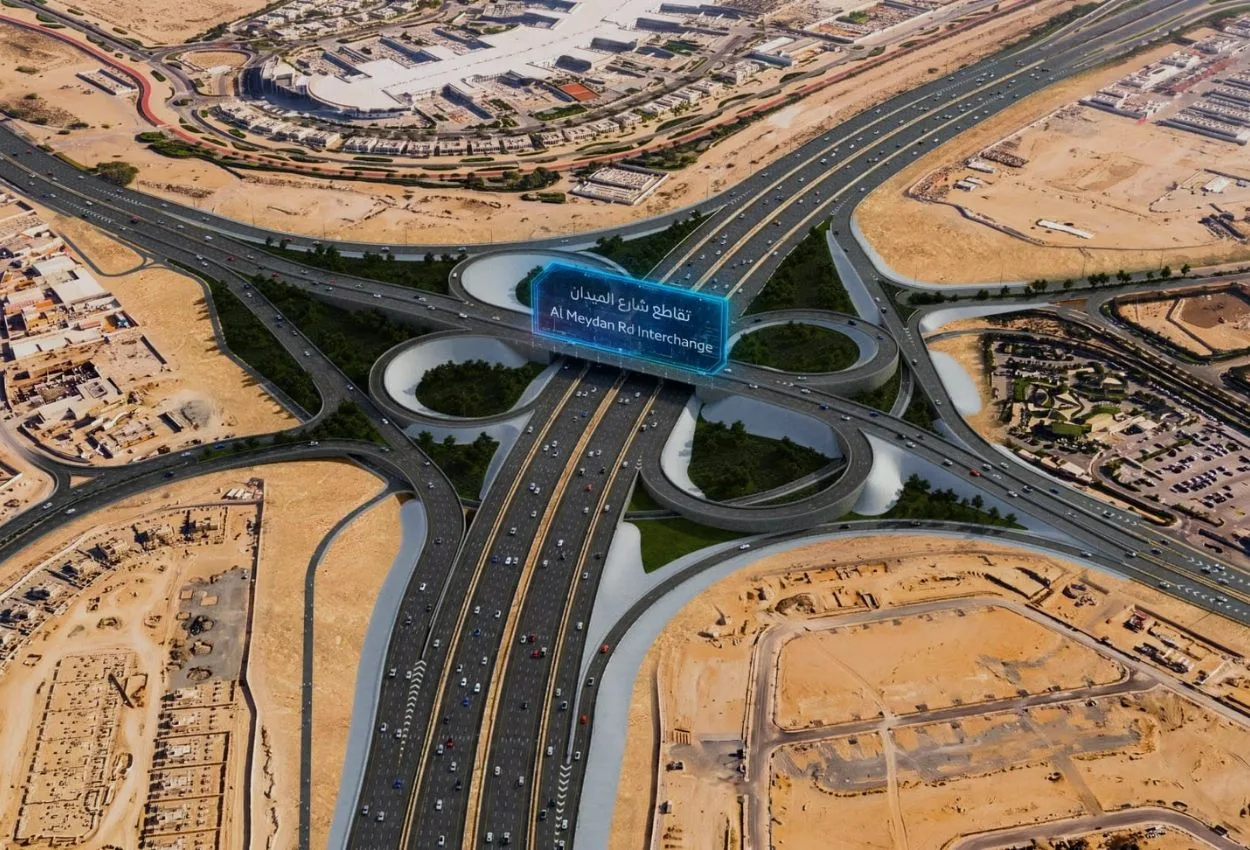
It includes a new grade-separated interchange at Al Marabea’ Street and Al Meydan Street, with bridges totalling 1,600 metres and a combined capacity of 14,400 vehicles per hour in both directions. A 700-metre elevated link on Dubai-Al Ain Road toward Nad Al Hamar Street will also be built to improve access for Nad Al Sheba residents.
The second contract covers Al Meydan Street from First Al Khail Street through Al Khail Road to Muscat Street. A signalised junction at Al Meydan Street and Muscat Street will be converted into a grade-separated interchange with 1,400 metres of bridges and capacity for up to 14,400 vehicles per hour in both directions.
The contract also adds approximately 2 kilometres of surface roads linking Al Meydan Street with Latifa bint Hamdan Street, along with cycling underpasses beneath Al Meydan Street to keep routes continuous.
The project is designed to work in tandem with the recently awarded Latifa bint Hamdan Street Development Project. Together, the two schemes will link arterial roads including Sheikh Zayed Road, Al Khail Road, Sheikh Mohammed bin Zayed Road, Emirates Road, and Sheikh Zayed bin Hamdan Al Nahyan Street, and support development areas such as Dubai Hills, Nad Al Sheba, Mohammed Bin Rashid Gardens, Dubai District One, and Al Barari.
The Latifa bint Hamdan corridor, a 12-kilometre project with seven bridges and eight tunnels, is already under way and is also due for completion by end of 2028. That project is expected to handle more than 130,000 daily trips and reduce travel time between Umm Al Sheif Street and Emirates Road by 54%.