Dubai’s Roads and Transport Authority (RTA) has approved a five-year plan to build 31 pedestrian bridges and tunnels across the emirate by 2030, with key crossings planned over Sheikh Zayed Road, King Salman bin Abdulaziz Al Saud Street, Al Ittihad Road and Omar bin Al Khattab Street.
RTA Director General Mattar Al Tayer said the network has grown from 26 bridges and tunnels in 2006 to 178 by the end of 2025, a 585 per cent increase. The 31 new structures will continue that trajectory, with sites selected through technical and field assessments covering pedestrian density, land use, and connections to public transport.
The safety case for the programme is substantial. Al Tayer cited a fall in the pedestrian fatality rate from 9.5 deaths per 100,000 population in 2007 to 0.22 in 2025, a decline of 98 per cent.
Resident satisfaction with Dubai’s pedestrian infrastructure stands at 88 per cent, while pedestrian trips rose from 307 million in 2023 to 326 million in 2025. Cycling trips climbed from 46.6 million in 2024 to 57.3 million in 2025, a 23 per cent increase.
“Existing and planned pedestrian bridges form an integrated pathway network linking residential communities across Dubai with key destinations and encouraging residents to use sustainable soft mobility modes for first and last-mile journeys. Pedestrian bridges and tunnels have played a significant role in enhancing traffic safety, with the pedestrian fatality rate falling from 9.5 deaths per 100,000 population in 2007 to 0.22 deaths in 2025, a decline of 98 per cent,” Al Tayer said in a statement.
“They have also contributed to measurable gains across key indicators, with residents’ satisfaction with Dubai’s pedestrian infrastructure reaching 88 per cent, pedestrian trips increasing from 307 million in 2023 to 326 million in 2025, a rise of 6 per cent, and cycling trips increasing from 46.6 million in 2024 to 57.3 million in 2025, a rise of 23 per cent” he added.
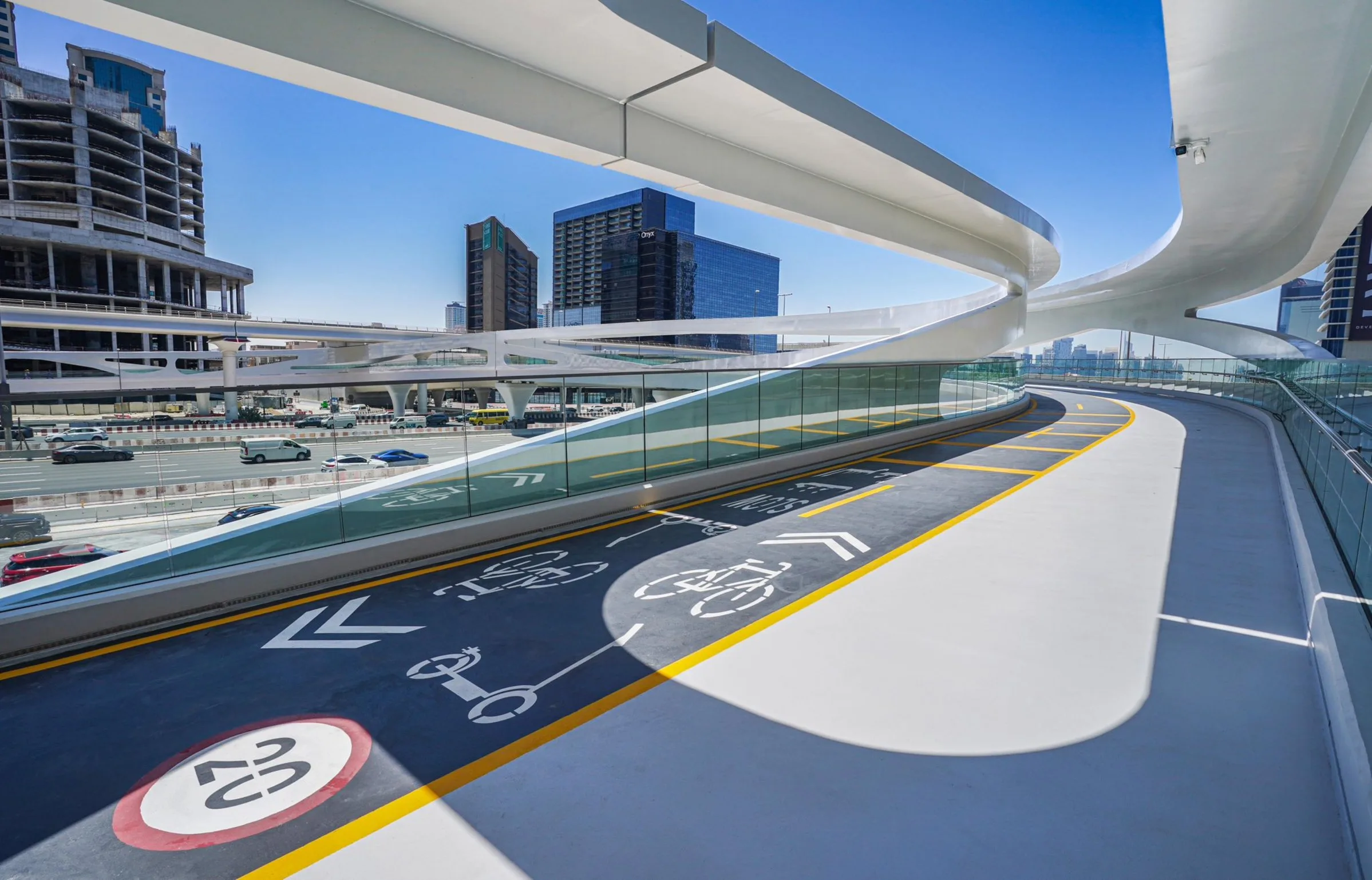
Three bridges have been completed recently. Two span Sheikh Zayed Road and Al Khail Road, forming strategic links for pedestrians, cyclists and e-scooter users across Al Sufouh, Dubai Hills, Dubai Internet City, Barsha Heights and Al Barsha 3. The Sheikh Zayed Road bridge runs 528 metres; the Al Khail Road bridge extends 501 metres. Both are 5 metres wide, divided between a 3-metre track for bicycles and e-scooters and a 2-metre pedestrian walkway. A third, shorter bridge on Al Manara Street in Al Quoz Creative Zone is 45 metres long and 5.5 metres wide.
Three further bridges are under construction. The largest, crossing Dubai–Al Ain Road to connect Wadi Al Safa 4 with Nad Hessa in Dubai Silicon Oasis, stretches 730 metres. A second, on Sheikh Mohammed bin Zayed Road at the Tunis Street–Al Nahda intersection, runs 554 metres and links Muhaisnah 1 with Al Twar and Al Mamzar Beach.
A third, on Al Sukook Street within the Al Mustaqbal Street Development Project, is designed to sit within Dubai’s Central Business District. All three are expected to be complete in the first quarter of 2027.
The bridges are built to incorporate cycling tracks, bicycle parking, and systems for fire detection, alarms and remote monitoring. The programme sits within Dubai’s Traffic Safety Strategy, which targets zero road fatalities.