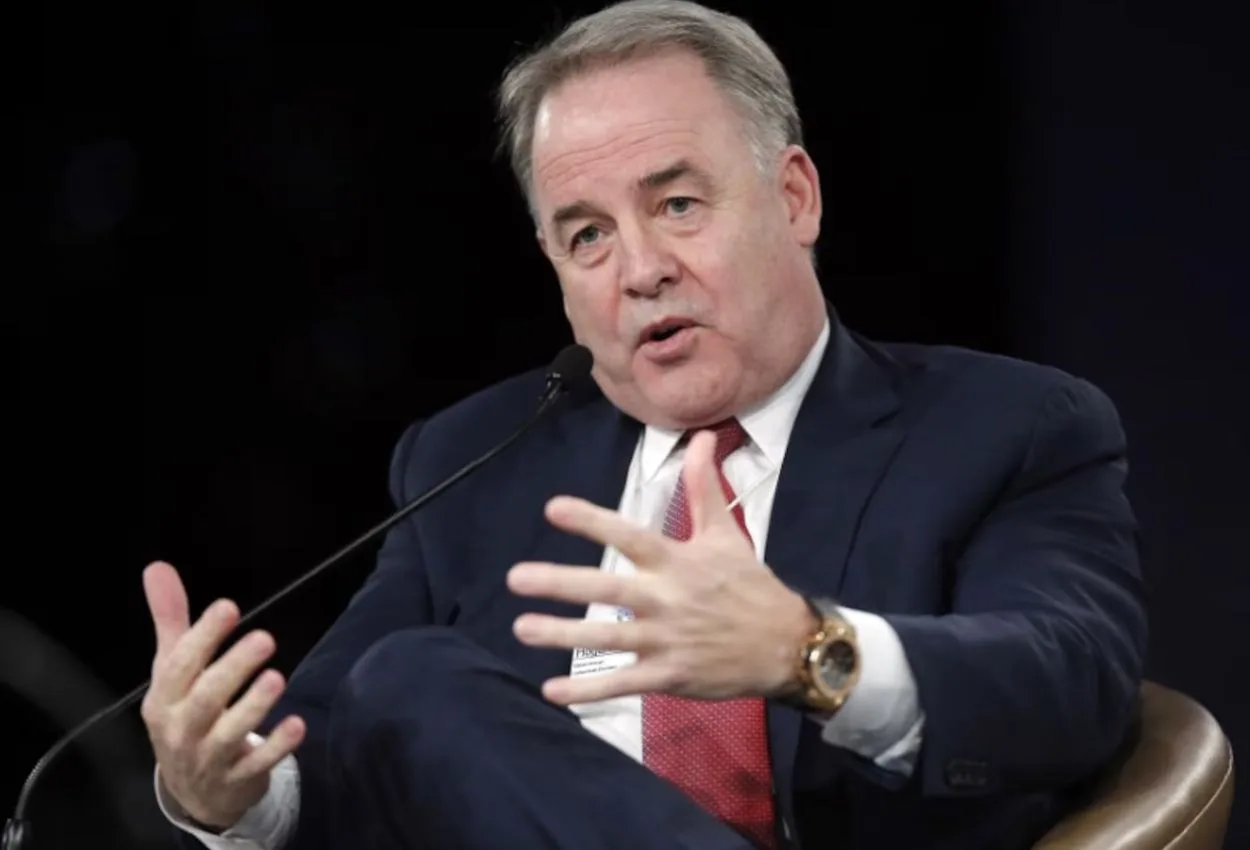
European carriers’ decision to suspend Gulf routes until the summer hands a capacity opportunity to regional airlines, James Hogan, chairman of Knighthood Global and former chief executive of Etihad Airways, has said, predicting that transfer traffic will lead the recovery over Abu Dhabi, Dubai, Doha and Saudi hubs.
Speaking to Lana, Hogan said the customer mix carried by Gulf airlines was fundamentally different from that of European competitors, leaving the region’s carriers better positioned to absorb the shift.
“You’ve already seen some of the European carriers saying they’re not going to operate into the Gulf until maybe June, July,” he said. “That means that traffic shifts back over to the Gulf carriers, but the segmentation is totally different than a European carrier.”
He pointed to the breadth of demand passing through the Gulf hubs – high-net-worth, business, convention, religious and worker traffic – each with its own commercial dynamic and resilience profile.
“I’m bullish about the bounce back,” he said. “The key strength of the Gulf hubs is connectivity. From Abu Dhabi, from Dubai, from Doha, from Saudi, you’re able to reach all points of the world non-stop. And the infrastructure is best in class.”
“There’s no better hub and spoke than the UAE.”
Hogan, who led Etihad from 2006 to 2017, welcomed the General Civil Aviation Authority’s open-skies announcement and praised the response from Gulf airlines and regulators since the conflict began as “outstanding,” describing the underlying strength of the sector as “a reflection of the leadership of the country.”
“Aviation is always at the forefront of any crisis, whether it be pandemic, whether it be war, whether it be economic,” he said. “So that means, over time, you need to build capability.”
Messaging over price wars
Hogan said competition between Gulf carriers on price would continue, but the more important task was a unified message to the rest of the world.
“They’ll never work in a coordinated fashion in regard to pricing,” he said. “You all have your own playbook, and depending on your network, your aircraft utilisation, you will determine how you stimulate the market.”
“When I say cooperation, it’s the messaging inbound from the rest of the world, saying, ‘We’re open for business. It’s calm. It’s always been safe and secure. We’ve been through a crisis. But this isn’t the only part of the world that’s had a crisis.’”
Hogan, who served as chief operating officer of British Midland during the Balkans war, said pricing alone was not the right lever. Loyalty, brand strength and service were what set Emirates, Etihad, Qatar Airways and a regenerating Saudia apart.
“Aviation is about time,” he said. “The Gulf carriers have an outstanding safety and service record. They’re the best service providers in the world.”
He pointed to Abu Dhabi and Dubai’s tourism infrastructure as a continuing draw for destination traffic, citing the Louvre Abu Dhabi, the upcoming Guggenheim, SeaWorld and the planned Disney development, alongside Dubai’s hotels and retail offer.
Long-haul threat overstated
On the question of whether ultra-long-haul routes of 17 to 20 hours would erode the stopover model, Hogan repeated a line he delivered at a recent event in Bangkok: “Travellers will not stop in the Gulf because they have to. They will stop because they want to.”
He argued the Gulf’s geography remains commercially decisive. “Within three hours’ flying time of the Middle East, the Gulf, the Middle East, Indian subcontinent – you go out further as you head towards China. It’s a huge market.”
He pointed to US Customs pre-clearance at Abu Dhabi International, established during his tenure, as a continuing differentiator.
Inside the crisis playbook
Hogan described the operational machinery airlines run during a crisis as “like going to Star Wars” – integrated control rooms bringing operations, pilots, engineering, crewing and customer service into a single environment.
“We used to have regular drills on crises, on emergencies,” he said. “Everybody has their own playbook on how, depending on whatever the crisis may be.”
The first priority in any crisis, he said, is constant: “Ensuring the welfare of your staff, your guest, and protecting the asset.”
He recalled signing fleet deals at Etihad with delivery slots stretching to 2040, structured with built-in flexibility so the airline could adjust capacity through any downturn. “Within those deals, you had slide rights, deferrals. So if there was a crisis, you could adjust, you could slow down.”
Invest through the crisis
Knighthood Global has argued the region should be investing now rather than retrenching. Hogan said that investment needed to come from across the ecosystem – airports, airlines, tourism authorities and government – pulling in the same direction.
“Nothing’s changed in regard to the style, the DNA of the airline. It’s a world shock. The destination is one of the best in the world. It’s calm. Once the crisis has been resolved, the market will come back, and in the meantime, there’ll be stimulation to encourage that traffic to come back.”
“I am extremely bullish that the Gulf will bounce back.”