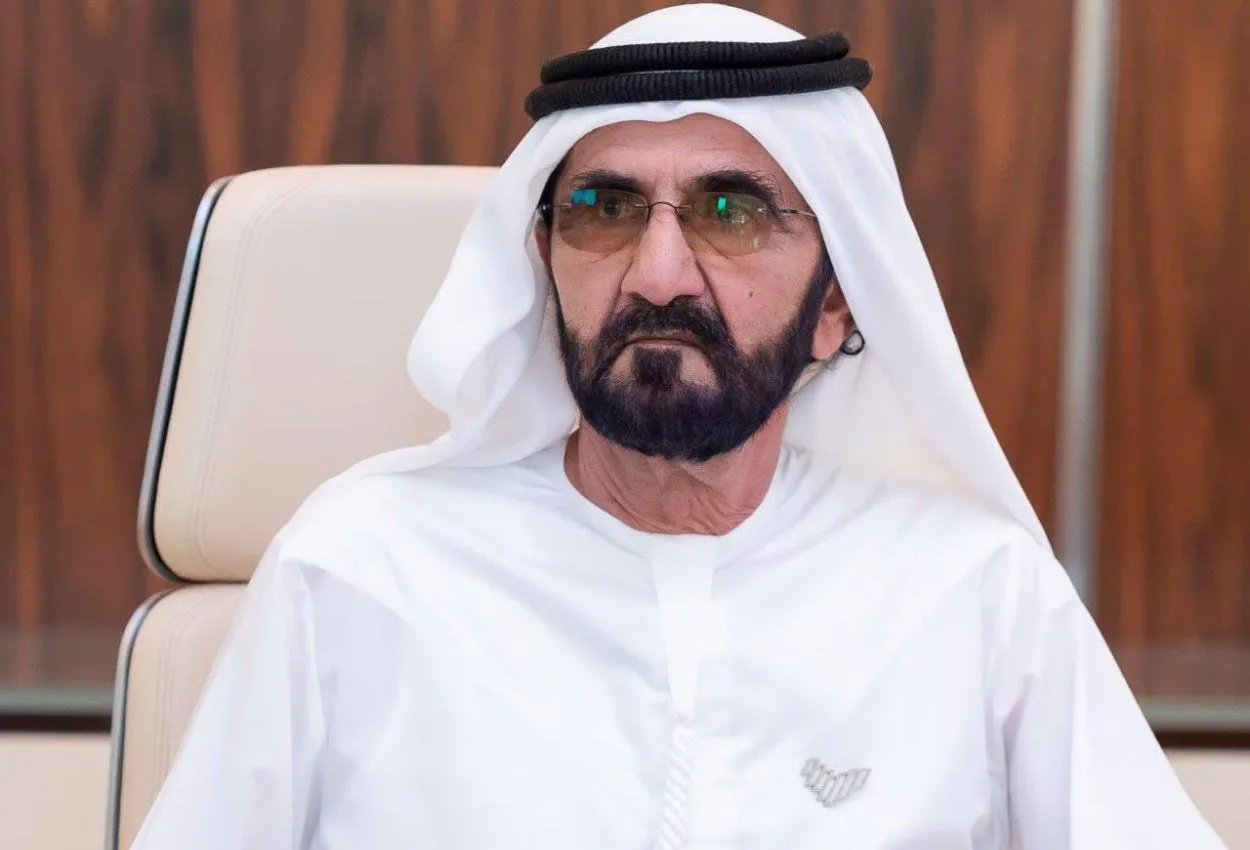
Sheikh Mohammed bin Rashid Al Maktoum, Vice President, Prime Minister of the UAE, and Ruler of Dubai has published a letter addressed to his government work team, released as part of “Al Rasail” (The Letters), the second volume of his series “My Life Taught Me.” The letter sets out his thinking on what effective leadership should look like in a world where multiple forces are shifting at once.
“You are not government employees – you are leaders,” he writes at the outset, before laying out three interconnected points for what he calls the future leader.
The core premise is that the challenge facing institutions today is not the speed of change alone, but the fact that many things are changing simultaneously. A startup can disrupt an entire industry. A small invention in an Eastern market can generate billions. A single event anywhere in the world can alter a person’s standing within it. “Leadership in the new world will not be as we were accustomed to in the traditional world,” he writes, “and reaching here does not necessarily mean we will reach there.”
His first point challenges the convention of fixed, long-range strategic planning. A future leader, he argues, should build institutions capable of adaptation and unlearning rather than institutions locked into five- or ten-year plans. Certainty about the future is not the goal; preparing for multiple scenarios is. The future leader’s strength lies not in accumulated knowledge, he writes, “but in his ability to ask the right questions. If he believes he knows everything about the future, he will be the first of its casualties.”
The second point concerns people. He distinguishes between “resources” – tools that document, monitor, and follow up on operations – and human beings, whom he calls “the foundation of creativity, the owners of imagination, and the source of ideas.”
He contrasts the traditional leader, who monitors staff and suppresses initiative, with the future leader, who builds environments that allow for experimentation and instils confidence. “Every leader who kills the spirit of initiative is spending the future of his institution,” he writes.
The third point addresses speed of response. When institutions move slower than the pace of change around them, they fall behind quickly.
He argues that today the delayed decision is more dangerous than the wrong one, and that future leaders will make faster calls by making better use of artificial intelligence for what he calls “time compression.” He draws on a historical principle to close the point: “A good decision made today is better than an ideal decision made next month.”
The letter ends on an optimistic note, expressing confidence that leaders will exceed expectations – provided governments succeed in building cultures of adaptation, continuous learning, and the freedom to innovate.