The UAE’s real estate market maintained broadly positive momentum through the third quarter of 2026, even as geopolitical uncertainty weighed on certain sectors, according to CBRE Middle East’s quarterly market review released on November 3.
The non-oil economy remained the primary growth engine, accounting for 79 per cent of UAE economic output during the period. The UAE’s Purchasing Managers’ Index reached 55.3 in both August and September, a 20-month high, indicating continued expansion in the non-oil private sector.
“While 2026 has presented a more challenging operating environment than initially anticipated, the UAE real estate market continues to benefit from solid fundamentals. Demand for high-quality office space remains exceptionally strong, industrial and logistics assets continue to see healthy occupier activity, and Abu Dhabi’s residential market is recording sustained growth. Although sectors linked to international tourism have faced greater pressure this year, the UAE’s diversified economy, pro-business environment and ability to attract global investment continue to support real estate performance,” Matthew Green, Head of Research at CBRE MENA said in a staetment.
Office space was the standout asset class across both emirates. In Dubai, average office rents rose 12 per cent year-on-year, with occupancy reaching approximately 95 per cent.
DIFC, Business Bay and Dubai Internet City led leasing activity, driven by financial services, professional services and technology tenants. Abu Dhabi performed even more strongly: average office rents climbed 20 per cent year-on-year, occupancy hit 96 per cent, and the continued expansion of ADGM reinforced the capital’s appeal to multinational occupiers and financial institutions.
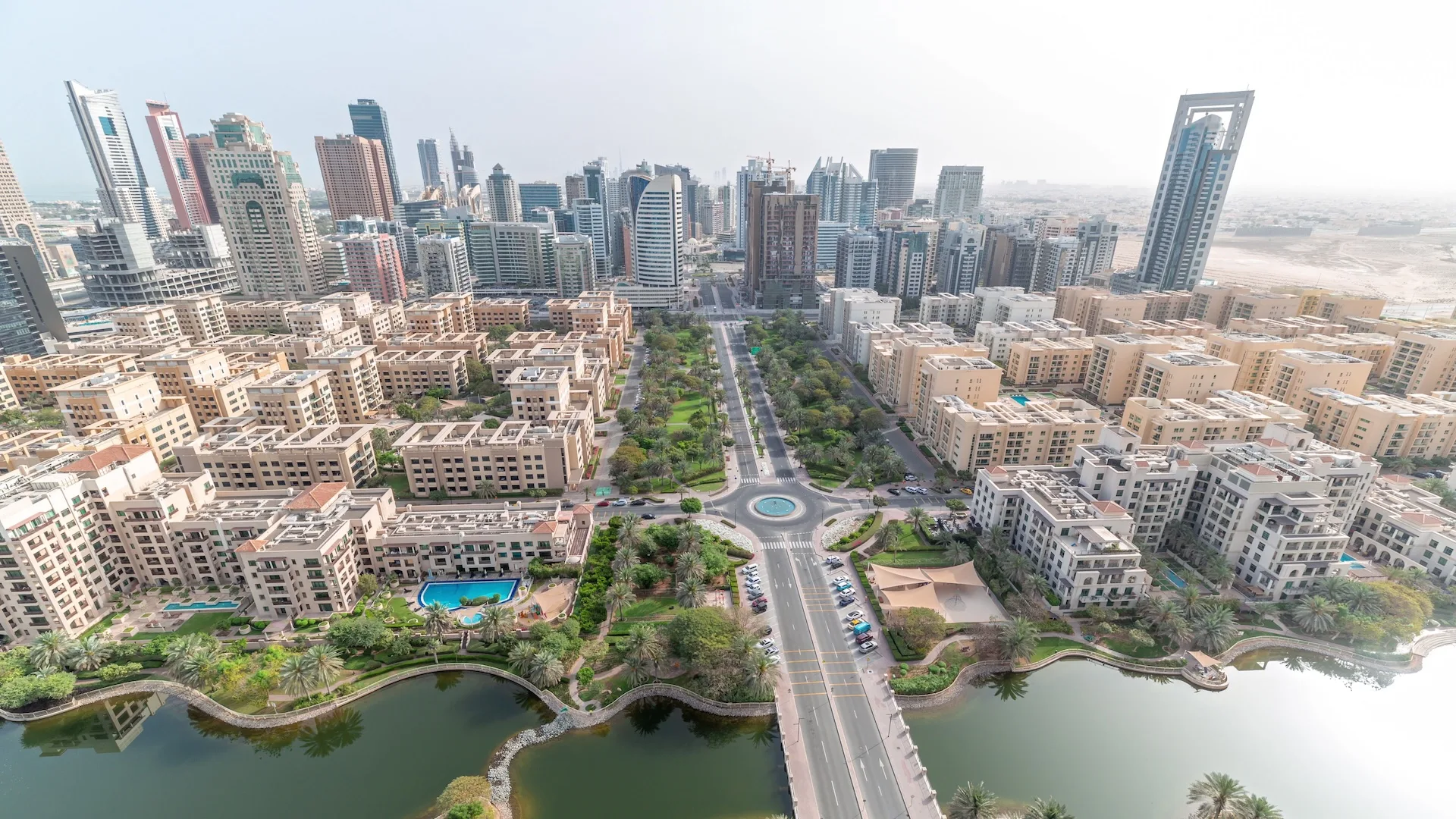
Dubai’s residential market, by contrast, shifted into a more measured phase. Average sales prices dipped approximately 1 per cent year-on-year and average rental rates softened by 7 per cent, as buyers became more selective and developers moderated new launch activity.
Residential values nonetheless remain well above pre-pandemic levels. Abu Dhabi’s housing market told a different story: apartment prices rose 13 per cent year-on-year and transaction volumes increased by approximately 5 per cent, supported by demand across new master-planned communities.
Hospitality was the weakest-performing segment. Hotel occupancy across the UAE fell approximately 24 percentage points year-to-date, narrowing from a 28 percentage point decline in the first half as air connectivity recovered. Average Daily Rate declined 8 per cent and
Revenue per Available Room fell 30 per cent compared to the prior year. Dubai welcomed almost seven million international overnight visitors in the first eight months of the year, with monthly arrivals improving steadily since March.
Retail held up well against that backdrop. Occupancy reached 97 per cent in Dubai and 96 per cent in Abu Dhabi, while average retail rents rose 5 per cent year-on-year in Dubai and 1 per cent in Abu Dhabi, supported by limited new supply and investment in experiential retail.
Industrial and logistics assets continued to perform strongly. Average industrial rents in Dubai increased 12 per cent year-on-year; Abu Dhabi recorded 6 per cent growth over the same period. E-commerce operators, third-party logistics providers and regional supply chain businesses were the primary drivers of demand.