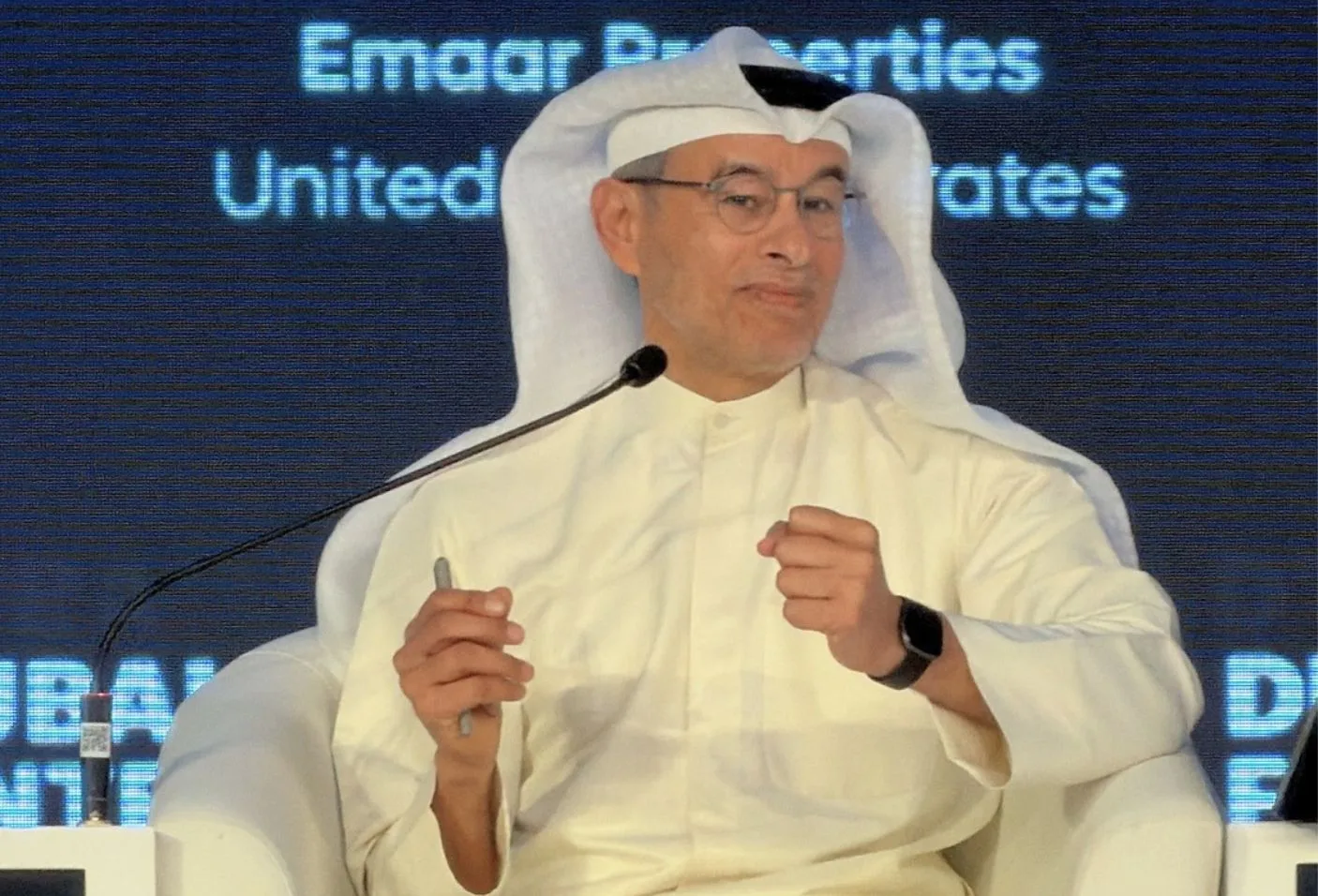
Mohamed Alabbar, Chairman of Emaar Properties, has warned that companies are falling behind despite reporting growth, as artificial intelligence (AI) transforms business operations, challenges technology monopolies and forces organisations to reconsider how they are built.
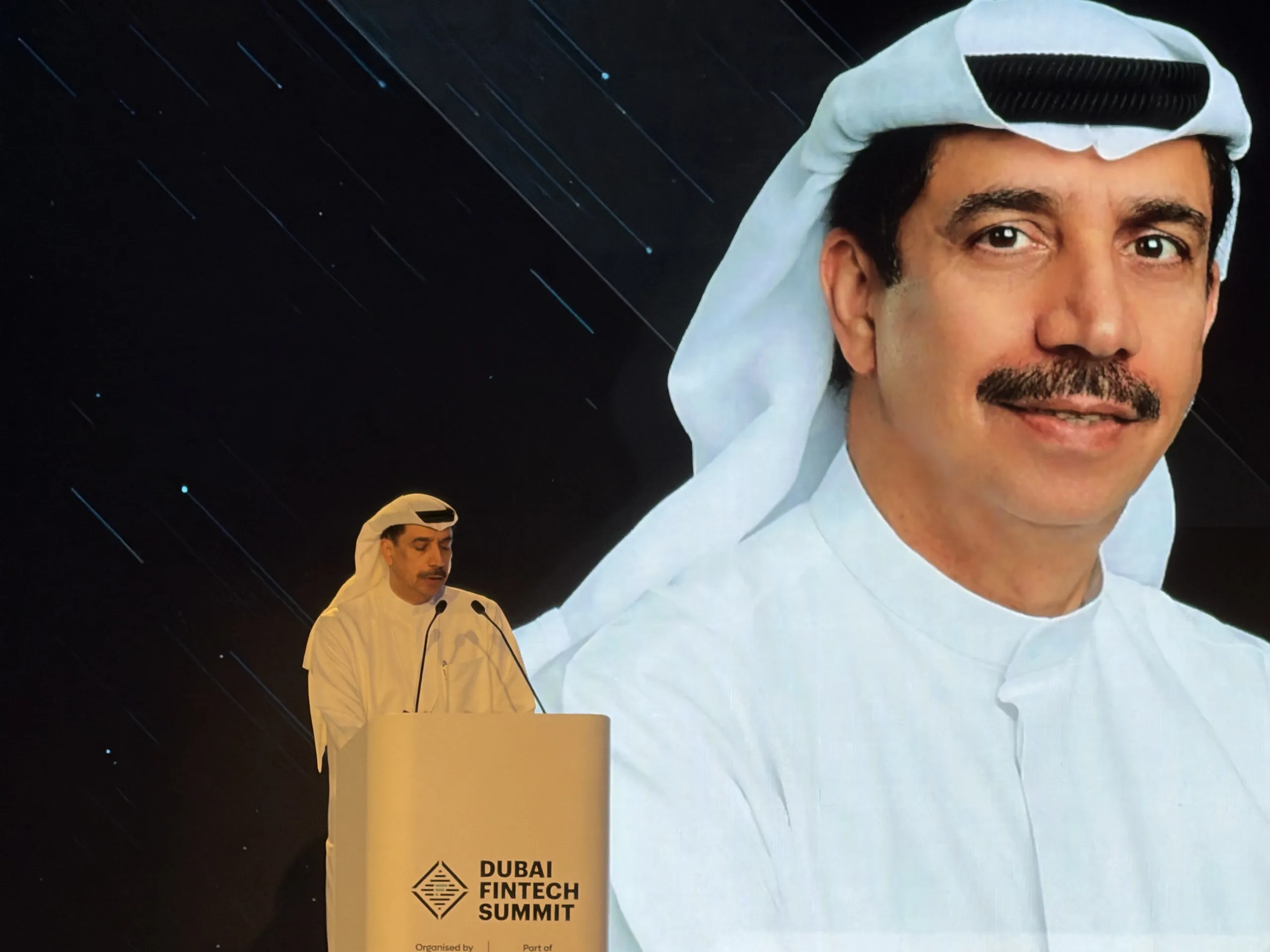
Speaking at the Dubai Fintech Summit 2026, Alabbar said the pace of AI development meant that methods responsible for business success in the past might no longer deliver results. “The good news that I have for you is that most probably all of your businesses are growing,” Alabbar said.
“And the bad news is that you are really falling behind, even if your business is growing, and that is the effect of how powerful AI is becoming. You think you are growing and you are doing okay. You are not doing okay – you are really falling behind. Careful.”
Alabbar said companies must question whether their operating models, management structures and technology systems can keep pace with AI.
“Whatever gave you the secret of success, and whatever gave us the secret of success, the methodology, the hard work, whatever philosophy you follow, do not think that it’s going to help you for the future success.”
He said two issues were occupying his attention: the Iran-US conflict and the US midterm elections, and the impact of AI on his life and business.
AI is changing every two weeks, says Mohamed Alabbar
Alabbar said the speed of AI development had overtaken the process of change that companies had experienced through technology upgrades. “The only problem is that they change every two weeks. It used to be every year, then it was every three months. Now it’s every two weeks.”
He said developments in the preceding fortnight had demonstrated how AI systems were beginning to manage other AI systems. “The last two weeks they were mind blowing because the last two weeks AI is managing AI,” he said.
“And that’s why I truly believe the companies that we have built that are so successful – that are doing well – they might not be fit for tomorrow, because of the change that’s coming.”
Alabbar also referred to a Financial Times report discussing the challenges AI companies face in controlling their technology. He said companies with valuations running into hundreds of billions of dollars were responsible for ensuring that their systems operated properly and should expect legal consequences if they failed.
“We’re going to sue them if they ever don’t operate their AI properly,” he said, arguing that adopting AI was necessary for companies and individuals to remain relevant to society.
“Change and evolution, is the only way that you and I will progress. If we want to progress, then our city will progress, then our country will progress, then humanity will progress.”
“My advice is that we need to adopt it, we need to learn it,” he added, stressing that employees needed support as businesses introduced AI into their operations.
Alabbar recalls $20 billion Downtown Dubai investment and Dubai Mall development
Alabbar said Dubai’s approach to development had taught business leaders to pursue projects, accept risks and change their methods.
Recalling the development of Downtown Dubai and Burj Khalifa, he said the investment required had been a test of the willingness to undertake projects on that scale.
“Twenty years ago for us to invest $18-20 billion is a big number. It was a big risk when we build downtown, including Burj Khalifa, and he [His Highness Sheikh Mohammed bin Rashid Al Maktoum, Vice President and Prime Minister of the UAE and Ruler of Dubai] asked for more,” Alabbar said, referring to Dubai’s leadership.
He said this approach shaped how his teams worked with engineers, technology and project delivery. Alabbar also added that Dubai Mall was another example of how developers were encouraged to increase the scale of projects. He said the mall subsequently attracted between 100 million and 120 million visitors annually.
However, while visitor figures and business performance were meeting expectations, consumer behaviour was changing as retail activity moved online. “All the metrics are right, but their consumers have changed. They all moved online,” he said.
Alabbar recalled studying the shift to e-commerce when online retail accounted for around 5 per cent to 7 per cent of the market, prompting his move into the sector through Noon.
Noon was the hardest thing I have done in my life, says Alabbar
Alabbar said launching Noon was driven by a desire to contribute to the UAE’s digital economy and ensure that e-commerce was not controlled by one company. “In our case, at Noon, we didn’t solve anybody’s problem, but we were keen to contribute to the digital economy in our country. That’s number one,” he said.
“And number two, personally, I am not that crazy about monopoly. I don’t want one company to come in and control the e-commerce experience in our country.”
He recalled taking the decision at the age of 58, despite the profitability of his property business. “By the way, it was really the hardest thing I’ve done in my life,” he told the audience at the summit.
“At the age of 58, my company was making easy $2.5 billion net profit. Why should I go and start this new technology and go and knock your head against Amazon?”
Alabbar said the decision was not motivated solely by business returns. “Besides business, beside money, we are honourable people. We want to care for our society. We want to stand for our society and contribute and do something meaningful.”
He said creating Noon was about introducing competition, supporting the digital economy and providing opportunities for people to learn about technology.
Noon cuts delivery times from two days to nine minutes
Discussing Noon’s operations, Alabbar said consumer expectations had pushed the company to overhaul its technology and logistics repeatedly. Delivery times moved from two days to one day, then same-day delivery, followed by 15-minute and nine-minute delivery services, he said.
“You do not know what change you have to go through in an organisation, to going from one day delivery to same day delivery. You rebuild the organisation, rebuild softwares, logistics, people, thinking. Then same day delivery was not enough. Fifteen-minute delivery, and then you rebuild all the technology again, logistics again.”
He said the company eventually reached nine-minute delivery, requiring changes across operations. “After 15 minutes delivery, it’s nine minute delivery, and nine minute delivery all the time, every time. The amount of technology that runs this is mind blowing.”
Alabbar revealed this delivery model was the first of its kind in the world. However, he said the arrival of AI meant companies could not regard such achievements as sufficient preparation for the future.
“Now, I think we are happy with nine-minute delivery. And storm hit us again – they’ve got this thing called AI. Welcome to the world. Oops, it has changed. Again.”
Noon Food challenged delivery companies charging restaurants 35%
Alabbar also recalled the decision to establish a food delivery operation after restaurants complained about commissions charged by existing platforms. He said some restaurants were paying delivery companies 35 per cent of their order value.
“We have local shops, restaurants that are being charged 35 per cent by delivery companies. Thirty-five. There is nothing left with the guy, right?”
He said restaurant operators approached Noon seeking an alternative. “They say, ‘Guys, you are a Noon. Please start the food business. Help us out.’”
Alabbar said Noon studied the market and determined that it could cover operating costs by charging 17.5 per cent. “We did our study, and it was 17.5 per cent, and we break even. And honest to God, we did it for them.”
He said building the service required investment in technology and logistics at a time when Noon was competing with Amazon and other companies. The business struggled for about a year before gaining ground, he said.
Alabbar linked the decision to his belief that companies had a responsibility to support the societies in which they operate. “People trust us. People give us a chance to do great work, and it’s our duty also to contribute to society.”
Emaar Chairman challenges Microsoft, Google and Oracle over monopolies
Alabbar also criticised the influence of technology companies, saying businesses faced limited choices when purchasing software and services. “I have a problem with Google. I have a problem with Oracle. I have a problem with Microsoft. I’m not sure if this monopoly can continue,” he said.
He referred to what he described as a $500 billion fall in Google’s market value over preceding days, arguing that AI could change the position of companies controlling technology markets. He questioned whether businesses could negotiate with providers when alternatives were limited.
“If I negotiate with Meta, I negotiate with Meta. I don’t negotiate with anybody else. That’s not nice, right? When Microsoft comes for your upgrade, can you negotiate? I don’t like that. But that’s changing.”
Alabbar said companies should challenge this dependence and seek alternatives. “How can you negotiate with Microsoft? How can you negotiate? Like how? I only tell them one thing: I’ll use Alibaba. The only thing is that when I tell them using Alibaba – they know I’m using Alibaba.”
He said he was already using Alibaba’s AI technology and welcomed the emergence of competition between companies in China and the US. Alabbar estimated that the US had around four AI companies competing at scale, while China had four or five.
“I hope that we’ll get something out of UAE,” he said, questioning whether the growth of AI would result in another concentration of power.
“I’m in favour of no monopoly, but then we need to think about: Is AI monopoly? How many AI companies are going to survive? I have no answer to.”
Alabbar also urged businesses not to accept dependency on one technology provider. “You should not accept a monopoly. And that’s why we started Noon – we need to protect our society, our country, our region.”
AI agents could replace ERP systems and emails, Alabbar predicts
Alabbar predicted that AI agents would change how companies operate, potentially replacing enterprise resource planning (ERP) systems and reducing the need for email. “No more ERPs. None of that stuff. I believe ERPs have another 12 months to us,” he said.
“In our companies now, we’re putting basically agents on top of every single department. We’re testing them now, and basically, the agents will be managed by super agents.”
He said the systems being tested would allow AI agents to handle activities across departments while another agent managed their work. Alabbar also questioned whether businesses would continue using email once AI could interpret conversations and coordinate communication.
“Do we need emails anymore? I don’t know,” he said. “There is no need for email. So the change is huge. It’s coming.”
Turning to banking, Alabbar said technology deployed six months earlier could already be overtaken by AI developments. “What was built six months ago isn’t applicable today,” he said.
He outlined a model in which four or five agents could manage functions across a department, covering risk, transactions, debt, deposits and compliance with central bank regulations. He also referred to the impact AI could have on human resources and legal operations.
According to Alabbar, AI systems could process transactions, apply regulations and identify matters requiring human involvement. “But then they know that certain elements have to go back to a human, and that’s the process that is happening now.”
He said the approach could extend beyond digital banks to banks and companies across industries. Alabbar also warned that businesses delaying AI adoption risked falling further behind. “Those who use AI and those who are little late in using AI, in another few months, the gap is going to get bigger.”
He said AI could accelerate processes, reduce errors, resolve customer problems and reduce bureaucracy.
Emaar tests a new business model built around engineers and AI
Alabbar revealed that his businesses were experimenting with AI-led operating models and had begun considering whether companies should be rebuilt rather than merely updated.
When asked how existing companies could transform themselves, he acknowledged that he did not yet have an answer. “I can’t because I’m confused myself,” he said.
He explained that experiments were under way across some of his companies, but discussions the previous day had resulted in a decision to create a team that would develop a company using another approach.
“So actually, we have a team that’s starting a new Emaar Properties, which basically has nothing to do with real estate. They are just a bunch of engineers.”
Alabbar said the experiment reflected the need to place engineers and technology across company departments. “You need an engineer to almost sit on top of every single department.”
He said AI could monitor work on screens and help companies complete tasks within shorter periods. “So whatever you need to do, like in three months, you will do it now for like four minutes.”
He identified efficiency, savings, the reduction of mistakes and prediction as potential benefits. However, he emphasised that the company was still testing different approaches.
“I’m still confused with trying different tricks to see what will work, but something is going to work.”
Middle East offers investment opportunities despite perceptions of regional instability
Alabbar said opportunities remained available across sectors in the Middle East, partly because the region had received less investment than other markets. “The good news about the Middle East is that really almost all sectors are open for investment,” he said.
He compared investment flows into China, India and the Middle East, saying capital had flowed into China while investment into India and the Middle East had been slower. He attributed part of the difference to perceptions of instability, regulation and transparency in the region.
“They classify us as unstable region. They classify us as regulation, transparency, and all that – that became an advantage,” he said.
Alabbar argued that lower levels of competition could create opportunities for businesses that understood consumer demand. “You have to look at a problem that you can solve. You have to look at true consumer demand that you can get into.”
He said businesses also needed people capable of delivering products, maintaining ethical standards and meeting customer expectations on price.
Dubai experience helped Alabbar expand operations to 20 countries
In addition, Alabbar said operating across 20 countries had required businesses to respond to political changes, regulations and differences in supply and demand. “When you operate in 20 countries like the way we do – you have geopolitical situations, you have regulation changes,” he said.
He referred to changes involving two political parties in countries where his businesses operate, saying the developments could affect his operations. He also said his businesses were preparing to start operations in Bangkok the following week, without identifying the business involved.
“So you really have to be able to do all this, and that’s because of the training that we get from the city.”
He said Dubai’s population, which he described as comprising of over 200 nationalities, contributed to the knowledge and experience available to businesses.
Alabbar urges entrepreneurs to be brave, learn from employees and solve problems
Discussing entrepreneurship as his concluding remarks, Alabbar said business leaders needed the courage to enter sectors where they lacked experience. “One of the things that should really help you in how you deal with AI is that you have to be brave. You have to be brave to move forward.”
He recalled having to learn from younger employees while establishing Noon, despite his experience in property development. “When we started Noon, I had to become a student again. I had to ask stupid questions. You have to be humble to learn and ask questions from these 26-year-old kids, and that’s fine.”
Alabbar said he relied on his employees and his children to understand changes in consumer behaviour and technology. “Mostly, I talk to my kids. I have younger kids. I have older kids. I learn a lot from my kids about what’s going on.”
He joked that moving from an Apple iPhone to a Samsung smartphone had taken him approximately a year. “It took me about a year to move from Apple phone to Samsung. One year, I lost one year of my life just to move from iPhone to Samsung.”
Alabbar also said companies needed to give employees freedom to experiment and make mistakes. “You give them the freedom, and they will move forward. They’ll make a few mistakes, but they keep moving forward.”
When asked what entrepreneurs should focus on when establishing businesses, he emphasised quality, consistency, efficiency and solving customer problems. “Building something that has quality, even if there is competition – I really think this is really the greatest advice I can give.”
He said this principle informed Noon’s approach to delivering products and value to customers. Alabbar also encouraged entrepreneurs to pursue work they enjoyed, even if their interests changed over time.
“If you can find something that you really love, it means that you will be so passionate that you will do it day and night, that you will never stop.”
He recalled spending approximately 15 years moving between interests before finding work that generated income and held his attention.
“Even if you were to love something and then after a year you change your mind, that’s okay. It’s a great journey. It’s a great learning,” he concluded.