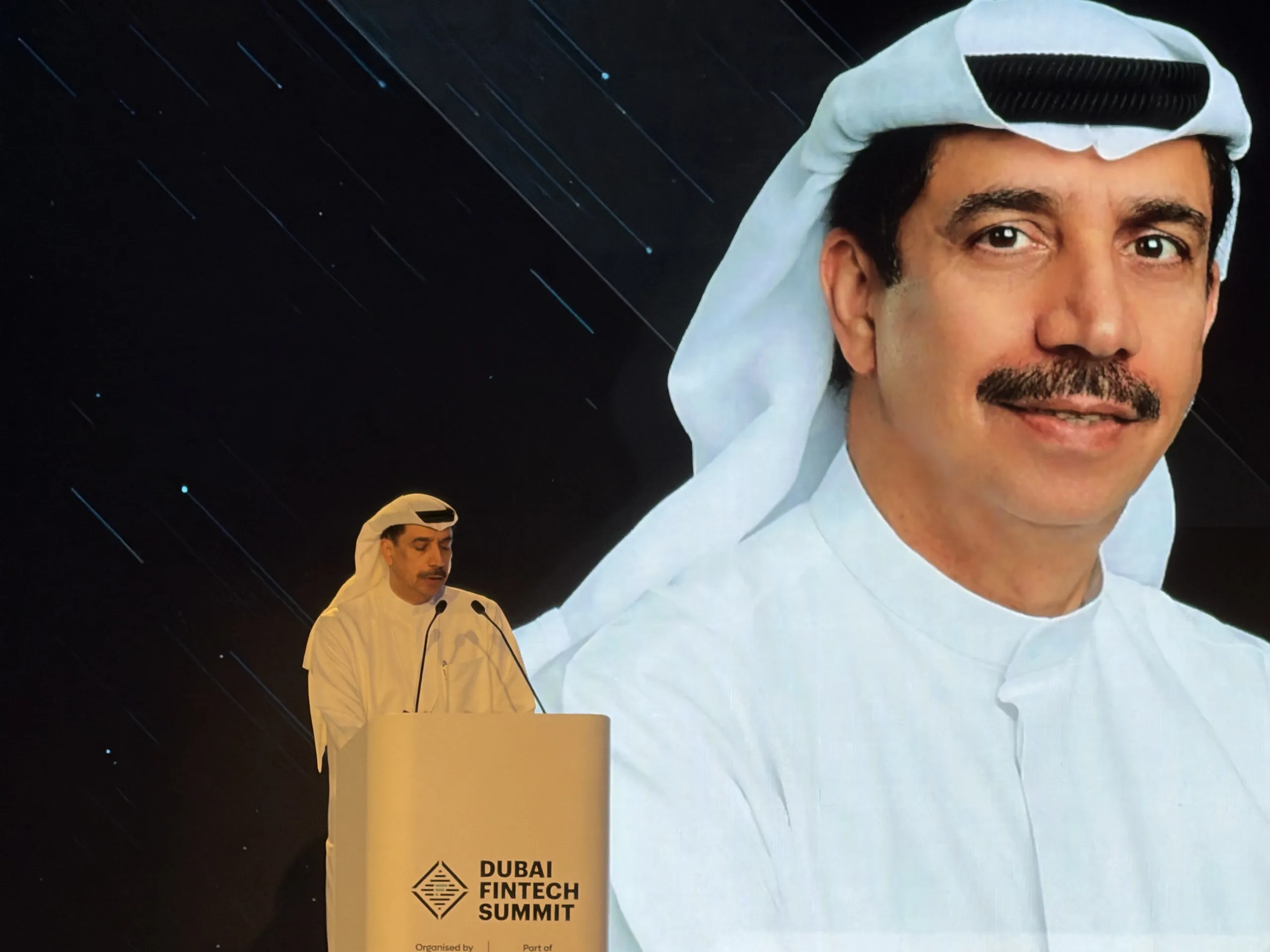
Dubai International Financial Centre (DIFC) recorded an all-time high of more than 2,200 new active companies in the first nine months of 2026, representing a 26 per cent increase from a year earlier, Essa Kazim, Governor of DIFC, said at the Dubai FinTech Summit 2026.
“This momentum was clearly visible in our ecosystem. In the first nine months of 2026, we reported an all-time high of over 2,200 active new companies, 26 per cent more than a year earlier,” Kazim said.
He said the companies were contributing to Dubai’s economy through employment, office occupancy and transactions conducted from the emirate.
“These companies employ people, occupy offices and execute transactions from Dubai,” he said.
Kazim also revealed that DIFC’s AI, FinTech and innovation community had recorded net growth of nearly 500 companies over the past 12 months.
“Our AI, FinTech and innovation community achieved net growth of close to 500 companies over the past 12 months, strengthening Dubai’s economy and helping shape the future of finance,” he said.
Dubai becomes one of world’s top 10 financial centres
Reflecting on Dubai’s development as a financial centre, Kazim said the emirate had taken a different route from centres whose financial industries had developed over centuries.
“DIFC’s rise as a financial centre is one of Dubai’s remarkable economic diversification achievements. Many leading financial centres have histories stretching back centuries. Dubai took a different path,” he said.
He attributed the emirate’s development to the vision of His Highness Sheikh Mohammed bin Rashid Al Maktoum, Vice-President and Prime Minister of the UAE and Ruler of Dubai.
“Guided by the vision of His Highness Sheikh Mohammed bin Rashid Al Maktoum, the emirate set out to establish a world-class financial centre, supporting its global economy and connecting the Middle East, Africa and South Asia,” Kazim said.
“In little more than two decades, Dubai has become a top 10 financial centre, showing what ambition and decisive action can achieve.”
Kazim said the ability to respond to changes in financial services would determine which centres lead the industry.
“Future leadership will belong to centres that understand change, provide enabling laws and regulations, invest in infrastructure, connect institutions with capital and technology, and attract talent,” he said.
“Dubai and DIFC have been building these capabilities with purpose.”
AI, tokenisation and digital assets changing financial services
Kazim said the finance industry was undergoing changes driven by artificial intelligence, tokenisation, digital assets, sustainable finance and methods of capital formation.
“We engage with the financial community to anticipate change and enable responsible innovation,” he said.
“As artificial intelligence, tokenisation, digital assets, sustainable finance and new methods of capital formation transform the industry, future financial centres will not simply accommodate these changes; they will lead them.”
He said these technologies were changing how financial institutions operate, how assets are traded and how capital reaches businesses and investors.
“Technology is fundamentally reshaping the architecture of financial services,” he said.
“Artificial intelligence is transforming how institutions make decisions, manage risk and serve their clients. Tokenisation is redefining how assets are issued, traded and accessed, while digital infrastructure is enabling financial transactions to become faster, more efficient and increasingly borderless.”
Kazim said the impact extended beyond operational processes to the business models used across the finance sector.
“These developments are not simply improving existing processes. They are changing the economics of financial services, creating new business models and expanding access to capital,” he said.
He added that the transformation was already taking place across DIFC, with companies introducing technology into financial services.
“Our ambition is not simply to keep pace with technological change, but to help shape how it is applied across the financial services industry,” Kazim said.
DIFC Academy to expand tenfold and support 50,000 learners
Kazim also announced plans to expand DIFC Academy tenfold in the new DIFC district, which is scheduled to begin opening in 2030.
The academy will support 50,000 learners across finance and sectors linked to technologies and industries of the future.
“Financial centres also depend on people whose skills and ambition correspond to change. That is why we are expanding the DIFC Academy tenfold in the new DIFC district that will start opening in 2030,” he said.
“The academy will support 50,000 learners in finance and other future-focused industries.”
He said the academy would connect education providers, financial institutions, researchers and innovators to help companies access talent and prepare people for roles within the finance industry.
“It will bring education, industry, research and innovation together. This will help institutions access talent and prepare the next generation to lead,” Kazim said.
He emphasised that while technology would change the structure of financial services, people would remain central to determining how it is adopted.
“The future of finance will not be determined by technology alone, but by people who understand how to apply it with purpose,” he said.
Dubai Future Finance Week to strengthen cooperation across markets
Kazim said Dubai Future Finance Week would support cooperation between governments, financial institutions, technology companies and investors across regions.
“Dubai Future Finance Week is an important part of this agenda,” he said.
“The future of finance will be created through cooperation between government and industry, established institutions and innovators, and markets across regions.”
He said Dubai’s ability to connect financial institutions, investors and businesses had contributed to the development of DIFC as a centre for finance and technology.
“Dubai has always succeeded in connecting people, capital and opportunity,” Kazim said.
“DIFC has translated that strength into a financial ecosystem founded on trust and built for the future.”
Closing his address, Kazim said DIFC would continue developing its infrastructure, regulatory environment and talent base as technology changes the finance industry.
“Our progress is significant. Our ambition reaches further,” he concluded, adding “the next era of finance is being shaped now. And Dubai is ready.”