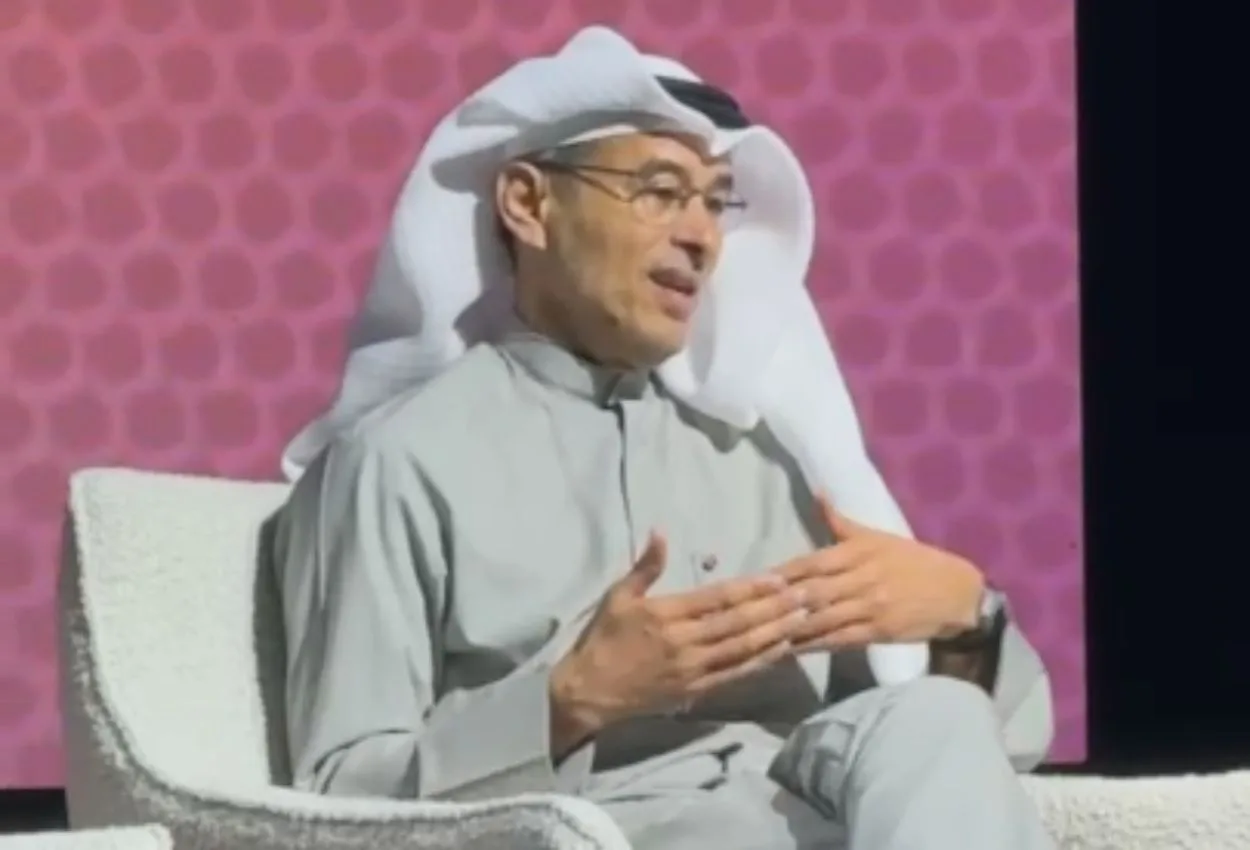
In one of the most transparent and candid sessions at the Make it in the Emirates 2026 forum, business tycoon Mohamed Alabbar provided what serves as a “field guide” for managing companies and navigating economic storms.
He drew on harsh lessons learned since the 1997 crisis, a time when banks suddenly recalled loans, contracts were abruptly cancelled, and goods piled up without buyers.
Alabbar emphasised that institutions failing to learn from these shocks face a real problem, noting that such experiences build human capital capable of preparing an organisation for the future.
How past economic crises shaped Alabbar’s business philosophy
Born from these crises, Emaar adopted a fierce and aggressive growth philosophy, which he simply summarised as: “Take the money… show no mercy.”
He explained that the company targets accelerated growth, sometimes leaping by 40 per cent to 70 per cent, but this aggressive approach is balanced with extreme caution under a management system he terms being “positively paranoid.”
Explaining this system, Alabbar stated that the desire for rapid growth and taking money from the table must be coupled with strict control over processes.
This includes managing costs, leveraging technology, and monitoring risks and market dynamics on a “day-by-day” basis. Most importantly, it requires securing financial “safety doors” to ensure a balance between receiving payments from clients and settling obligations with contractors.
To prove the effectiveness of this system and the resilience of the UAE market, Alabbar revealed Emaar’s numbers during the 2008-2009 global financial crisis.
At that time, the company was managing around 100 non-stop construction sites with 40,000 customers paying monthly installments for off-plan apartments and villas.
The normal average for two-month payment delay requests was 1,000 customers. The surprise was that at the peak of the global crisis “tsunami,” this number only rose to 1,200 customers, before eventually dropping to 700. Alabbar considered this definitive proof of the UAE economy’s robustness and the high level of trust it commands, stressing the absolute necessity for leaders to monitor their data daily.
In a candid statement that resonated with startup founders and family business owners, Alabbar stripped away any executive pretenses, admitting that his personal IQ is merely “average.” However, he quickly added that his hard work is what elevates his intelligence to be among the highest.
Alabbar broke down his definition of “hard work”: closely monitoring operations, meticulously studying every opportunity, taking calculated risks in the right places, hiring top talent, and constantly pressuring them to deliver results.
“Push, push, push. The harder you work, the luckier you get,” he concluded.