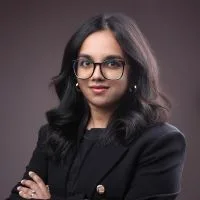
Canva is aiming to open its regional headquarters in Dubai before the end of 2026, Ahmad Iqbal, General Manager for Middle East, North Africa, Pakistan (MENAP) at Canva, told Lana in an exclusive interview.
“The goal is this year,” he said, adding that a location for the headquarters had yet to be finalised and discussions were still in the “early days.”
Iqbal’s comments came after the announcement that the company would establish a regional headquarters in Dubai, following an agreement signed between Dubai Chamber of Digital Economy and Canva during the World Governments Summit 2026.
The deal, which supports the UAE’s national objectives for digital transformation and artificial intelligence, also commits the platform to supporting 250,000 small and medium-sized enterprises and individuals over the next five years.
The five-year partnership will give SMBs access to Canva’s design and productivity tools alongside training and upskilling programmes.
“This is going to include some licences, training, and upskilling programmes to really enable the SMB sector here,” Iqbal said. “I hope that we can scale beyond just Dubai, but for the whole region.”
Canva Dubai is hiring for 10 key roles as part of its founding core team
On the structure of the Dubai team, Iqbal said the company was starting lean. “Our policy is to act like a startup,” he said. “We’re hiring right now – I’m looking at about double the team, so maybe about 10 people to get the core team in place, and then from there we’ll grow.”
Roles being recruited for include a localisation lead, content lead, marketing lead, SEO lead, partnerships lead, education lead and community lead.
He also confirmed the company had recently decided to bring on an enterprise account executive. “Only recently, we decided maybe we should hire somebody on the enterprise side to help service those inbound requests,” he said.
On whether the Dubai office would be the only base in the UAE, Iqbal said conversations with other emirates were ongoing but no decisions had been made.
“We’ve had interest from other emirates as well to host us, and we’re very excited to have those conversations, but right now we don’t have any definitive plans,” he said.
Why the UAE is among Canva’s fastest-growing AI market
The expansion reflects what Canva’s own data shows about the UAE market. Iqbal told Lana that Canva AI is adopted in the UAE at twice the rate it is globally – a figure he said surprised him. ”That was a bit shocking to me when I first saw that number,” he said.
“However, it became quite clear to me – it is a mix of a few things. Firstly, there is a friendly government policy for AI adoption. The same week in which the Italian Parliament had banned AI, the UAE government was mandating its use at the government level,” he said.
The second reason, Iqbal said, is the presence of a young population – with approximately 60 per cent under the age of 30. A strong digital infrastructure is also among one of the factors, he added.
“People here don’t need to be convinced that AI is the future. They just want to know how to use it,” he said, adding the accessibility of Canva’s tools are also advantageous. “We are seeing them come in, try it, and actually like it.”
That enthusiasm, however, is not uniform across the region. Iqbal identified Arabic language complexity and right-to-left rendering as product gaps the company was working through.
“We feel very confident that we’re going to have a very solid right to left experience sometime this year,” he said, adding that price sensitivity was also a separate challenge. “What works in the UAE and what works in the GCC doesn’t necessarily work for Egyptian or Pakistani users,” he said.
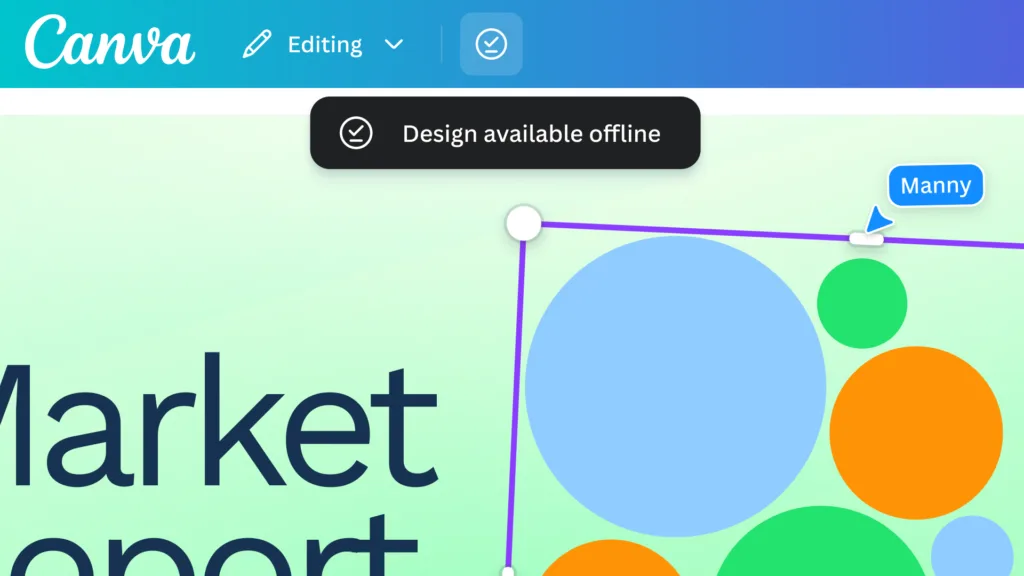
Connectivity, he said, was a third variable and one that had prompted the recent launch of Canva Offline. “We can’t just assume desktop first experiences,” he said. “We have to assume mobile first experiences – we are working through them.”
Canva’s regional expansion strategy spans several work streams, including content, localisation, product, marketing, community and SEO, though Iqbal said it was the first three that the company invested in most heavily in their regional expansion.
Inside Canva’s localisation strategy for the region
On localisation, Iqbal said the company was working across content, language and product.
This includes partnerships with local photographers, illustrators and musicians to bring regional content into the platform, as well as integrations with local payment gateways and an open invitation to regional developers to build into Canva’s app marketplace.
“It is about making Canva feel that it can speak their language – we’re not just translating to them,” he said. “We’re actually speaking with them.”
On the product side, Iqbal said through integrations with local payment gateways and integrations with local app developers, “we have a very robust ecosystem and app marketplace where people can make third party apps. We want local developers to be building into our ecosystem as well. So these are what we do as part of our local product offering, and once we get this in place, is then where we kind of scale out the growth in our marketing efforts.”
However, when asked what sets Canva apart from the competition, Iqbal said the platform did not see itself in a race with any single rival.
“We don’t believe there’s anyone else that has consolidated this whole ecosystem to one easy to use tool,” he said. “We just think about it from our users’ perspective – what is going to make it easier for someone to go from an idea into a finished product.”
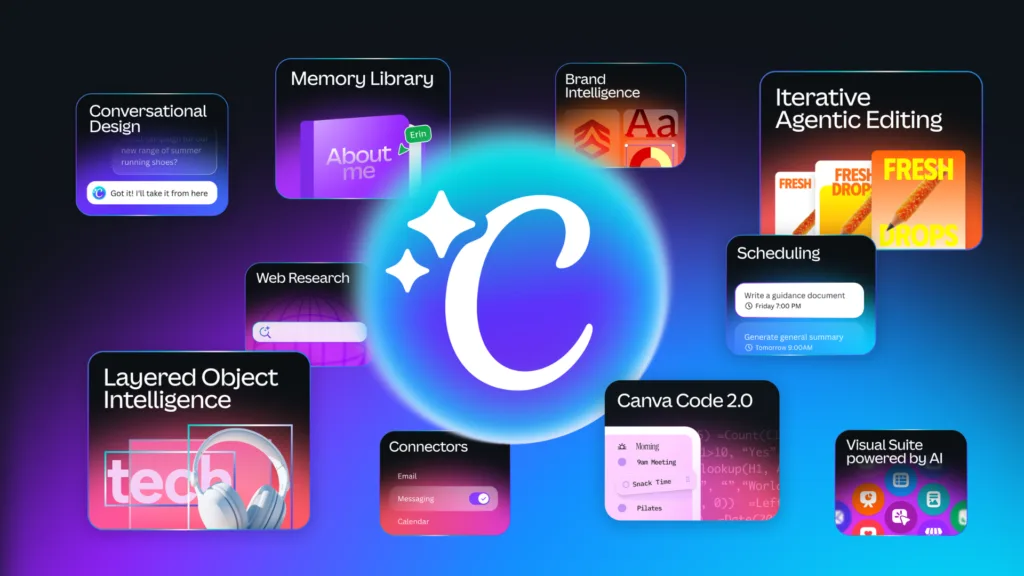
Iqbal described Canva AI 2.0, unveiled at the company’s Canva Create event, as the most significant product moment for the company. The tool allows a user to describe an idea and receive a fully editable design in return.
“It’s not just a product update. It’s really a shift in how Canva operates,” he concluded.