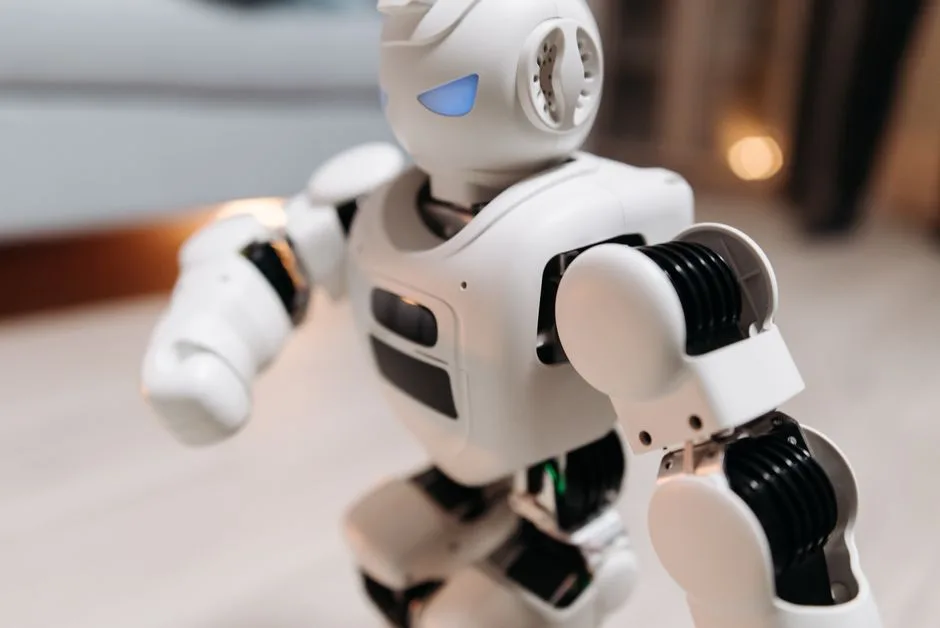
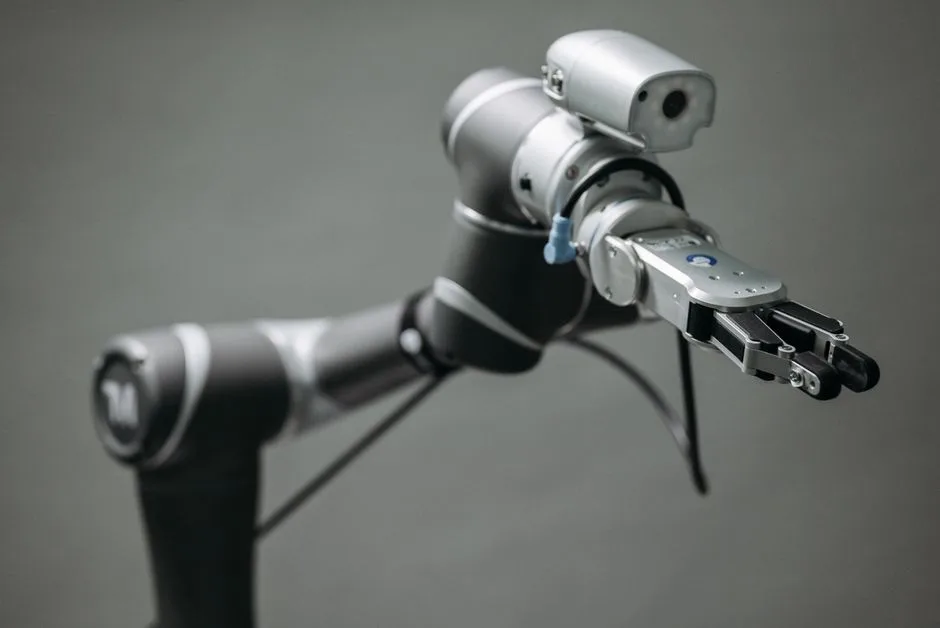
Walking and carrying loads are solved problems for a growing number of humanoid robots. Picking up a coin, pouring tea without spilling, or closing a jacket zip without tearing it — that remains genuinely hard. Norwegian company 1X Technologies is making a direct attempt at that problem with the hand it has built for its NEO home robot.
The hand uses artificial tendons to transfer force from motors to fingers, a design that echoes the mechanics of a human hand. According to 1X, the result is 22 degrees of freedom across the fingers and palm, plus 3 in the wrist, for 25 independently controllable movements in total. That range allows the hand to approach objects from different angles and adjust grip mid-task rather than simply opening and closing.
The tendon approach is a deliberate choice to reduce rigid mechanisms inside the joints. When an external object pushes against a finger, the joint yields rather than resisting, and the system measures the force involved. That responsiveness matters in a home environment, where the same hand needs to handle a wine glass and a heavy pot — objects that require very different grip forces. Tactile sensors in the fingers measure pressure, contact location, and lateral force, and 1X says the system can detect the beginning of a slip and tighten its grip before an object drops.
Company demonstrations have shown the hand picking up screws and small coins, using a screwdriver, fitting a lightbulb, working with Lego bricks, and inserting a USB-C connector. The published specifications put positional accuracy at plus or minus 0.2 millimetres, fingertip bending force at 45 Newtons, thumb base joint torque at 3.5 Newton-metres, some finger joint torques at 2.6 Newton-metres, and wrist torque at 17.75 Newton-metres.
The hand carries an IP68 rating for dust and water resistance, and 1X says the external materials are food-safe, which allows the robot to work near sinks or handle food directly. On durability, the company reports that some components have completed millions of movement cycles, with certain wrist joints exceeding two million cycles under high loads.
The hand is part of the full NEO robot rather than a standalone product. NEO stands 168 centimetres tall, weighs around 30 kilograms, and runs for approximately four hours on a charge. Early access pricing is set at $20,000 to own outright, with a refundable $200 deposit to reserve a unit, or $499 per month on a subscription. 1X says it has already produced hundreds of hands and is targeting production capacity of 10,000 units by 2026.