
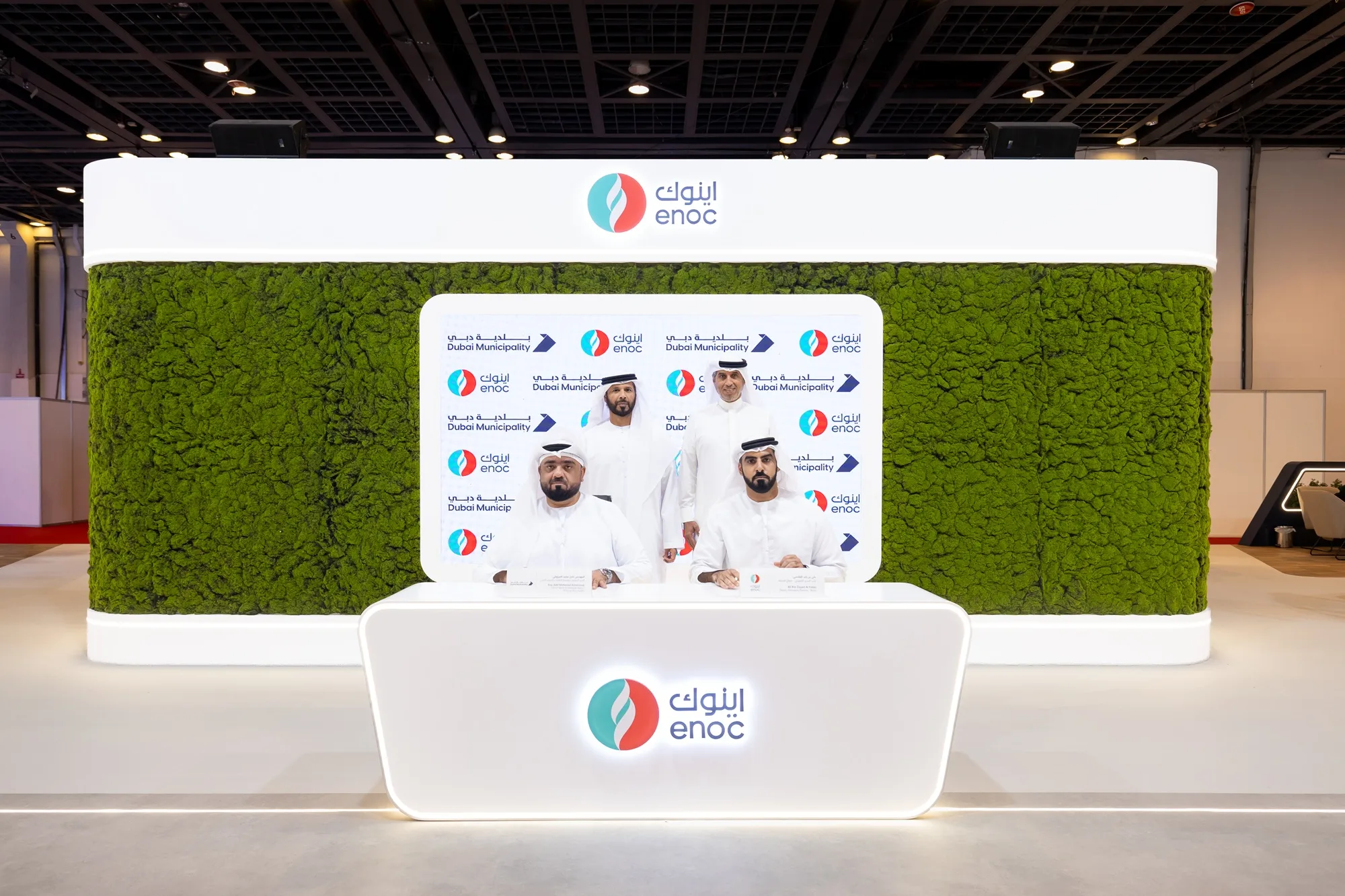
ENOC Group and Dubai Municipality have signed an agreement to explore building a citywide collection system for used cooking oil, with the aim of converting it into biodiesel at ENOC’s Jebel Ali production facility.
The deal was signed at WETEX 2026 by Ali Khalid bin Zayed Al Falasi, Deputy Managing Director of Commercial and Retail at ENOC Group, and Eng. Adel Mohammed Al Marzouqi, CEO of the Waste and Sewerage Agency at Dubai Municipality. It was witnessed by Eng. Marwan Ahmed bin Ghalita, Director General of Dubai Municipality, and Hussain Sultan Lootah, Group CEO of ENOC Group.
Under the partnership, the two organisations will develop a collection network drawing from restaurants, businesses and households across the emirate.
Dubai Municipality will coordinate recovery and oversight to prevent improper disposal, while ENOC will handle production and supply. The biodiesel produced at Jebel Ali would serve customers in transport, logistics and construction – sectors ENOC has been supplying with its Biodiesel5 product since launching it in the UAE in 2017.
“Meeting the UAE’s future energy needs requires us to expand access to cleaner fuels and make better use of the resources already available to us. Turning waste into fuel can help address both priorities, strengthening local production capabilities while supporting the transition to a lower-carbon economy. By combining Dubai Municipality’s waste management expertise with ENOC’s fuel production capabilities, we aim to create a practical link between the recovery of used cooking oil and the supply of alternative fuels. This partnership reflects our commitment to developing energy solutions that support Dubai’s sustainability priorities and the UAE’s long-term economic and environmental ambitions,” Ali Khalid bin Zayed Al Falasi, Deputy Managing Director of Commercial and Retail, at ENOC Group said in a statement.
“Our partnership with ENOC represents an important step in strengthening integrated waste management and advancing circular economy practices by transforming waste into valuable resources. Through this collaboration, we aim to maximise resource recovery, reduce waste and support the long-term sustainability of the energy sector.” He added: “Converting used cooking oil into lower-carbon biofuel demonstrates how innovative solutions can support the development of sustainable energy alternatives while reducing the environmental impact of waste. This initiative contributes to Dubai’s clean energy transition and our broader efforts to establish a more efficient and sustainable resource management system that protects the environment, enhances quality of life and advances the circular economy,” Eng. Adel Mohammed Al Marzouqi, CEO of the Waste and Sewerage Agency at Dubai Municipality added.
The partnership is structured to align with the UAE Circular Economy Policy 2031. By creating a local pathway from kitchen waste to usable fuel, both parties say it is designed to retain value within the economy rather than exporting or discarding a resource that already exists in volume across the city.