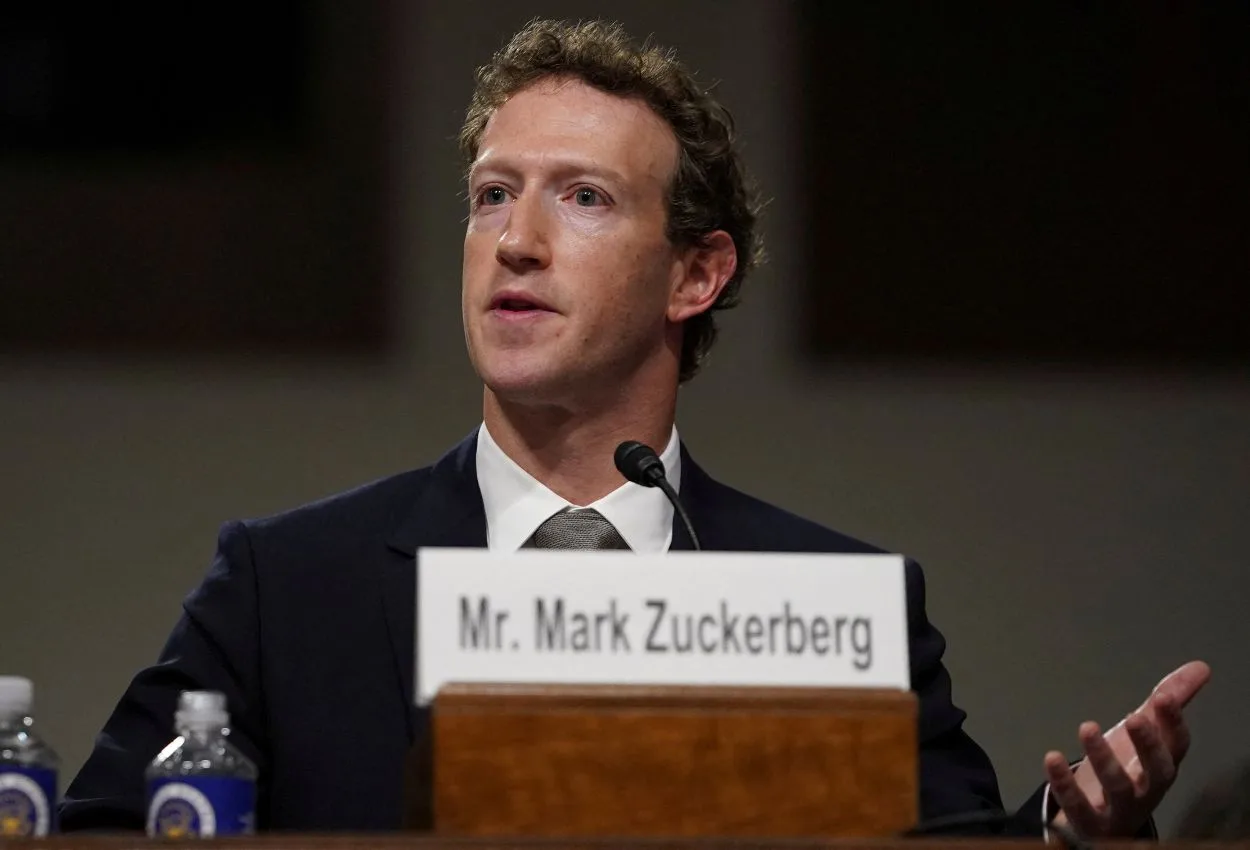
Meta is building an AI version of Mark Zuckerberg that can field questions from the company’s 79,000 employees, according to reports.
The AI clone of Meta’s founder and chief executive is being trained on his mannerisms and tone, as well as his statements and thoughts on company strategy.
The aim, according to the report by Financial Times, is to make employees feel more connected to one of the most powerful figures in Silicon Valley.
Mark Zuckerberg training AI version of himself for Meta staff
The 41-year-old executive, whose wealth is estimated at more than $220bn (£164bn), is reportedly taking part in the training process for his AI. A person with knowledge of the project told the FT that the AI character would be developed using images and the voice of Zuckerberg.
Zuckerberg has a history of experimenting with versions of himself in the company’s products. In 2022, he shared his own avatar inside the metaverse, which was mocked for the quality of its graphics. He later posted an upgraded version. Meta has since scaled back its metaverse vision, in which avatars could interact with other users.
The company has instead been developing AI-generated 3D characters that can engage with humans in conversation. It has recently started focusing on building a character based on Zuckerberg.
Until the AI launches, Zuckerberg will have to present in person at meetings with thousands of Meta staff, such as the one he held in 2023 two days after announcing that 10,000 employees would be laid off. At that session, staff described as “rattled” questioned him about job security and the future of remote working.
The Wall Street Journal has reported that Zuckerberg could be helped to prepare for such sessions by a “CEO agent”, an AI system being developed at Meta that is already helping him to get company information faster.
Zuckerberg is driving Meta to use AI more across the business, in the expectation that it will lower costs and accelerate work.
Through integrating AI, the company, which also owns WhatsApp, aims to minimise its structure and increase efficiency. Zuckerberg has said this is key to “get more done”.
“We’re elevating individual contributors and flattening teams,” he said in January.
The moves form part of a company-wide effort to invest in AI to remain competitive with rivals that are also pouring billions into the technology.
Zuckerberg is presiding over a multibillion-dollar investment in AI in an attempt to create “superintelligence”, the term for a system that can perform any task far better than a human.