Travellers considering the Middle East skew heavily towards luxury, while UAE and Saudi residents heading abroad are driven more by cultural curiosity than any other motivation.
That is the central finding of the ATM Travel Trends Report 2026, produced in association with Tourism Economics, an Oxford Economics company.
“Interest in cultural travel reveals important differences between audiences. For prospective visitors to the Middle East, cultural connection sits alongside a strong interest in premium experiences. For UAE and Saudi travellers travelling abroad, the research highlights curiosity and a willingness to discover local customs. For destinations, hotels and tour operators, these findings highlight an opportunity to make local experiences a more visible and accessible part of the travel offer. That means connecting accommodation with locally hosted activities and helping travellers discover experiences during their stay. At ATM 2027, an important part of the discussion will be how businesses can work together to develop these products and make them easier for travellers to find and book,” Danielle Curtis, Regional Portfolio Director – UAE, RX Global said in a statement.
The luxury gap between Middle East-bound travellers and the global average is wide. Among those planning a visit to the region, 77 per cent list luxury as a booking priority, compared with 51 per cent of travellers considering other destinations. Cultural access matters alongside the premium offer: meeting local people and hosted experiences are identified as key draws for this audience.
Events data points in the same direction. Among Middle East visitors who travel for events, 55 per cent cite cultural events as a motivation, against 42 per cent for those visiting other regions. Religious events also feature more prominently, at 22 per cent versus 13 per cent.
Separate research from Skift’s State of Travel 2026, cited in the report, found that 42 per cent of MENA travellers are classified as cultural immersion travellers. The pattern held globally, with 50 per cent of Asia-based travellers, 39 per cent in North America, and 36 per cent in Europe falling into the same category, suggesting cultural travel is a broad preference rather than a regional one.
For outbound Gulf travellers, the data points to a distinctive openness to the unfamiliar. Drawing on Hilton’s 2026 research, the report found that around 66 per cent of UAE and Saudi travellers attempt to learn some of the local language before a trip, the highest proportion across the 14 markets Hilton surveyed. Around 70 per cent also seek out local customs they had not researched in advance, suggesting that spontaneous discovery is as much a preference as planned cultural engagement.
That curiosity shapes how UAE travellers book accommodation too. Hilton’s research found that 81 per cent of UAE travellers book multiple hotels within a single destination. The motivations include exploring different neighbourhoods (52 per cent) and mixing budget and luxury stays (46 per cent).
The report also profiles visitors to South Asia as a distinct segment, with food and family connections as the primary drivers. This group is characterised as younger and more flexible in its itinerary planning, with culinary trails and multi-generational products identified as commercial opportunities.
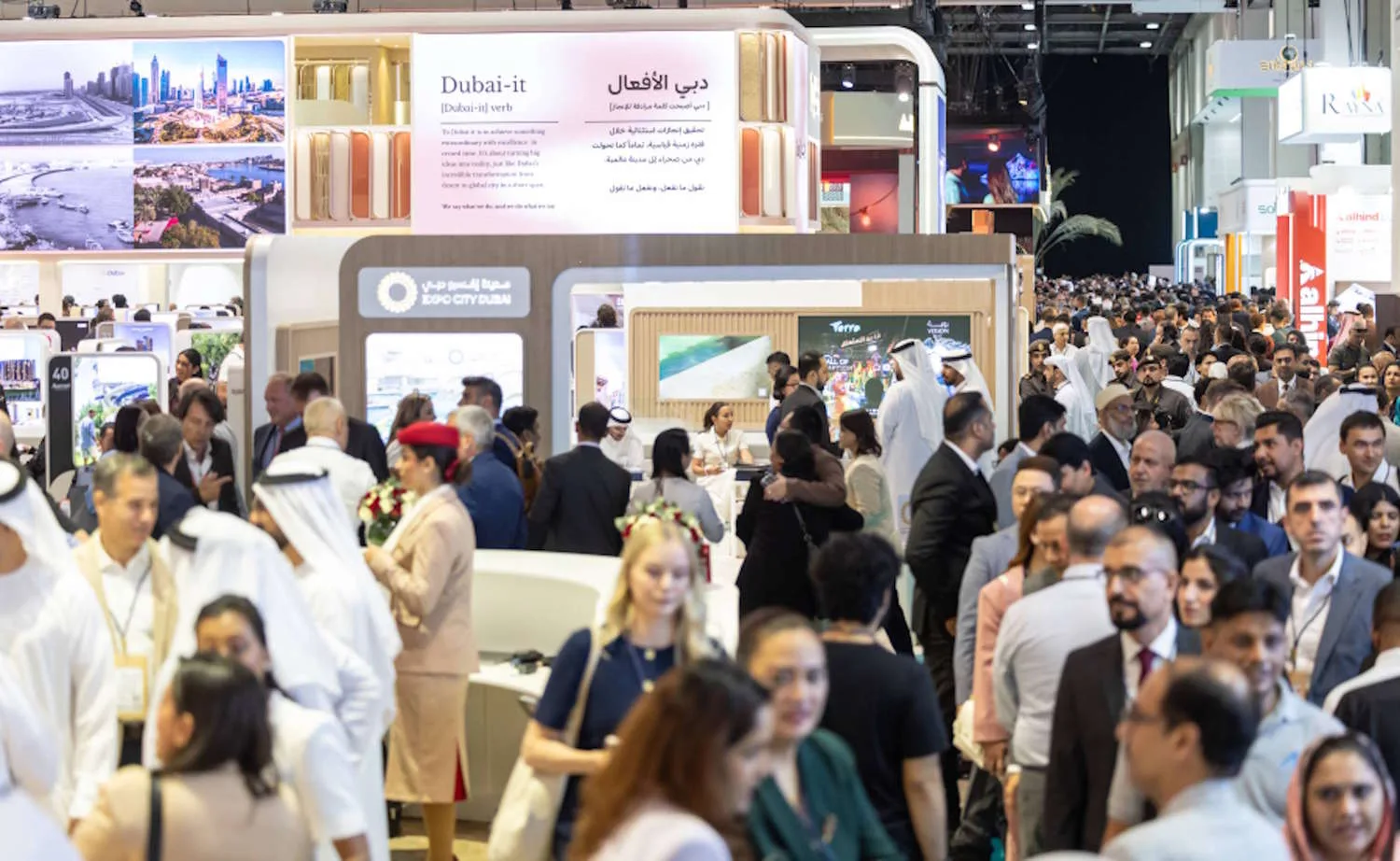
The findings are intended to frame discussions at Arabian Travel Market 2027, taking place from 3 to 6 May at Dubai World Trade Centre under the theme Travel without boundaries: Shaping global travel through experience.