Global financial wealth climbed 10.7% to $333 trillion in 2025, the fastest growth rate since 2021, according to the 26th edition of Boston Consulting Group’s Global Wealth Report. When real assets are included, the total reaches $550 trillion.
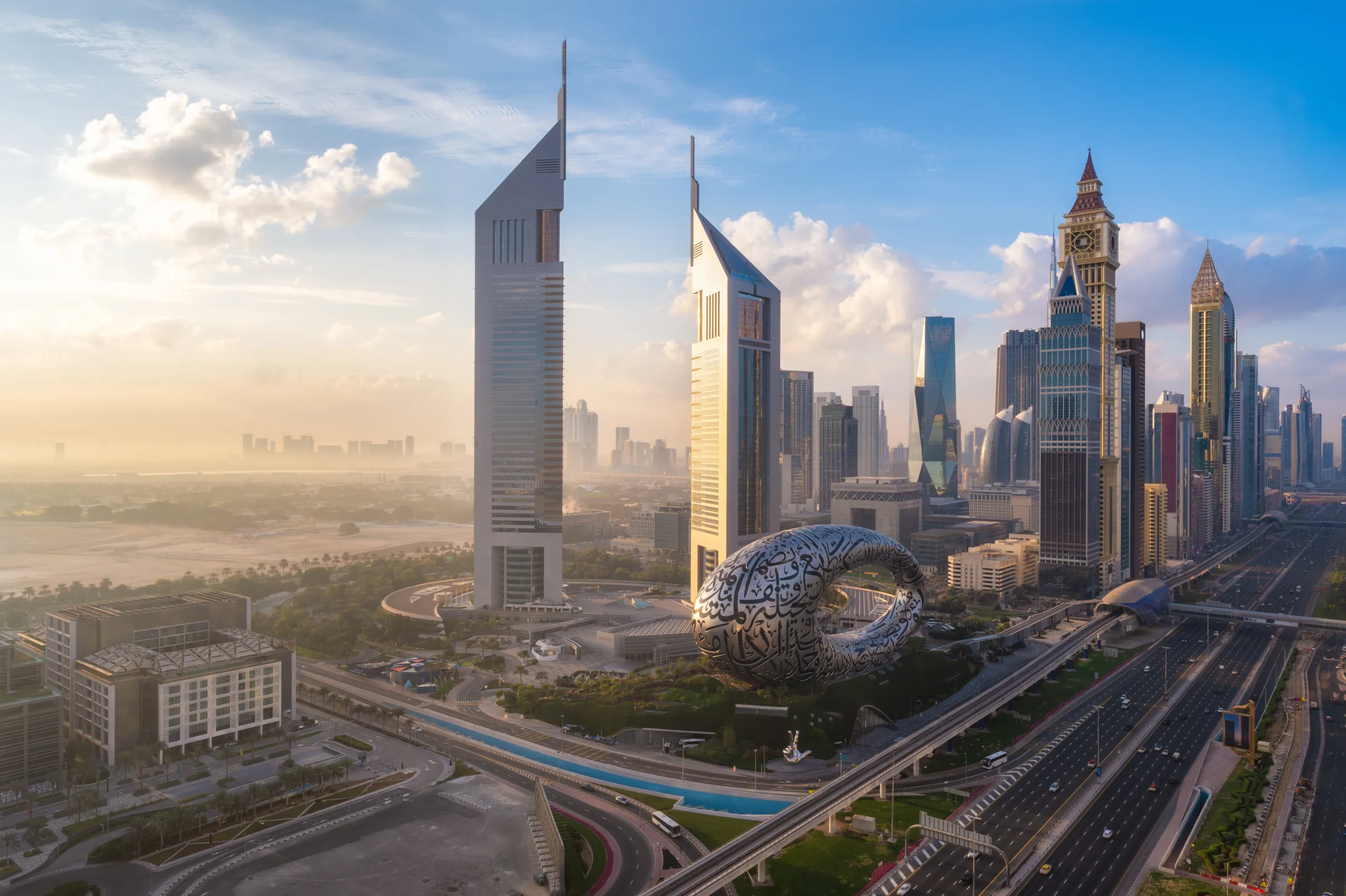
Within that shift, the UAE has positioned itself near the top of the rankings. Cross-border wealth deposited in the country rose 11.1% last year to $721 billion, placing it seventh among the world’s leading offshore wealth centres and ahead of more established hubs including Luxembourg, the Cayman Islands, and the Bahamas in growth rate terms.
BCG attributes the performance to the rapid build-out of financial infrastructure in the Dubai International Financial Centre and Abu Dhabi Global Market, continued inflows from high-net-worth individuals relocating from high-tension regions, and a regulatory environment the report describes as among the most open and flexible globally.
The report identifies a structural advantage underpinning all of this. Global wealth flows, it argues, organise around two networks: one centred on Hong Kong and Singapore, drawing capital from China, India, and Southeast Asia; another centred on Switzerland, the United States, and the United Kingdom, attracting European, Latin American, and Middle Eastern money. The UAE sits at the boundary of both, giving it what BCG calls a “structural advantage” that amplifies its capacity to absorb international capital flows.
Under a baseline scenario of relative stability in the second half of 2025, the report projects cross-border wealth held in the UAE will exceed $900 billion by 2030, growing at roughly 6% annually.
The top ten offshore centres together captured around 90% of new cross-border flows in 2025. Hong Kong led with $2.9 trillion under management and 10.7% growth, matched in absolute size by Switzerland at $2.9 trillion though growing more modestly at 7.6%. Singapore ranked third at $2.1 trillion with 10.3% growth. The UAE’s seventh-place ranking reflects a higher growth rate than most of the centres above it in the table.
Across the broader Middle East and Africa region, nominal wealth grew 12.3% to $9.2 trillion, driven by accelerating economic diversification across the Gulf and rising investment activity. BCG projects the region will sustain a compound annual growth rate of 7% over the next five years.
The report also flags the UAE, alongside India and Singapore, as one of the fastest-growing markets for independent wealth managers. Assets managed by independent firms operating under the Dubai Financial Services Authority and ADGM oversight are estimated at between $100 billion and $150 billion, growing at 6% to 12% annually. These firms primarily serve clients with a minimum wealth threshold of $250,000, a segment BCG sees expanding rapidly as emerging markets add wealth.
On the technology side, the report notes that a single AI-powered tax planning announcement by a US fintech startup wiped more than $140 billion from the market capitalisation of several major wealth management firms. BCG estimates full AI adoption could add 25% to 30% in planning and portfolio management capacity, while improving client retention rates enough to lift returns by 15% to 20%.
Gold was the standout asset class of 2025, rising roughly 44%, driven by central bank buying as institutions sought alternatives to traditional reserve currencies amid geopolitical uncertainty.