
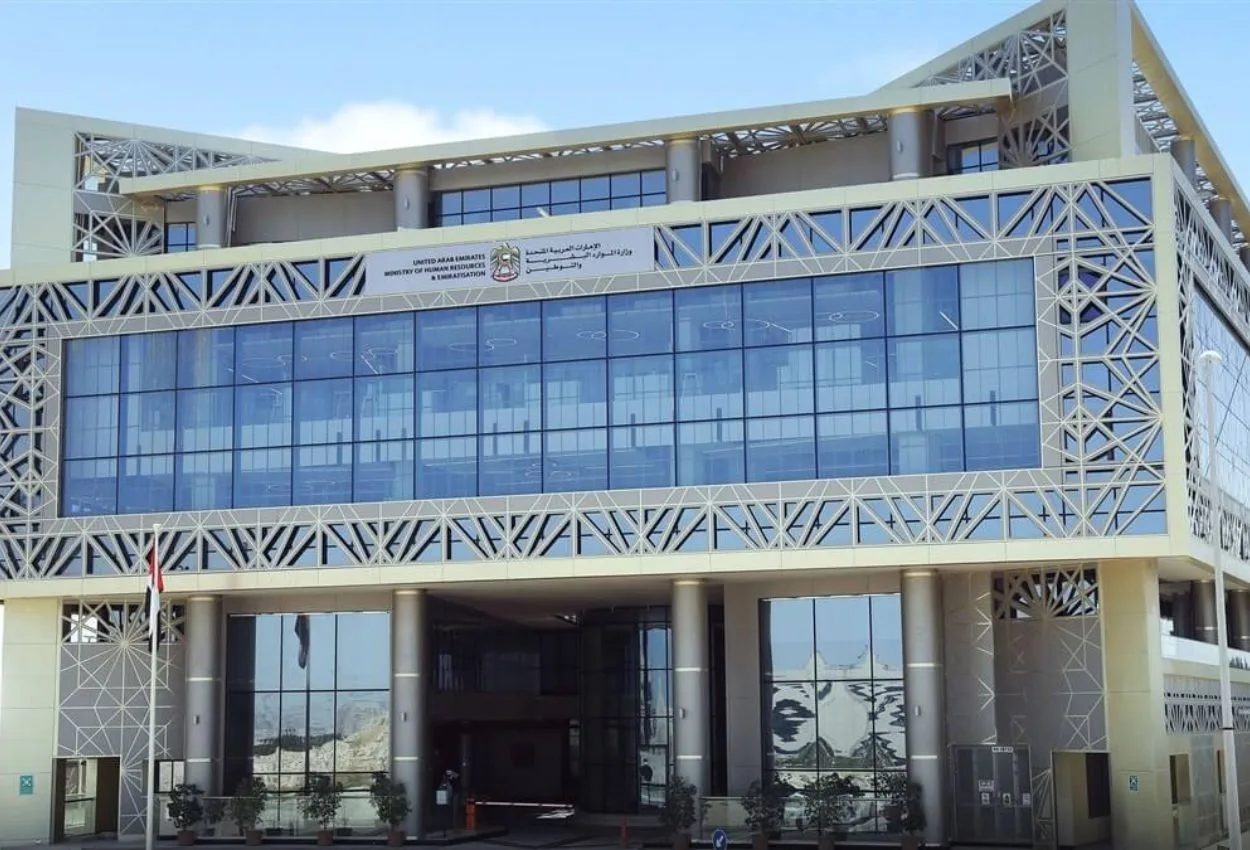
The Ministry of Human Resources and Emiratisation has said that the UAE labour market remains stable and that business operations continue without disruption amid regional developments.
The Ministry issued a statement confirming that private sector establishments continue to pay workers’ wages on time through the Wage Protection System, which covers approximately 99 per cent of private sector workers.
MoHRE said the WPS data, monitored in collaboration with the UAE Central Bank, showed that compliance rates “have not recorded any notable change in light of the current developments.”
MoHRE: UAE private sector wages paid on time despite regional tensions
The findings, according to the Ministry, “reflect the notable level of compliance among establishments in various economic sectors with their legal obligations.”
MoHRE data showed that 2.3 million customer transactions were completed in March, bringing the total for the first quarter of 2026 to around 7 million. The Ministry said these figures reflect “uninterrupted continuity of operations.”
The Ministry’s Call Centre processed more than 4 million interactions during the period, while 1.5 million consultations were provided in 22 languages through its legal consultation centres.
The Ministry stated that regional developments have not affected job stability in the private sector. It noted that legislation in force provides flexible work options, including remote work, which enables establishments to adapt to different operating circumstances.
MoHRE said the majority of private sector establishments continue to operate from their usual workplaces. Some companies opted for flexible work arrangements, remote work, or work-from-abroad arrangements “in accordance with the nature of their respective business, thereby ensuring continuity without impacting productivity.”
UAE companies pledge no job losses or salary reductions
A number of UAE companies affirmed their commitment to ensuring no jobs are compromised and salaries are not reduced. They said employee stability remains a priority regardless of challenges.
The Ministry said these results “underline the efficacy of fostering partnerships between the government and private sectors in achieving sustainable development.” It added that the indicators “confirm continued operational performance at high efficiency, with no notable impact on the pace of performance.”
The Ministry said it continues to monitor labour market indicators in coordination with its partners “to ensure sustained performance and enhance market readiness.”
MoHRE commended what it described as the partnership between government and private sectors, which it said contributes to establishing stable and safe work environments, supporting job creation, and enhancing economic growth “in line with the UAE’s future vision.”
The private sector, the Ministry added, continues to perform “supported by a flexible work ecosystem and advanced digital infrastructure, ensuring service continuity, rapid response, and accurate operations, in an environment of transparency, which strengthens investor confidence and reaffirms the resilience of the national economy.”