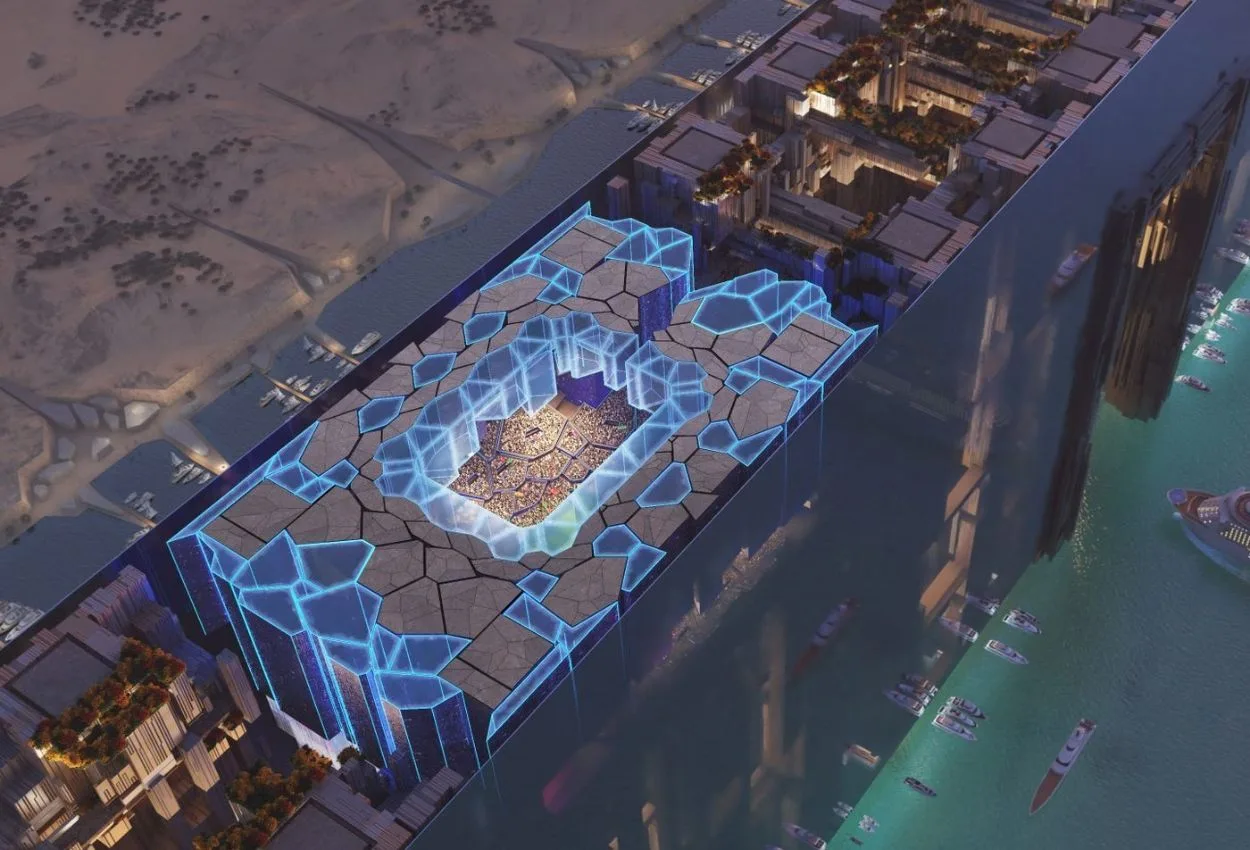
Saudi Arabia has quietly abandoned plans to build the NEOM Stadium, one of the most architecturally striking venues proposed for the 2034 FIFA World Cup, Reuters reported, citing to two sources familiar with the matter.
The arena was designed to sit within The Line, the 160-kilometre steel-and-glass linear city at the heart of the NEOM giga-project. MEED Projects, a Dubai-based construction intelligence platform that tracks regional tenders, had valued the stadium at $2.5 billion and listed it with a projected capacity of 46,000 seats. Its database now marks the project as “on hold”, with no completion date recorded.
According to the report, the shelving follows a broader retreat from The Line itself. In April, Yasir Al-Rumayyan, governor of the Public Investment Fund, which owns NEOM, confirmed the structure was no longer a priority and was not essential before 2030, the original target for its first phase, though he denied any projects had been cancelled outright.
NEOM, the Saudi government media office, and the Ministry of Sports did not respond to questions. The World Cup 2034 Hosting Higher Authority said “substantial delivery” of construction milestones was already underway but did not address the NEOM Stadium specifically.
Saudi Arabia is still working to build or renovate 15 venues across five cities for the tournament, the first time a single nation hosts the expanded 48-team format. MEED puts the total value of those projects at $22.7 billion, the report said, adding other stadiums are progressing: the Aramco Stadium in Al Khobar is due to complete by year-end, with its first match scheduled for January.
The NEOM decision fits a wider pattern. Reuters reported last year that the PIF was shifting focus away from costly giga-projects toward investments with more immediate financial returns. Construction of The Mukaab, a cube-shaped skyscraper planned for Riyadh’s New Murabba development, was suspended in January.
Fiscal conditions have added to the pressure. Saudi Arabia’s Ministry of Finance last week projected a wider-than-expected deficit for the current year and a real GDP contraction of 3.6%, driven by a drop in oil activity. The kingdom is also contending with Houthi attacks on energy infrastructure linked to the broader conflict with Iran.
A third source noted that the geographic spread of the remaining 15 venues across multiple cities makes delivery more complex, and that further delays to host developments could compound the challenge.