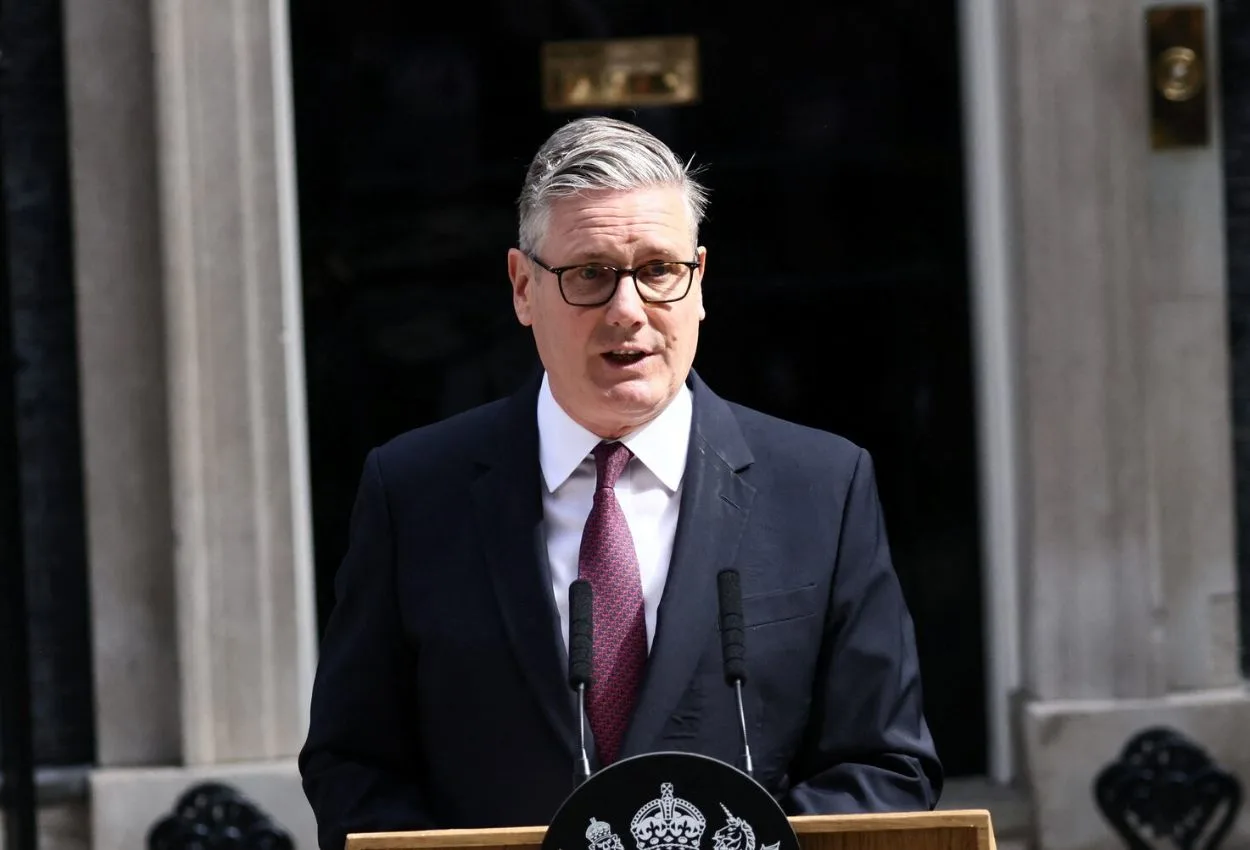
Keir Starmer has resigned as prime minister and leader of the Labour Party, announcing his decision outside 10 Downing Street on Tuesday in a statement that drew on two years in office and six years leading the party.
Starmer framed the moment as an acceptance of his party’s verdict. “The question my party is asking is whether I am best placed to lead it into the next general election,” he said. “I have heard the answer and I accept that answer with good grace.”
Before announcing his resignation, Starmer reflected on the Labour Party he inherited, describing it as “politically, financially and morally bankrupt.” He said he was told repeatedly that the party was finished, and cited the removal of antisemitism from Labour’s culture, alongside what he called a restoration of trust on the economy, defence, and national security, as defining achievements of his leadership.
He said he had spoken to the King earlier in the morning to inform him of his decision. He has asked the Labour Party’s National Executive Committee to open leadership nominations on 9 July, with the process completed before the summer recess, so that a new leader is in place when parliament returns in September. Starmer said he would remain in post as prime minister until then.
He pledged full support to whoever succeeds him, saying his successor would inherit a Britain he believes is stronger and fairer than it was two years ago. He also thanked colleagues, No 10 staff, and the civil service.
Starmer closed his remarks on a personal note, becoming visibly emotional as he spoke about his family. He said that after leaving “the biggest job in the country,” he would focus on “the most important job” — being the best husband he could to his wife Victoria, whom he described as “a rock,” and the best father he could to his children, “my pride and joy.” He embraced his wife before returning inside.