
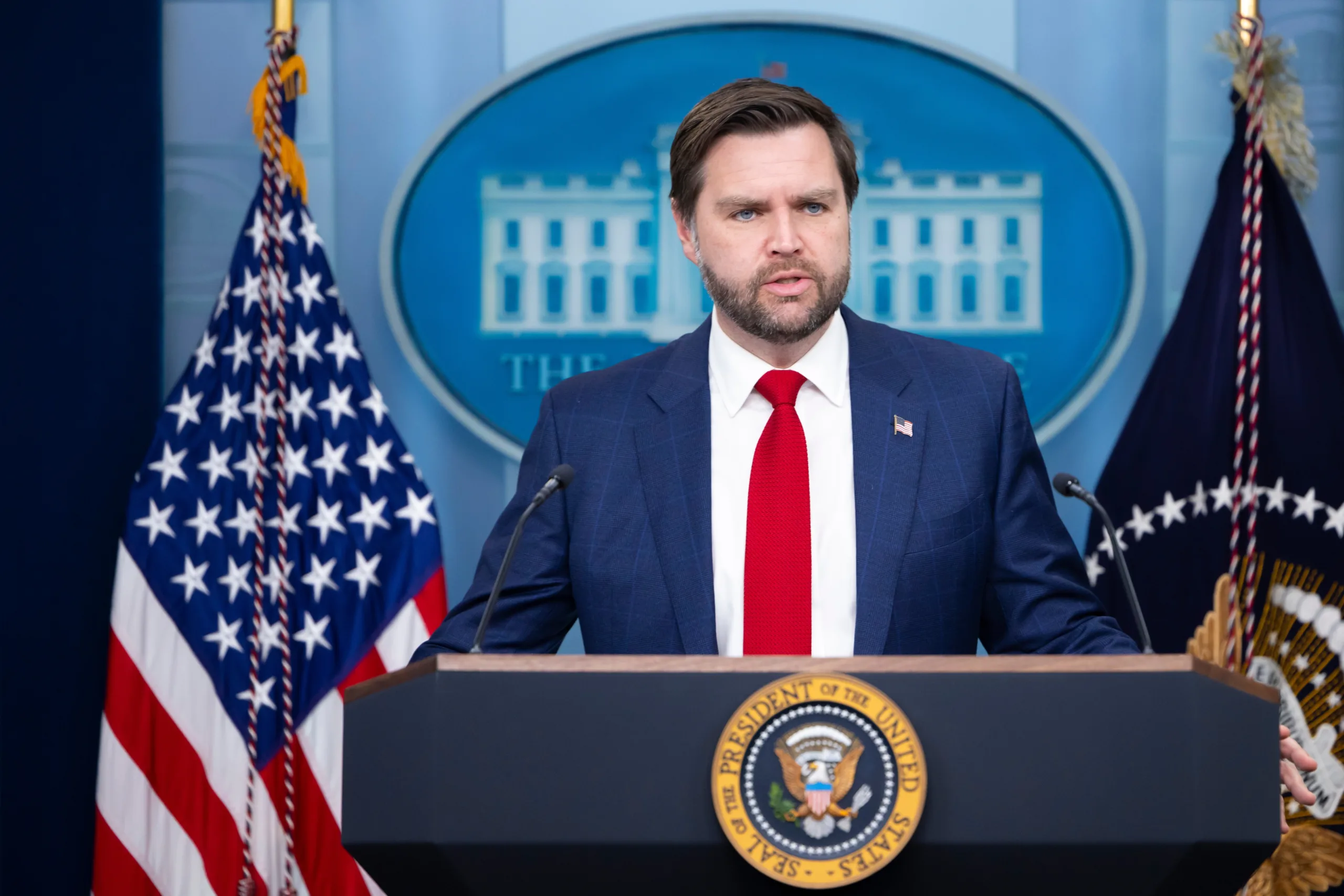
US Vice-President JD Vance has blamed the war in Iran for the Republican Party’s defeat in the midterm elections, signalling a potential shift in his relationship with President Donald Trump as speculation grows over his plans to seek the White House in 2028.
In a 600-word statement posted on X on Wednesday, Vance acknowledged that voters who supported Trump in the 2024 presidential election had turned away from Republicans in the midterms, which saw Democrats gain control of both the House of Representatives and the Senate.
“The reason we lost is the war,” Vance wrote. “The president himself said so last night.”
His comments followed interviews on Tuesday night and Wednesday in which Trump defended the war while acknowledging that it had contributed to Republicans losing control of Congress.
JD Vance breaks silence on Iran war after Republican election losses
Vance has backed the conflict since the United States and Israel launched attacks on Tehran in February. However, reports have indicated that he expressed opposition to the war during meetings with administration officials.
Those disagreements had remained out of public view until Wednesday, when Vance linked the decision to enter the conflict with the party’s losses in Congress.
“If you’d like to argue it was worth it, that losing the Senate for the next 6 years was worth it, then do so. Argue it was a worthwhile cost to pay. Agree or disagree, that’s at least honest,” Vance wrote.
The statement marked a departure from the position he had maintained in public and represented an instance of a sitting vice-president challenging a president over a policy at the centre of his administration’s foreign affairs agenda.
It also raised questions about whether Vance was beginning to establish a position separate from Trump ahead of the 2028 presidential election.
Donald Trump responds to JD Vance’s Iran war criticism
Despite Vance’s comments, Trump agreed that the Iran war had played a role in determining the outcome of the midterm elections.
The president said the conflict had “largely” influenced the results but maintained that he would make the same decision to go to war if faced with the circumstances again.
“I know how he feels about it. I think it was — I think it was fine,” Trump told reporters when asked about Vance’s statement.
“I knew that when I went in, and we stopped them from having a nuclear weapon, and they will never have a nuclear weapon.”
Trump’s response suggested that he was prepared to tolerate Vance expressing a position that differed from his own, despite his record of expecting loyalty from members of his administration.
It also raised the possibility that Trump could allow Vance to distinguish himself from the administration if he decides to pursue the Republican presidential nomination in 2028.
JD Vance’s Iran War statement fuels 2028 Presidential Election speculation
Daniel Byman, a foreign policy expert at the Center for Strategic and International Studies, said Vance’s comments appeared to be “a way of separating himself from Trump”.
Byman said Vance would face the challenge of drawing distinctions between his policies and those of Trump if he entered the presidential race.
Vance appeared to account for that challenge in his statement. He did not mention Trump by name when discussing the election results and attributed much of his analysis to pollsters whom he did not identify.
Republican strategist Ashley Davis told the BBC that Vance “put his toe in the water to see what he’s going to do”.
The comments have prompted questions about how Vance would position himself within the Republican Party while maintaining the support of voters who backed Trump.
JD Vance outlines four-point plan for Republicans after midterms
Beyond attributing the election defeat to the Iran war, Vance set out four priorities that could form the basis of a presidential campaign.
He wrote:
“1) End the war 2) Focus on cost of living/inflation 3) Put America First 4) Change our relationship to Israel.”
The proposals reflected positions Vance has promoted since entering politics, including opposition to US involvement in conflicts abroad, a focus on household costs and a reassessment of Washington’s relationship with Israel.
His emphasis on ending the war and addressing inflation also indicated how he believes Republicans could regain support among voters who abandoned the party during the midterms.
The programme could provide the foundation for a campaign message if Vance decides to seek the presidency in 2028.
Questions remain over the extent of the disagreement between the president and vice-president.
According to The New York Times, Vance showed Trump the statement before publishing it on X.
That disclosure suggested Trump had advance knowledge of the criticism and may have accepted Vance’s decision to express his views publicly.
However, the president could change his position and decide against allowing Vance or other members of his administration to challenge his policies.
Trump has previously demonstrated that loyalty is a factor in his relationships with advisers and political allies.
Whether Vance’s statement represents the beginning of a separation from Trump or an approach that has the president’s consent remains uncertain.
Trump yet to endorse JD Vance or Marco Rubio for 2028
The next US presidential election is two years away, and Vance has not announced whether he intends to run.
Although he is expected to seek the Republican nomination, his aides maintain that he has not reached a decision.
Trump has also declined to say whom he intends to support as his successor.
He has praised both Vance and Secretary of State Marco Rubio on several occasions but has not indicated when, or whether, he will endorse either of them for the party’s 2028 presidential nomination.
The president has continued to leave questions about his successor unanswered, at times appearing to welcome speculation over who could take control of his political movement.
Trump has also floated the possibility of serving a third term, although the US Constitution prohibits a president from being elected more than twice.
For Vance, the challenge will be to retain the backing of Trump and his supporters while establishing positions that could appeal to voters who rejected Republicans in the midterms.
His statement on the Iran war may ultimately have little impact on the party’s future.
Alternatively, it could mark the beginning of the contest for the 2028 Republican presidential nomination and the battle over the direction of the party after Trump.