
Kerala-based rugs and carpet brand Neytt – best known for its themed Met Gala red carpets – is looking to grow its presence in Dubai and the Middle East after working on projects in the UAE, including supplying carpets to COP28, the UN Climate Change Conference held in the UAE.
The move comes as the brand, founded by Sivan Santhosh and Nimisha Srinivas, builds on work with hotels, palaces, clubs, design spaces and international events, including the Met Gala.
“We are already seeing interest from the region and it makes complete sense,” Santhosh, Founder and Director of Neytt, told Lana in an exclusive interview.
Dubai’s design market draws Neytt’s attention
“We have actually been working on some exciting projects in the UAE through Wood Culture, a furniture brand we have collaborated with, and that partnership has given us a real sense of the appetite that exists there for this kind of design conversation,” he said.
Santhosh recalled the company had also supplied carpets to COP28, calling it “a meaningful commission for us given how central sustainability is to what we do.”
For Neytt, Dubai is not being treated as a sales market alone. Santhosh said the city has clients who look at provenance, craft and design as part of an interior decision.
“Dubai in particular has a luxury interiors market that is sophisticated, scale-aware, and genuinely curious about provenance and craft. The clients there are not just buying a product – they are buying a story, a level of quality, an identity for their space. That is exactly the conversation Neytt is built to have,” he said.
When asked, Santhosh positioned Neytt within ultra-luxury residential projects, boutique hospitality, and galleries and cultural spaces in Dubai. “These are environments where the rug is not an afterthought but an intentional design decision. We have done Six Senses Ibiza, Soho House Mumbai, Rambagh Palace Jaipur, Suryagarh Palace Jaisalmer – spaces where design is taken seriously. Those are the conversations we want to be having in Dubai,” he said.
Neytt Homes was founded by Santhosh and his wife, artist Nimisha Srinivas, after the couple sought to build a brand with its own identity within Santhosh’s family manufacturing business. The idea took shape after Santhosh returned to India following his MBA in the US.
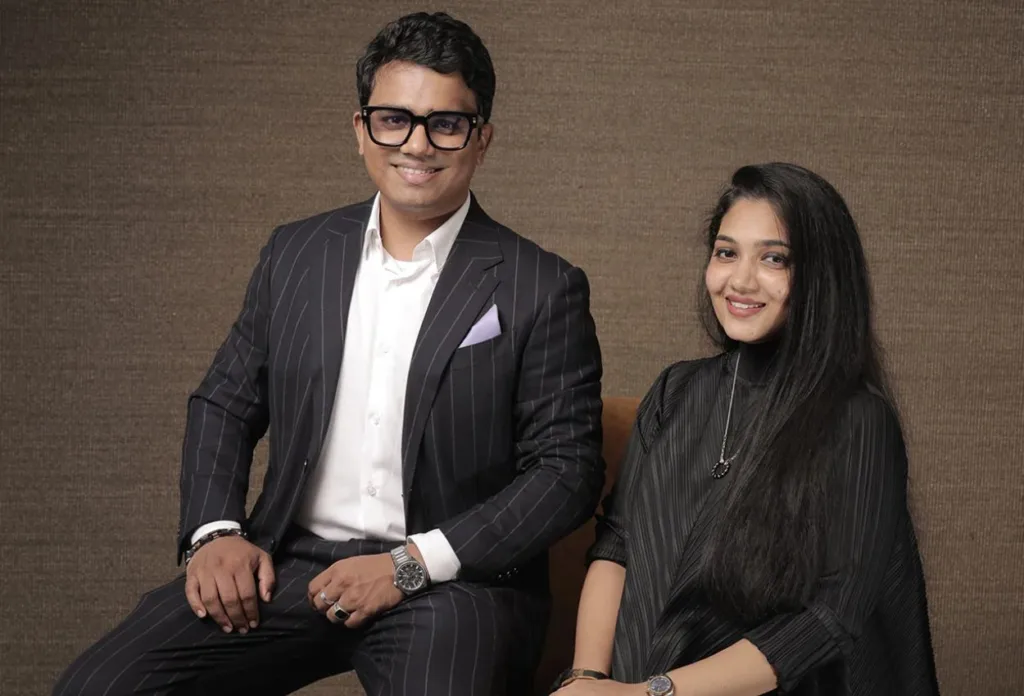
Extraweave, the family business, was started in 2000 by his father, Santhosh Velayudhan. Its parent company, Travancore Mats and Matting Company, dates back to 1917 and was started by Santhosh’s great-grandfather. “So the manufacturing foundation was deep. But Nimisha and I wanted to do something that went beyond manufacturing – after doing our research, we felt strongly that the stories and craft traditions of South India were being overlooked, and we wanted to put Kerala on the map of rug making in a meaningful way..”
He said the founders felt South India’s craft traditions were being overlooked in the rug industry. Neytt was created as a way to tell those stories and place Kerala within the map of rug making.
“The rug industry in India is almost entirely dominated by North India – Jaipur, Bhadohi, Agra. And that is where most people’s idea of an Indian rug comes from. But Kerala has an extraordinary craft tradition, incredible natural materials, a completely different aesthetic sensibility. Neytt was our way of saying that story deserves to be told,” he explained, adding that the brand was set up to be design-led, material-led and rooted in Kerala, while also competing with rug brands abroad.
“We wanted to build a brand that was genuinely design-led, that used exotic and sustainable materials, and that could sit confidently alongside the best luxury rug brands in the world – not as an Indian alternative, but as a world-class brand that happens to come from Kerala,” he said.
A flood-inspired rug becomes a turning point
A turning point came during the 2018 Kerala floods , when Srinivas, designed a rug that responded to what was happening in the state. Santhosh said the piece focused not on loss but on the way people came together, helped one another and emerged with resilience and unity.
2018 Kerala floods
AI Generated
The 2018 Kerala floods were a catastrophic natural disaster that occurred in the Indian state of Kerala, triggered by unusually heavy monsoon rains. The deluge resulted in widespread inundation, landslides, and significant loss of life and property, displacing hundreds of thousands of people and necessitating a large-scale rescue and relief operation.
That rug was nominated for the Elle Deco International Design Award. For the founders, the nomination helped confirm that Neytt could become a brand rather than a line within a manufacturing business.
“That moment confirmed what we had been feeling – that there was something here worth building into a brand. Neytt became the vehicle for that vision.”
The company has since built collections that draw from traditions, objects and art forms linked to India and Kerala. Santhosh cited Vallamkali, Aranmula Kannadi, Bidri and Kilivaathil as collections that come from cultural references but are designed for interiors in cities such as Dubai and New York.
“We do not treat them as opposing forces. The craft legacy is not a constraint – it is the source of what makes Neytt interesting to a global audience in the first place. What we do is make sure the design language is contemporary and the execution is world-class, so the cultural story lands as a strength rather than a footnote,” he said adding “the heritage is the foundation, not the limit.”
Met Gala commissions brought global visibility
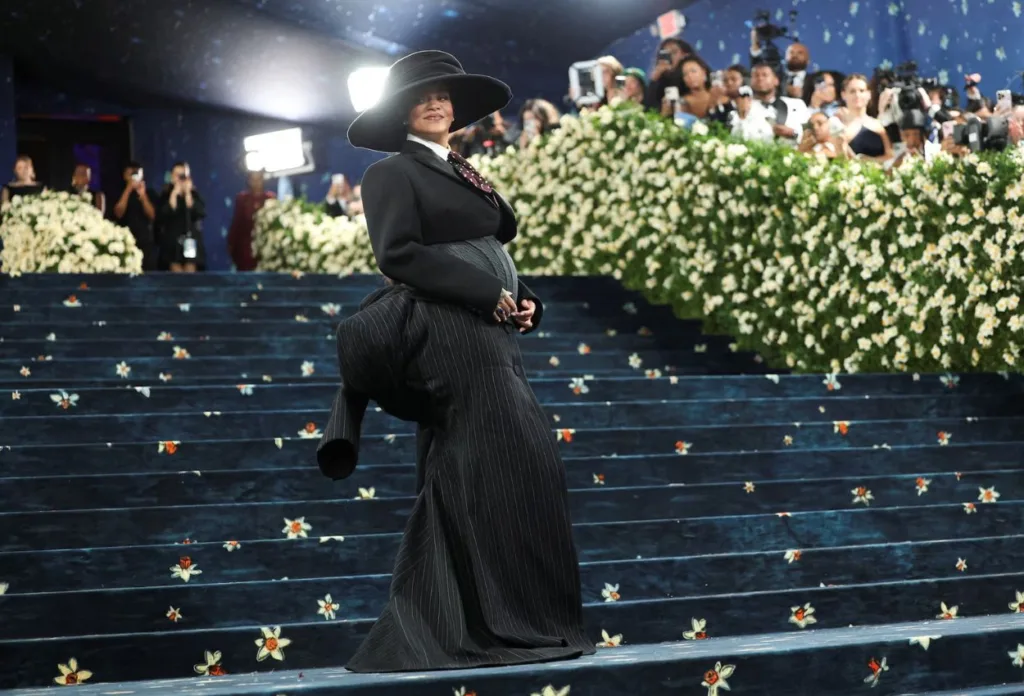
Neytt’s global profile grew after it supplied carpets for the Met Gala.
Santhosh said the first Met Gala opportunity came in 2022 through Fibreworks, a long-term US client with which the family business had worked for more than 15 years. The brief was confidential at the start, and the team went through prototyping before samples were approved.
“It was only at that point that we found out it was for the Met Gala. When we learned that, we were ecstatic,” he recalled.
For the artisans and workers in Cherthala , the scale of the project became clear only when images from the event were published.
Cherthala
AI Generated
Cherthala, also known as Shertallai, is a town and municipality in the Alappuzha district of Kerala, India. It is situated between the backwaters and the Arabian Sea, and is known for its significant role in the coir industry and as a hub for traditional crafts. The town has a rich cultural heritage and is a growing centre for commerce and tourism in the region.
“Watching our carpet appear in those photographs was surreal. Seeing something made by their hands become part of one of the most watched cultural events in the world – that was emotional in a way that is hard to describe. And for Neytt as a brand, it gave us a kind of validation that no award or press feature could replicate,” he said.
Santhosh said the project gave Neytt a form of validation that awards and press could not match.
This year, the company again worked on the Met Gala carpet. Santhosh said the theme was Fashion Is Art and the brief was different from previous years. The entrance moved away from the staircase setup into a format with hand-painted interventions in New York after the carpet arrived.
“Our role became more foundational – precision, consistency, surface elegance,” he said.
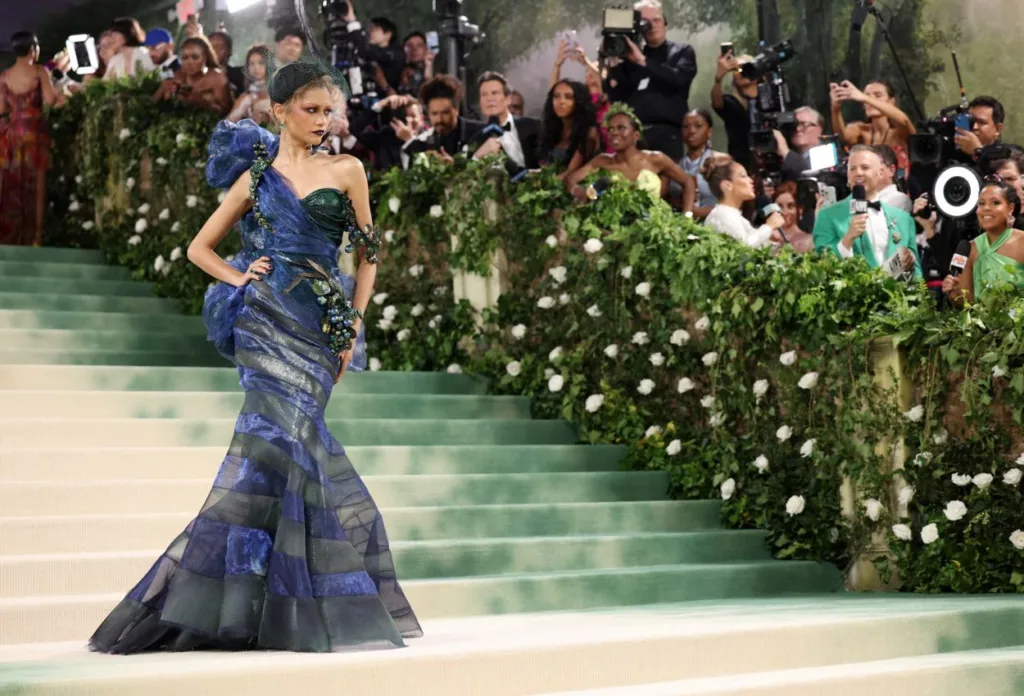
Neytt used fine-grade sisal sourced from Madagascar. The carpet went through about 14 processes from fibre to completion, not including quality checks. The company produced 57 large-format rolls covering around 6,840 square metres.
The process took nearly 90 days and involved close to 480 people across spinning, dyeing, weaving, finishing, inspection and logistics.
Santhosh said one of the technical challenges was creating a weave structure that would work for the event. “One of the trickiest technical challenges was the weave structure itself – tight enough that high heels would not sink or catch, but smooth enough that couture garments would not snag as guests moved across it. Natural fibres also behave differently depending on humidity, tension and handling, so maintaining consistency across that volume was genuinely difficult,” he said.
“Most people think of a carpet as either beautiful or functional,” he added. “The Met Gala forces you to make it both simultaneously, under conditions that are essentially impossible to test for in advance.”
He said the carpet had to work for hundreds of guests in couture, some wearing high heels, while also being photographed under lighting from several angles.

“Any inconsistency in the weave, any variation in colour or texture across the rolls, will show. So the craft and the engineering have to work together completely. That tension is actually what makes it interesting to us – it pushes the team in ways that a purely decorative brief never would.”
As for materials, Santhosh said the company looks for materials that carry both a sustainability story and a sensory quality.
“We are always looking for materials that have both a sustainability story and a sensory quality – something that looks extraordinary but also has integrity in how it was grown or produced,” he said.
He said people often misunderstand the brand as one that works only with natural fibres such as sisal, jute or coir, with some assuming those are outdoor rugs.
“Neither is true,” he said. “We work across a much wider range of materials including silk, lyocell, bamboo silk, linen, water hyacinth, seagrass and recycled PET, and these are very much indoor luxury pieces designed for the most considered interiors.”
He also said Neytt should not be seen only as the premium export arm of a factory.
“Neytt is a design brand that happens to have extraordinary manufacturing capability behind it. The design thinking, the material choices, the storytelling – those drive everything. The factory is what allows us to execute at a level most design brands cannot reach, but it is not where the brand identity comes from. The other thing people underestimate is the range – full customisation by material, design, size, shape and border. There is almost nothing we cannot make,” he said.
Neytt plans US, Europe roll out as part of expansion
Neytt is also planning its next phase outside India. Santhosh said the company is working on a collaborative collection set to launch in October, with further details to follow.
The company also wants to open international stores in Europe and the US “within two years,” he said. It is looking for partners rather than trying to do that alone.
“We are actively looking for partners who share the same passion and the same understanding of what design and craft can mean at a global level,” he said. “If the right people are reading this, we would love to hear from you.”
“The rug is almost always the last thing a space thinks about and the first thing a guest feels,” he said. “There is something poetic about that – this object that anchors a room, that people walk across without thinking about it, and yet it carries so much craft and intention.”
He said Neytt exists in that gap between being unseen and being felt.
“The Met Gala, in a strange way, made that visible,” he said. “480 people in Kerala made something that the whole world walked across and photographed without knowing where it came from. We know. And that is enough.”