
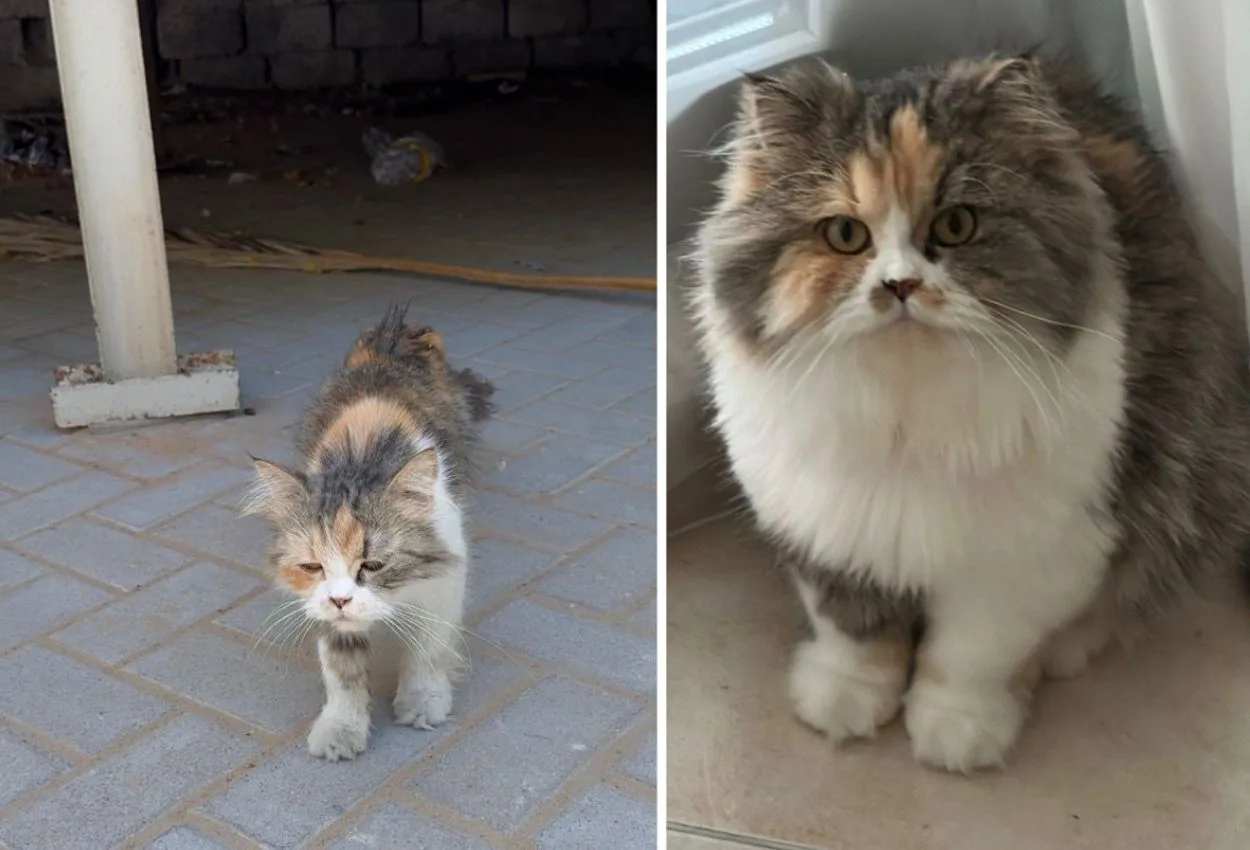
For the past five years, Sharjah-based expat Laila Di – who prefers not to use her full name – has been rescuing abandoned cats across the UAE.
The housewife and mother of three has devoted much of her time to animal rescue in the UAE and currently has over 100 cats in her care, spread across veterinary clinics and foster homes.
“I discovered that many abandoned cats needed help,” she told Lana of how her rescue work began, adding that some are recovering from illness, others are waiting for foster placements, and many are waiting for adoption.
A day in the life of UAE cat rescuer Laila Di
Di’s rescue work starts where many others stop: on the streets. She responds to reports of cats who are injured, sick, or abandoned via her Instagram page. In many cases, the cats she rescues have been ignored by passers-by and turned away by those unwilling or unable to help.
“I pick them up from the streets when no one wants to help them, especially if they have no chance to survive” she said.
Once rescued, cats are taken to veterinary clinics for assessment and treatment. Some remain in cages at clinics while waiting for foster homes. Others require medication, follow-up visits, or long recovery periods before they can be placed elsewhere.
Her day begins at 5.30am with school runs for her children, after which she visits foster carers to check on rescued cats, manage medication and vitamins, and stops by veterinary clinics to monitor the condition of new rescues.
She also delivers food and litter to foster homes and arranges transport for cats who have recovered enough to leave clinics.
After collecting her children from school, she often returns to clinics to check on cats or to drop off new rescues. Her evenings are spent continuing the same cycle.
“At night once my kids are asleep, I search for fosters,” she said, adding that her days rarely include time away from rescue work. “My whole day is spent caring for cats.”
Why foster homes are essential for cat rescue in the UAE
Foster homes are central to Laila’s rescue work. Without them, many cats remain in cages at clinics for extended periods. Finding people willing to take cats into their homes, even for a short time, is one of her main tasks.
She assesses each cat’s needs through time spent with them or through reports from foster carers once placement is possible. Some cats require quiet spaces; others need time to recover before interacting with people or other animals.
“I assess them by spending time with them or once they are in fosters,” she explains.
Despite the need, many people hesitate to foster due to space concerns.
“Many temporary fosters say they have little space,” she said. “But just look at the cats living in cages, waiting for even the smallest corner. Even a bathroom or a quiet spot is better than a cage.”
She stressed that fostering is not a permanent commitment but a step that allows another cat to be rescued from the streets. “Every foster saves another life,” she explained.
And while fostering provides temporary safety, adoption is the final goal for most rescues. For Laila, one of the most meaningful moments comes when a cat moves from a clinic cage into a foster home or a permanent one.
“When rescues that were waiting in vet cages finally get fosters, and when cats get adopted,” she said, describing what she finds most rewarding.
Matching cats with adopters is not a quick process. She considers the needs of the cat and the lifestyle of the adopter to ensure a suitable placement.
“I match cats with adopters based on their needs and lifestyle,” she said, “so every cat finds a home where they can truly be happy and loved.”
‘Expectations’ among key reason behind foster, adoption fails
Despite careful matching, some adoptions or foster placements do not work out. One common reason, she revealed, is expectations.
“When someone expects a fancy cat and doesn’t want a thin or fragile one – without realising that with love and care, they will grow into a beautiful, happy cat they dreamed of,” she said.
In such cases, cats are returned to her care, and the search for another home begins again.
Despite the rewards of ensuring these cats are safe and in happy homes, balancing rescue work with family life remains one of Laila’s main challenges. With three children at home, her responsibilities extend far beyond animal care.
The demands of rescue work often conflict with family needs. Clinic visits, emergencies, and foster coordination do not follow schedules. Despite this, she continues, driven by the knowledge that without her intervention, many cats would not survive.
Moreover, Laila believes many people misunderstand rescue cats, especially those found on the streets. She said people often judge them based on their condition at the time of rescue.
“Every rescue blooms with time when surrounded by love and care. They may arrive thin, fragile with dull eyes and patchy fur but that is not who they are,” she said adding that recovery takes time and patience.
“Helping takes time. Every cat deserves love, and they will thank their human with a grateful heart.”
What cats actually need from foster homes, potential adopters
When asked about memorable rescues, Laila finds it difficult to single out one experience. For her, each rescue carries its own weight.
“Every story is unforgettable,” she said, recalling cats who were once unwanted on the streets and later found comfort in foster homes. Just a few weeks ago they were unwanted on the streets and now they are happily purring on a soft couch,” she said.
Some cases stand out because survival was uncertain. She describes cats who were turned away by some clinics and offered euthanasia.
“Some of the most memorable ones are the cats no one believed would survive,” she said. “Living on the edge between life and death, rejected by many clinics only offered euthanasia.”
And for those considering fostering or adoption, Laila offers direct advice. She asks people to look beyond convenience and appearance and to consider responsibility.
“Adopt a cat only if you are ready to give her a forever home filled with love and care,” she said, reminding potential adopters that commitment reduces the number of cats left without homes.
“Every cat deserves a life where she/he is safe and cherished. The more of us who commit, the fewer lonely, abandoned souls will be left on the streets.”
She also urged people to consider fostering to help without long-term commitment. “For us, they may be just a chapter in our lives, but for them we are their whole world,” she concluded.