
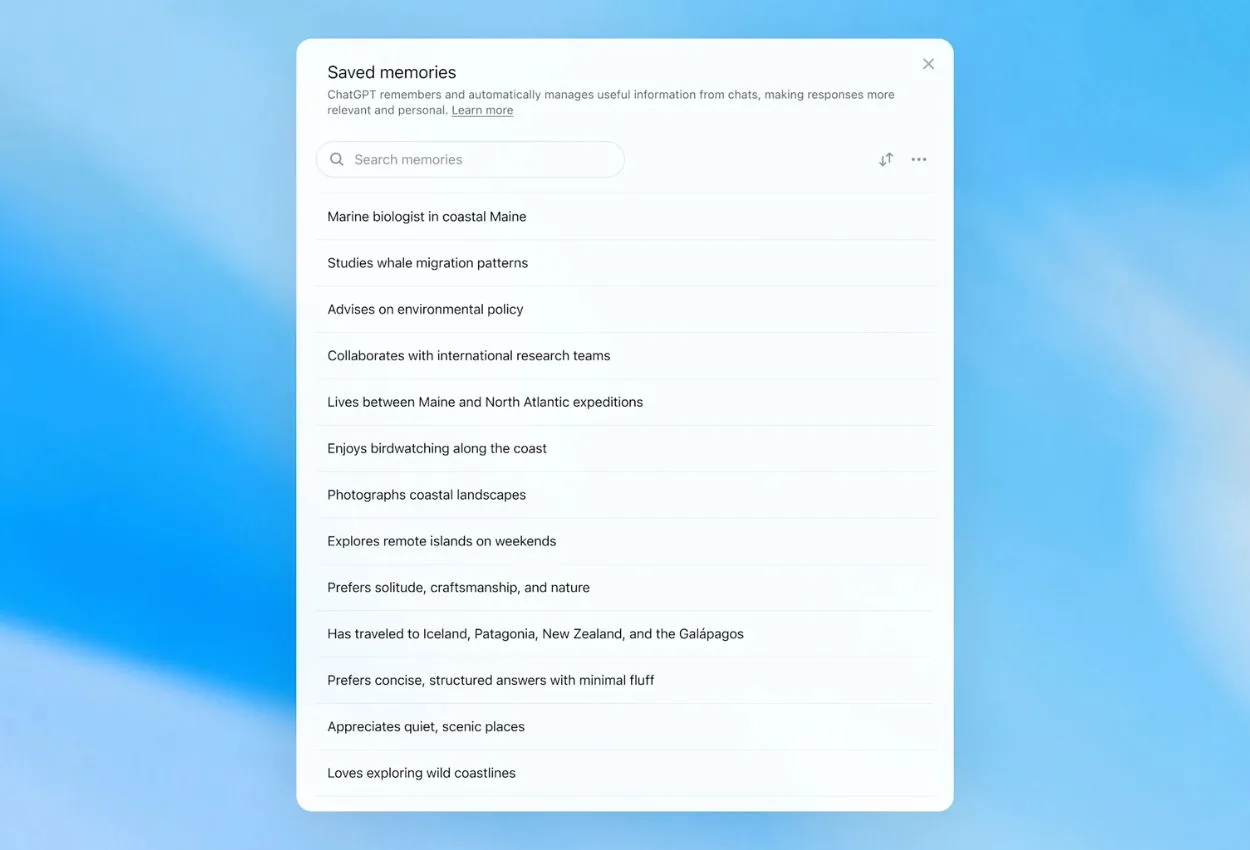
OpenAI has begun rolling out a significantly upgraded memory system for ChatGPT, designed to address a persistent problem with earlier versions: the fact that what the tool remembered about you could quickly become outdated or incomplete.
The system, which the company calls “dreaming,” works by running a background process that automatically reviews chat history and synthesises it into an updated picture of the user’s preferences, projects, and constraints.
Unlike the original saved-memories feature, which launched in April 2024 and required explicit prompts to store information, dreaming operates without the user having to ask. It also continuously revises what it knows as circumstances change.
The practical difference is meaningful. A user who told ChatGPT they were planning a trip to Singapore in July, for instance, would previously find the tool still treating them as Singapore-based weeks after returning home. With the new system, memories update over time, so location-based recommendations adjust accordingly.
OpenAI says dreaming also improves how well ChatGPT applies personal preferences when they’re relevant. In one scenario the company described, a user with specific interests in wildlife photography, quiet dining, and strong air-conditioning received an itinerary built around those details, rather than a generic tourist rundown. The earlier system, it says, largely ignored that kind of context unless it was explicitly restated.
Users can review a summary of what ChatGPT currently knows about them, edit or correct specific details, and instruct the tool on what topics to raise and when. Drilling into a particular area can be done conversationally.
The update is available to Plus and Pro subscribers in the US from today. OpenAI says it will extend to additional countries and to Free and Go users over the coming weeks. A roughly 5x reduction in compute cost made it feasible to bring dreaming to Free users at scale, the company said.