Recent geopolitical tensions in the region have driven iD Fresh Food’s shipping costs up threefold, leading the company to accelerate production plans across the GCC as it seeks to reduce dependence on cross-border freight without adding preservatives.
In an exclusive interview with Lana, PC Musthafa, chairman and global chief executive of iD Fresh Food, said the rise in costs had tested the limits of the company’s logistics network. The business responded by activating contingency plans used during the 2019 pandemic so that customers did not face disruption.
“Our response to logistical bottlenecks is never to compromise our food with artificial preservatives; it is to build closer to our consumers,” Musthafa said, revealing that the company is establishing production facilities across the GCC under a range of operating models.
Musthafa described them as “state-of-the-art production facilities” and said the aim was to address freight dependence and transport costs while preserving the company’s approach of making food without chemicals, preservatives or shortcuts.
The pressure comes from a model in which products move through a cold chain and remain on sale for days rather than months. Musthafa said maintaining freshness, consistency and the company’s clean-label promise had been the main test during its expansion from Bengaluru into the GCC, the US and the UK.
“Demand was never the challenge,” he said. “The real test was maintaining freshness, consistency, and our clean-label promise as we scaled across markets and geographies”
“Making fresh food isn’t a difficult part. Making it fresh every day, at scale, without preservatives or shortcuts that’s the real challenge,” Musthafa said.
What is iD Fresh? The journey from a 50 sq ft kitchen to five plants explained
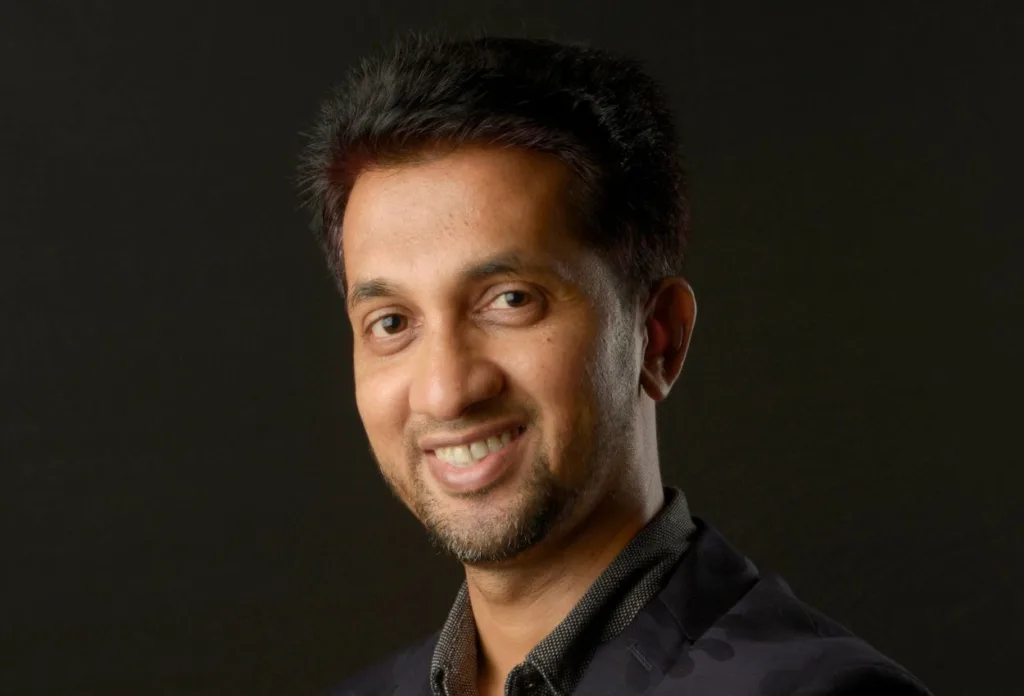
The idea for iD Fresh began with Musthafa’s experience in the UAE, where he missed meals made at home. After returning to India in 2005, he concluded that others faced the same problem and saw a gap in the market for idli and dosa batter.
Musthafa started the business in Bengaluru with four cousins: Shamsudeen TK, Abdul Nazer, Jafar TK and Noushad TA. They had AED2,000, one grinder, a mixer, a second-hand scooter and a 50 sq ft kitchen.
The group began by supplying 10 packets of one-kilogram batter each day to 20 stores. Musthafa said the founders set out to build a brand around Indian food made with natural ingredients and without preservatives.
“Our vision was never small,” he said. “We set out to be the first brand in India to champion authentic Indian foods that are 100% natural and completely preservative-free, pioneering the clean-label movement long before it was even a well-known term.”
He said the company adopted a clean-label approach before the term became known. Its rule is that food should be made in a kitchen rather than a laboratory.
The company says its products contain no preservatives, chemicals, artificial colours, artificial flavours, emulsifiers, stabilisers, raising agents, anti-caking agents or additives that it regards as unnecessary. Musthafa said the same standard applies to every ingredient.
The purpose, he said, was to make the preparation of meals a pleasure and ensure that food did not become a casualty of work and household schedules.
“We make our food in a kitchen, not in a laboratory,” Musthafa said.
iD Fresh runs a zero-inventory model supported by temperature-sensitive packaging and cold-chain distribution. Musthafa said the company uses kitchens, equipment and manufacturing processes designed around hygiene, food safety and freshness.
When discussing the challenge of scaling the business, Musthafa said its products carried a shelf life of four to seven days. As for food safety, he said the company maintained a shelf life of seven to 10 days without preservatives through cold-chain-compatible packaging and logistics.
“Quality and food safety standards are non-negotiable,” Musthafa explained, adding that the company would not respond to logistics pressure by extending shelf life through preservatives. Instead, it plans to place production closer to customers.
The strategy also requires control over supplies. He said raw materials can contain additives before they reach a food producer, so iD Fresh works with vendors, asks questions about ingredients and, at times, requires suppliers to make inputs to its specifications.
The company also places ingredients on the front of packs. Musthafa described that as a promise to consumers and part of the company’s clean-label commitment.
“At iD Fresh Food, the fundamental difference comes down to our core philosophy: while the traditional packaged food industry innovates to extend shelf life artificially, we innovate to protect freshness naturally,” he said, adding the benchmark covers chemicals, preservatives, emulsifiers, synthetic stabilisers and artificial enhancers, as well as the spices, flour and oil used in production.
Musthafa said the company works with vendors because even raw materials can contain preservatives and additives. Suppliers may be required to customise ingredients for iD Fresh.
UAE a ‘live test market’ for the region
Musthafa said the UAE was more than a source of revenue for iD Fresh. He called it “the ultimate global proving ground for the future of modern retail. The region acts as a giant “live test market,” powered by an exceptional mix of affluent locals, diverse multicultural expat communities, and global tourists. This unique demographic landscape heavily rewards brands that can master the delicate balance of being globally relevant while remaining deeply, locally familiar.”
The company also sees a change in the structure of demand. Musthafa said the market was no longer centred only on workers staying for limited periods but included families that had settled in the UAE and wanted transparency about food.
He linked this shift to residency reforms and quality of life. He said consumers in the Gulf consider health, understand clean labels and are willing to pay more for freshness and quality.
The UAE’s digital systems, logistics networks and quick-commerce services also support iD Fresh’s distribution model, he said. “Because we refuse to extend shelf life with chemicals, our business relies on conquering time, and the UAE’s frictionless quick-commerce ecosystem empowers us to deliver everyday freshness at unprecedented speeds,” Musthafa said.
The company wants to increase its market share in the UAE to between 50 per cent and 70 per cent in the coming years. Musthafa said the UAE would provide a model for expansion across the GCC and into other countries.
“Winning in the UAE means setting up the trend for the entire Middle East,” he said. “It serves as our ultimate launchpad for regional dominance.”
Batter, flatbreads key driver of UAE sales
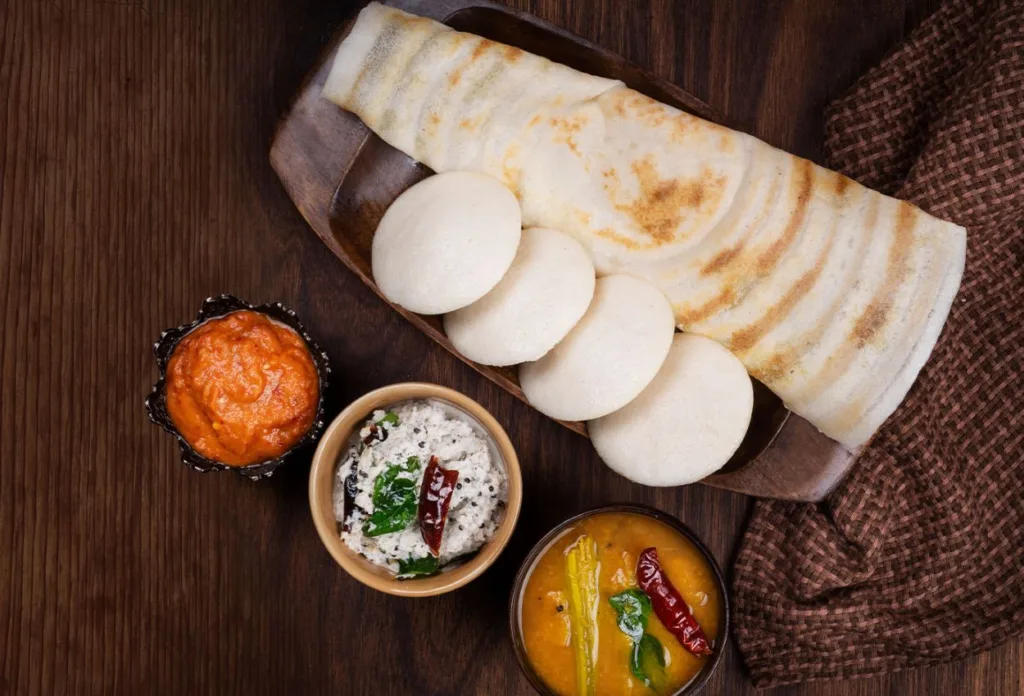
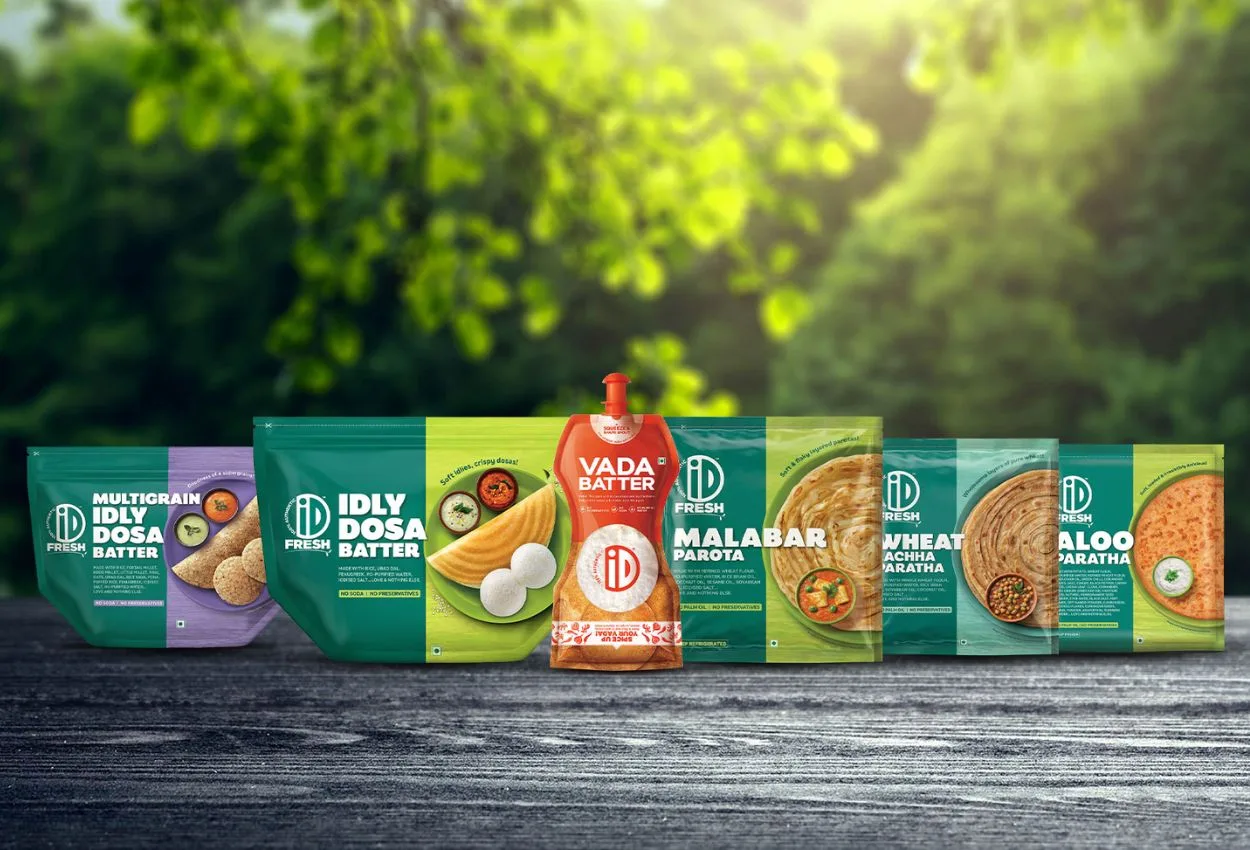
The company’s batter range and its parathas and chapatis have driven growth over the years, Musthafa said. Products sold in the UAE include Malabar Parota, Whole Wheat Parota, Mini Malabar Parota and Mini Whole Wheat Parota.
The batter range includes Idly-Dosa Batter, Ragi Idly-Dosa Batter, Protein Idly Dosa Batter and Multigrain Idli Dosa Batter. The chutney range includes coriander, coconut, tomato and peanut, alongside sambar. The company also sells Whole Wheat Chapati.
Concepts introduced to the market include Filter Coffee Decoction and Squeeze-and-Fry Vada. Launches named by Musthafa include Protein Batter, Protein Chapati, Ragi Millet Batter, Multigrain Batter and fresh tortillas made under the company’s clean-label approach.
Musthafa said the UAE’s mix of cultures had created a customer base shaped by food from different markets while remaining connected to food traditions. Meals made at home continue to hold a place in family life, he said, but consumers are accepting products that reduce preparation time without replacing cooking.
They are not seeking to stop cooking, he said. They want products that help them prepare meals while maintaining the standards they associate with food made from scratch. Musthafa described the change as “convenience with confidence”, in which trust in freshness and quality remains as important as saving time.
Customers want convenience without preservatives
Musthafa said demand for food without preservatives was a return to basic cooking rather than a new request.
“Consumers aren’t actually asking for anything new; they are simply asking to go back to the basics,” he said.
“When our parents and grandparents cooked for us, they never reached for emulsifiers, acidity regulators, or synthetic stabilizers. You don’t have these chemicals sitting in your own home kitchen, and you certainly do not intend to feed them to your children.”
He said families need convenience because of work and time pressure, but should not have to accept additives in ready-to-cook food.
“The modern expectation is that an everyday meal should be as close to home-cooked as possible; not just in taste, but in absolute ingredient integrity,” he said, further describing iD Fresh as a “professional assistant” in the kitchen. He said its role was to reduce the work involved in daily meal preparation without changing the company’s ingredient rules.
GCC plants, product launches and IPO preparation
As for expansion plans, Musthafa said the GCC was no longer only an expansion market but a part of the company’s global growth plan. The UAE already contributes to its international business, he said.
The company is developing manufacturing facilities across the GCC so its products can reach consumers without losing a day in transit. It is also exploring flavours for the region’s customer base.
“Whether we are launching a new localised flavor or entering a brand-new market, our commitment to zero chemicals, zero preservatives, and zero shortcuts remains uncompromising,” Musthafa said, adding operations continued across all markets despite the security situation in the region. The company has about 2,400 employees across five manufacturing plants.
Musthafa said the company was strengthening its leadership team in preparation for an IPO and expansion. “We remain committed to our growth trajectory and employee welfare,” he said.
A plan to build closer to consumers
Musthafa said the company’s long-term goal was to change how consumers viewed convenience food. He wants people to eat food made with natural ingredients and without chemicals, in line with the meals prepared by earlier generations.
“Our long-term vision is to fundamentally redefine how the world perceives convenient food,” he said. “We simply want people to eat exactly the way our parents and grandparents did, with 100% natural ingredients and absolutely zero chemicals.”
The company plans to scale what he calls its “giant home kitchen” model across India and other markets. Local production forms the basis of that plan.
“As we expand our footprint across India and key international markets, our strategy remains simple: we will build closer to our consumers,” he said.
Musthafa said localisation would allow the company to avoid relying on preservatives or longer shelf lives when products crossed borders. The company also plans to enter more product categories, sustain growth and profit, and eventually become a listed company.
“We want to ensure that real, authentic food never becomes a casualty of modern life and we will continue to scale globally with zero chemicals, zero preservatives, and zero shortcuts,” Musthafa concluded.