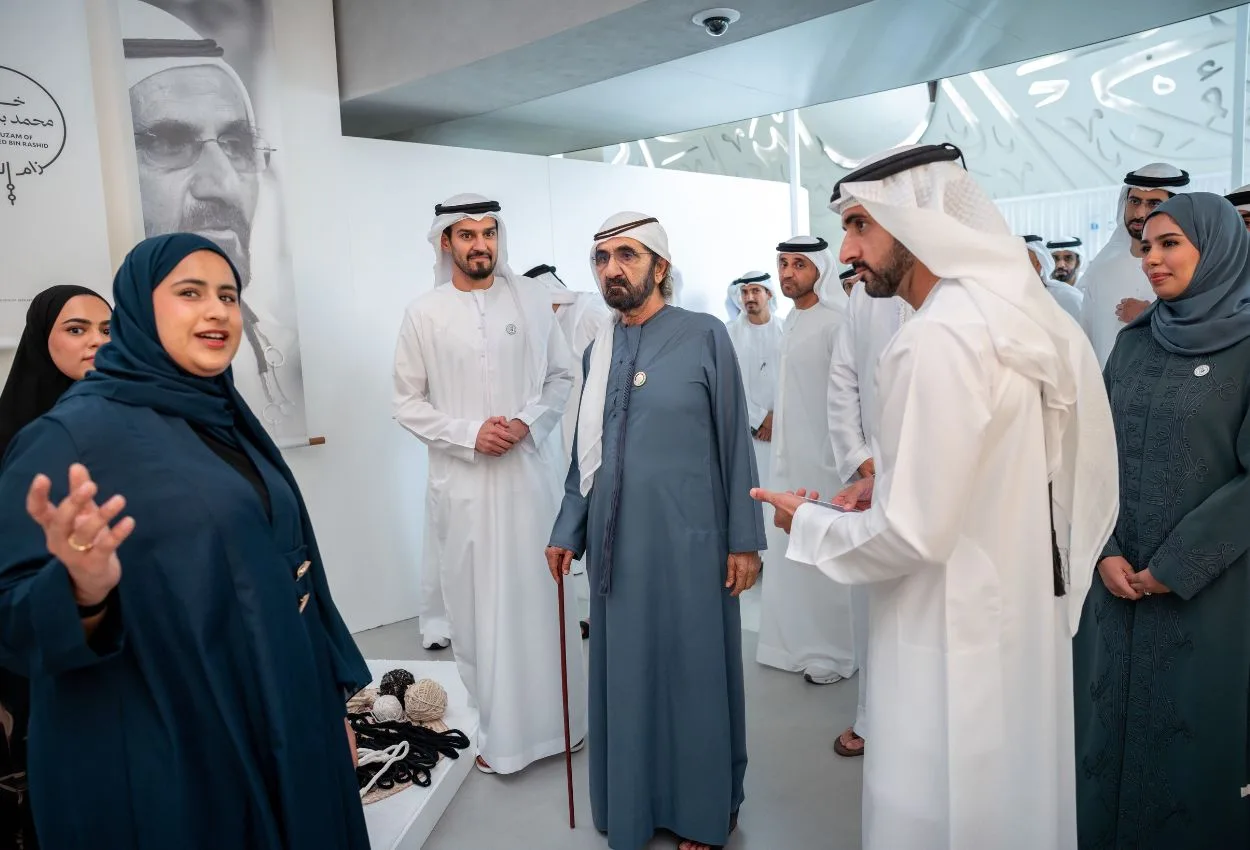
Sheikh Mohammed bin Rashid Al Maktoum, Vice President and Prime Minister of the UAE and Ruler of Dubai has reviewed a research project dedicated to Al Khuzam, the traditional Emirati rope used in camel steering, examining how the object evolved from a functional tool into a broader symbol of Emirati identity.
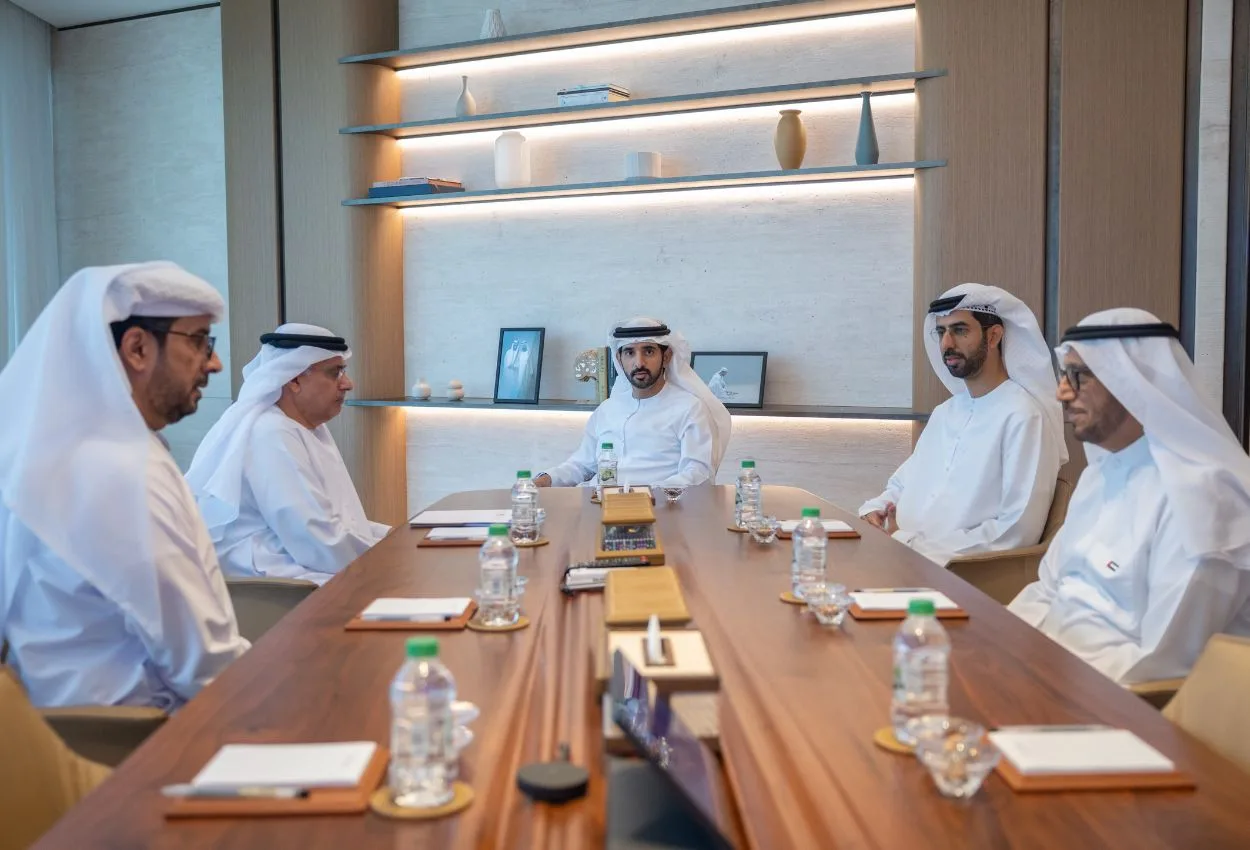
The review took place in the presence of Sheikh Hamdan bin Mohammed bin Rashid Al Maktoum, Crown Prince of Dubai, as well as Sheikh Ahmed bin Mohammed bin Rashid Al Maktoum and Mohammad Abdullah Al Gergawi, Chairman of the Executive Office of His Highness Sheikh Mohammed bin Rashid Al Maktoum.
The project, supervised by the Development Office, maps Al Khuzam’s history across three distinct phases: its early functional role in desert navigation and camel management; a social phase in which it became part of regional dress and everyday life; and its current standing as a recognisable marker of Emirati cultural identity. Historical evidence from across the Arab world is included, alongside documentation of Al Khuzam’s appearance in classical Arabic poetry, where it carried associations with travel, leadership, resolve, and resilience.
On the craft side, the study documents the full production process, from collecting and spinning raw wool into thread, to braiding the rope and finishing it with knots, rings, and silver chains. The project frames this as an integrated ecosystem of knowledge, materials, and technique, and identifies the transmission of these skills to younger generations as central to the craft’s survival.
The project also has a forward-looking dimension. Designers and Emirati entrepreneurs worked alongside researchers to develop contemporary products and collections drawing on Al Khuzam’s visual language, including its rings, threads, and structural details, converting them into design motifs suited to modern goods. The aim, according to those involved, is to extend the object’s relevance without losing what makes it distinctive.
A multidisciplinary team of researchers, artisans, specialists, and creatives contributed across their respective fields under the Development Office’s supervision. The project is presented as a model that connects historical research with living craftsmanship and commercial opportunity, offering a potential framework for entrepreneurs working in heritage-inspired design.