
Jordan is telling travellers it is “safe”, “secure” and “open for business” as the country works to address concerns over the impact of the US-Iran war on tourism and bookings, Justin Abu Anza, Assistant Director of Marketing – Promotion at the Jordan Tourism Board told Lana in an exclusive interview.
When asked about the effect of the conflict on traveller confidence and bookings, Abu Anza said the impact had been felt across the region rather than in Jordan alone. “I think it’s affected everybody within the region, not only Jordan as a destination,” he said.
The Jordan Tourism Board has responded by working with partners outside the country and providing information on conditions on the ground, Abu Anza said.
“It’s kind of made us work a little bit harder to make sure that the confidence is there, to reassure people that Jordan is safe, it’s secure, it’s open for business,” he said, revealing that the board is also seeking to address concerns through information and data.
Abu Anza said the board works with partners to create channels for questions from travellers and the tourism industry and to ensure concerns are answered with “proper information” and “accurate data”, rather than “things that you hear on the news or hearsay.”
Jordan shifts focus towards regional markets
However, the effect of developments in the region has also contributed to a shift in the markets Jordan is targeting. Abu Anza said Europe remained one of Jordan’s priority markets, but the tourism board had increased its focus on GCC countries, Arab markets and expatriates who can travel to Jordan for short stays and weekend trips.
Jordan’s current priority markets include markets served by air links and the GCC, while China and India are also receiving more attention.
Royal Jordanian is due to start flights to China on December 11, which the tourism board expects to support access to the Chinese market. India is another market being targeted as Royal Jordanian expands its operations and works through its codeshare arrangements.
“Europe is always going to be one of our priority markets, but given what is going on regionally, we’ve had to kind of shift our focus towards the GCC Arab markets, expats, and close regional markets,” Abu Anza said.
Visitor numbers rise as source markets change
Despite pressure on traveller confidence, Jordan has recorded about five million visitors, according to Abu Anza, compared with about 4.9 million during the corresponding period a year earlier. He put the increase at about 2.9 per cent.
“The numbers are there. Just where they’re coming from has changed,” Abu Anza said, adding that more visitors were coming from Saudi Arabia, the UAE, Palestine and what he referred to as “Arab 48”.
Travellers continue to arrive from France, Italy, Spain, Germany and the UK, but the share coming from different source markets has shifted.
Jordan is also increasing its work in China as it seeks to broaden its tourism markets. The tourism board has appointed a market-based representative in China and plans to work with Trip.com and Royal Jordanian, Abu Anza said.
“China is kind of a game changer for us, and I think it’s a game changer for all destinations,” he said, adding India also forms part of the expansion. Abu Anza said Royal Jordanian had helped the tourism board enter the Indian market but that further work was needed.
The board is using data and research to monitor what travellers are looking for, where they are going and how Jordan can compete for their trips. Abu Anza said diversification was part of the response to changes in tourism markets and demand.
Events form part of plans to increase stays
Jordan is using events, concerts and community experiences to encourage visitors to spend more time in the country. “Stay longer. We’re working on more local community experiences,” Abu Anza said when asked how Jordan planned to increase visitor stays and spending.
He said the tourism board was also using festivals, concerts and raves to give travellers reasons to add time to their trips. Abu Anza said events were being staged in Petra, Wadi Rum and other sites across Jordan, with music events among the tools used to bring in different groups of visitors.
The tourism board is seeking to maintain a programme of events throughout the year rather than relying on one-off occasions. The board also maintains a content calendar to give travellers information about what is taking place before they book.
“That way, people can kind of plan their trip and know what’s going to happen throughout the month,” he said.
The events strategy sits alongside the board’s work to increase community participation in tourism and encourage travellers to combine sites such as Petra and Wadi Rum with other activities during their stay.
Jordan prepares for 2030 faith tourism push
Faith tourism is also forming part of Jordan’s plans for the coming years, with the tourism board preparing for 2030, which will mark 2,000 years since the baptism of Jesus Christ by John the Baptist.
“We’ve also been focusing on 2030, which is 2,000 years since Jesus Christ was baptised by John the Baptist,” Abu Anza said. He said work had already begun to build activity around the anniversary.
“We’re starting to build up on that and work towards that,” he said. “We have Dawn of Christianity, which is basically an exhibition which is going to be happening in Washington DC in February of ’27,” Abu Anza said.
He said the exhibition had already been staged in Italy and Greece and would form part of Jordan’s continued work around faith tourism. The tourism board expects the 2030 anniversary to help Jordan reach pilgrims and faith travellers from different markets.
“One of them being faith tourism, and 2030, which will kind of open up Jordan to a different demographic of pilgrims and faith travellers from all over the world,” Abu Anza said.
Jordan promotes destinations beyond Petra
The tourism board is also trying to spread visitor activity across the country rather than concentrate tourism in Petra. “As a tourism board, we try to promote all the regions as equally as we can,” Abu Anza said.
He acknowledged Petra’s role in Jordan’s tourism sector but said the board was also promoting Amman, the Dead Sea, faith sites and other governorates. “Petra is always going to be our crown and our jewel,” he said.
Abu Anza described Amman as a destination for short breaks, pointing to its history, culture and food scene, while the Dead Sea remains part of Jordan’s tourism offering throughout the year. “Amman as a city destination, as a short break, is important,” he said.
Faith sites are also receiving more attention. “Faith tourism is increasingly becoming very important,” Abu Anza said, citing the baptism site as well as Christian and Islamic sites.
He also pointed to Jerash, Ajloun, Al-Karak and Aqaba as places travellers could incorporate into a wider itinerary. There’s not really one thing in specific,” he said. “We’re trying to show how diverse Jordan is across the map.”
Abu Anza said the tourism board wanted travellers to understand that tourism experiences were available throughout the country. “There is something to see and somewhere to go in every single governorate that we have in Jordan,” he said.
Travellers moving between destinations could also stop for tourism sites, activities or community experiences. “Whether you’re passing Al-Karak or you’re passing Ajloun or you’re going towards Aqaba, you can stop on the way and see different things,” he said.
Adventure, wellness and education support diversification
Jordan’s push into adventure, wellness, educational and MICE tourism is not a new response to regional conditions, Abu Anza said, but part of a strategy developed over several years. “It’s been part of a strategic direction for a couple of years,” he said.
“History and culture is very important to Jordan. That’s why people come to Jordan,” Abu Anza said. “But also to stay relevant, we have to kind of diversify our product offering.”
The tourism board has teams working on different segments and markets because traveller demand varies between countries. “What might be relevant in the UK when it comes to wellness might not be relevant in Italy or Spain or even the GCC,” he said.
Abu Anza said the strategy was intended both to reach travellers looking for a specific experience and to give cultural visitors more reasons to extend their itineraries. He cited adventure activities that could be added to trips centred on Petra, Wadi Rum and Jordan’s heritage sites.
“If you’re coming to see Petra or Wadi Rum or kind of to see the history and culture of Jordan, why not partake in an adventure tourism activity?”
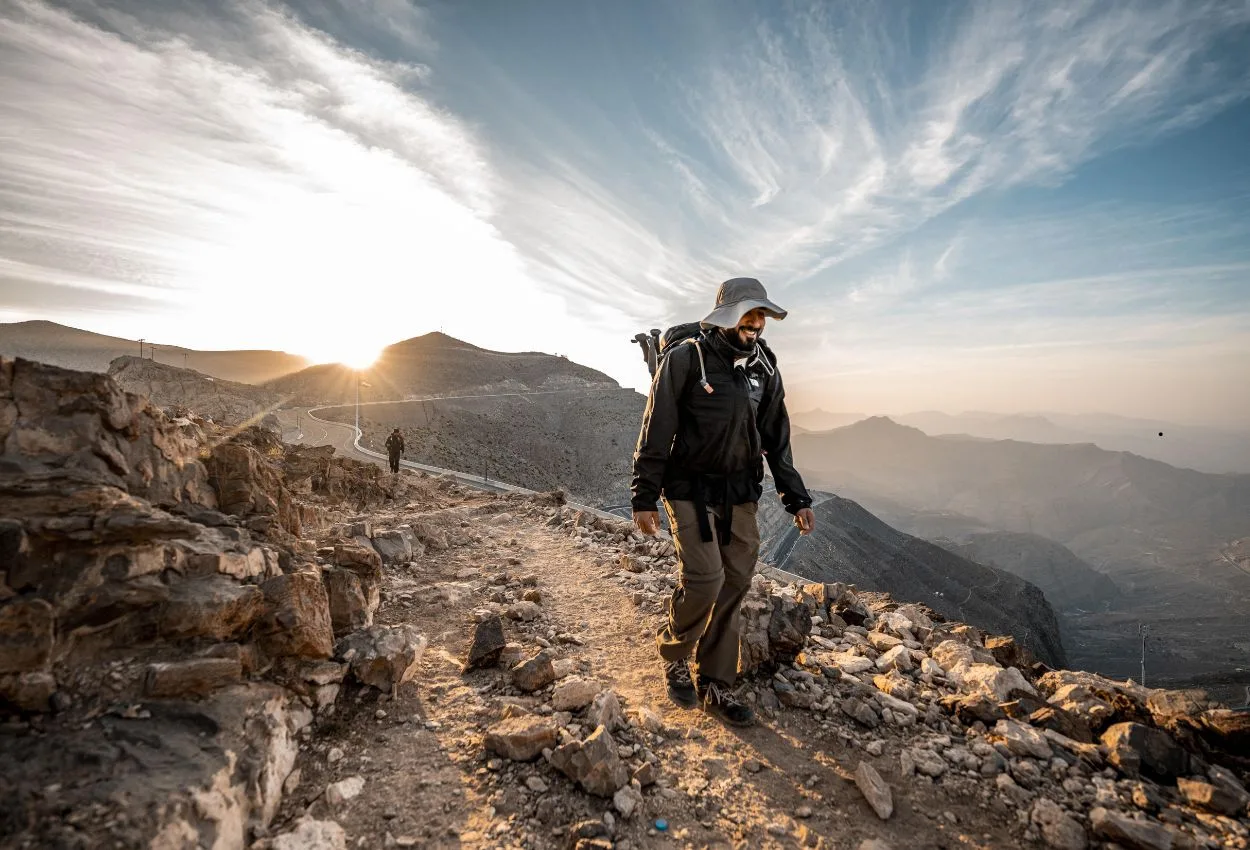
Those activities could include cycling, canyoning or swimming at Wadi Mujib, he said.
Royal Jordanian and low-cost carriers support connectivity plans
Air connectivity, on the other hand, is another part of Jordan’s effort to expand tourism markets. Abu Anza said the tourism board works with Royal Jordanian on marketing and market development.
“We’ve always worked with Royal Jordanian, our national carrier, very closely,” he said, adding that the tourism board and airline coordinate their marketing so that activity in target markets is not duplicated.
“We complement each other when we work on various markets to make sure that we’re not doing the same thing at the same time,” Abu Anza said. Royal Jordanian’s expansion into China and India is part of that work.
“Royal Jordanian has been very helpful when it comes to connecting us to new destinations,” he said. The tourism board also works with Wizz Air, Ryanair, easyJet and Air Arabia.
“It’s not only one ticket price or one carrier,” he said. “They can come from all over the world.”
Where Royal Jordanian does not provide direct market access, the tourism board works with other carriers, he said. Low-cost airlines have also helped Jordan reach markets that previously had fewer links to the country.
“Low-cost carriers have been very good to Jordan,” Abu Anza said, citing Poland and Eastern Europe among the markets where connectivity had increased.
Jordan looks to sustain tourism growth over next three years
When asked where Jordan’s tourism industry could grow over the next three to five years, Abu Anza pointed to market expansion and the development of tourism products.
“We see positive growth, we see opportunity, we see opening new markets,” he said, adding Jordan would need to continue offering different tourism products to reach different types of travellers.
“You have to be diverse. You have to be strategic,” he said. The tourism board has already carried out some of the work required to develop these markets and products, Abu Anza added.
“We’ve kind of put the legwork in,” he said. The next phase would focus on sustaining that work over the coming years.
“Now we’re going to start working a little bit harder to make sure that what we’ve done is kind of sustainable over the next three years,” he said. Faith tourism and the 2030 anniversary remain among the products the board expects to support that growth.
Jordan seeks tourism benefits for local communities
Community participation also forms part of the tourism board’s strategy, Abu Anza said. He encouraged travellers to spend enough time in Jordan to see more of the country and engage with people outside tourism sites.
“If you come for three days, you can see something. You come for five days, you see a little bit more,” he said. Abu Anza again stressed the tourism board’s message that visitors should continue travelling to the country.
“Jordan is safe. Jordan is welcoming. We want people to come in,” he said. “We want people to see everything that we have to offer, not only touristic sites but also engage with local communities.”
He said directing tourism activity towards communities was part of the board’s mandate. “We feel like it’s part of our mandate or goal to kind of give back to the community,” Abu Anza said. Tourism could support people’s livelihoods and create change within those communities, he added.
“That’s kind of our goal,” he said. “We want to make sure that we work with our partners, and we market Jordan in the best picture possible.”