
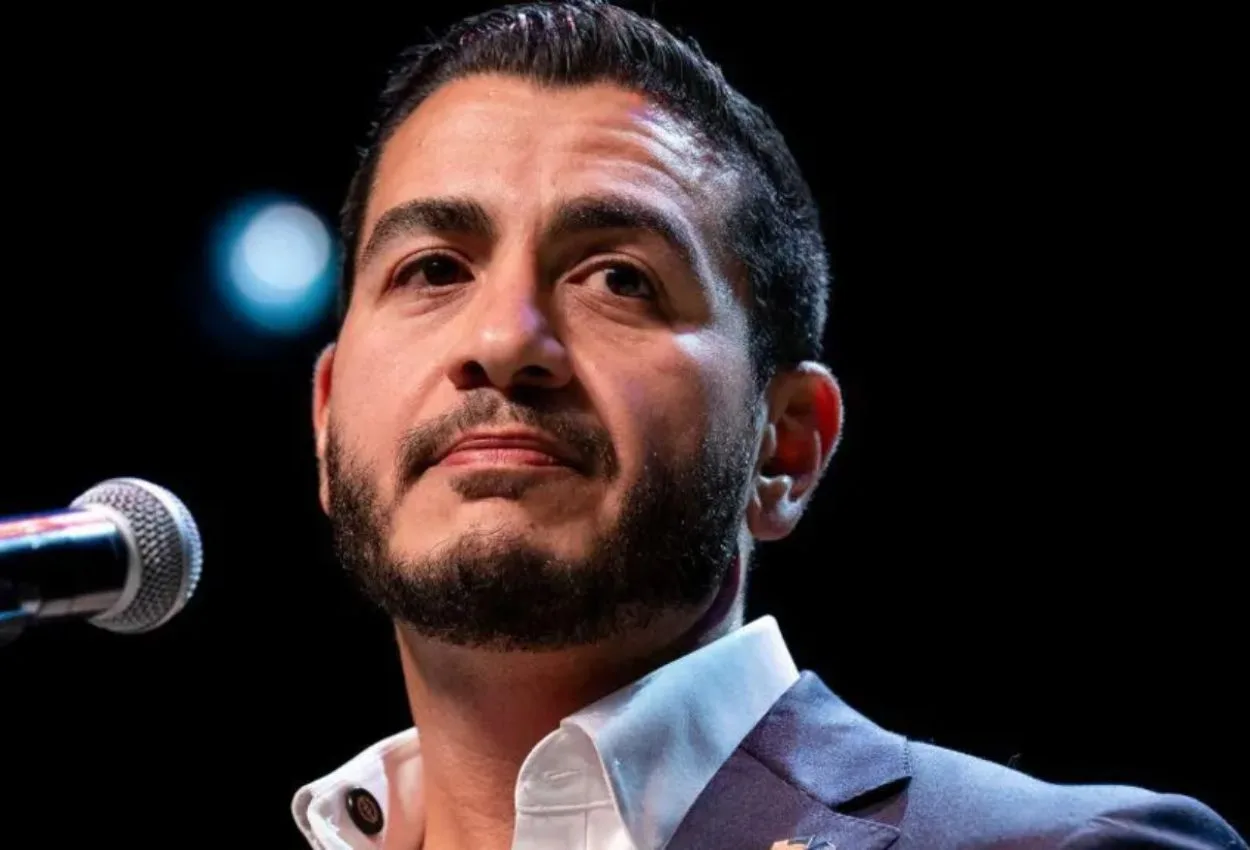
Abdul El-Sayed won Michigan’s Democratic Senate primary on Tuesday, defeating incumbent-backed congresswoman Haley Stevens in a result that will complicate the party establishment’s calculations ahead of November’s midterms.
El-Sayed, the son of Egyptian immigrants and a former Michigan health official, ran on a platform of government-sponsored health insurance, lower drug costs, higher taxes on the wealthy and campaign finance reform.
He carried endorsements from senators Bernie Sanders and Elizabeth Warren and congresswoman Alexandria Ocasio-Cortez. Stevens had the backing of Democratic leadership in Washington, $32 million from the American Israel Public Affairs Committee, and outside group spending that favoured her nine-to-one over her opponent.
None of it was enough.
El-Sayed now faces former Republican congressman Mike Rogers, who ran unopposed, in a race that will serve as perhaps the most direct test yet of whether a left-wing candidate can win a general election in a genuine battleground state.
His primary margin was narrower than polls had suggested, and he faces work to consolidate support among lower-income voters who backed Stevens in Detroit and rural areas. A Republican has not won a Michigan Senate race since 1994.
The Michigan results were not the only story for pro-Israel Democrats. Democratic Socialist Donavan McKinney ousted Shri Thanedar, an outspoken supporter of continued US backing for Israel, in another Michigan House race. William Lawrence, who has called for an end to US arms sales to Israel, won a competitive House district in the state.
The picture was more mixed elsewhere: in Missouri, Wesley Bell defeated Cori Bush, partly on the strength of her past criticism of Israel. In Washington, congresswoman Marie Gluesenkamp Perez, who supports military aid for Israel, repelled a left-wing challenge.
Two ballot measures in the Midwest offered further signals of the electoral mood. Missouri voters rejected a Republican-backed proposal that would have made citizen-led constitutional amendments harder to pass, a mechanism Democrats have used to protect abortion rights and raise the minimum wage in the GOP-controlled state.
Kansas voters also rejected a Republican measure that would have required state supreme court justices to stand for election, a move widely seen as a response to the court’s 2024 ruling that abortion rights are protected under the state constitution.
On the Republican side, Tuesday was largely a good night for Donald Trump’s endorsements. John James won Michigan’s Republican gubernatorial nomination despite being heavily outspent, with Trump appearing alongside him on stage last week. In Kansas, Trump’s preferred candidate won a crowded governor’s race.
In Washington, his pick to replace retiring congressman Dan Newhouse finished first. Newhouse was one of the last two House Republicans to have voted to impeach Trump following 6 January 2021.
Trump’s record was not clean, however. In Michigan, Thomas Smith defeated Trump-endorsed Amir Hassan for a congressional nomination, despite Smith having dropped out of the race last month while remaining on the ballot.