Czechia is preparing its tourism plans for 2027 after the crisis in the Middle East disrupted its GCC season, led to changes in airline campaigns and contributed to a fall of about 30 per cent in traffic from the region.
Barbara Andelová, International Marketing Manager for the Middle East and India at Czech Tourism, told Lana in an exclusive interview that the destination had entered 2026 with plans for Gulf markets before events in the Middle East forced the organisation to change its programme.
“This year it was something out of the cube totally because the crisis and crisis in the Middle East. So we had several plans, but they turn ups and downs totally,” Andelová said on the sidelines of the 33rd Arabian Travel Market (ATM).
“Fortunately – but slowly – the region of Middle East is picking up. But for us in Czech tourism, actually the season is over.”
Czechia has flight connections from the UAE through Emirates, Etihad and Air Arabia and from Doha through Qatar Airways. Kuwait has seasonal services through Jazeera Airways, while Saudi Arabia has seasonal flights through flyadeal and flynas.
“We have direct flights from UAE like Emirates, Etihad, Air Arabia. We have direct flights from Doha, Qatar Airlines, but we have only the seasonal flights from Kuwait, Jazeera, and from Saudi Arabia like flyadeal,” Andelová said, adding the disruption from the Iran war also affected campaigns planned with airlines.
“We had several campaigns, joint campaigns with the airlines. We had to postpone those campaigns, and unfortunately, some were cancelled,” she said.
Spa and treatment travel remain at centre of Gulf strategy
Spa, wellness and treatment travel remain part of Czech Tourism’s strategy for Arab markets, with the organisation planning more promotion following this year’s disruption.
“The main product for travellers from Arabic countries are spa wellness and spa in the sense of medical tourism – so it’s evergreen and it will be always there,” Andelová said. “We will promote it even more after the gap this year – regions such as Karlovy Vary and also the northeast part of Czechia.”
However, for younger travellers, Andelová said they sought experiences that look beyond treatment. “Our travellers are still young. The younger generation are not only coming to the country only for treatments,” she said.
“We are trying very hard to make those people know more about Czechia,” Andelová said, adding that while Prague remains the starting point for many visits, Czech Tourism wants travellers to continue into other regions.
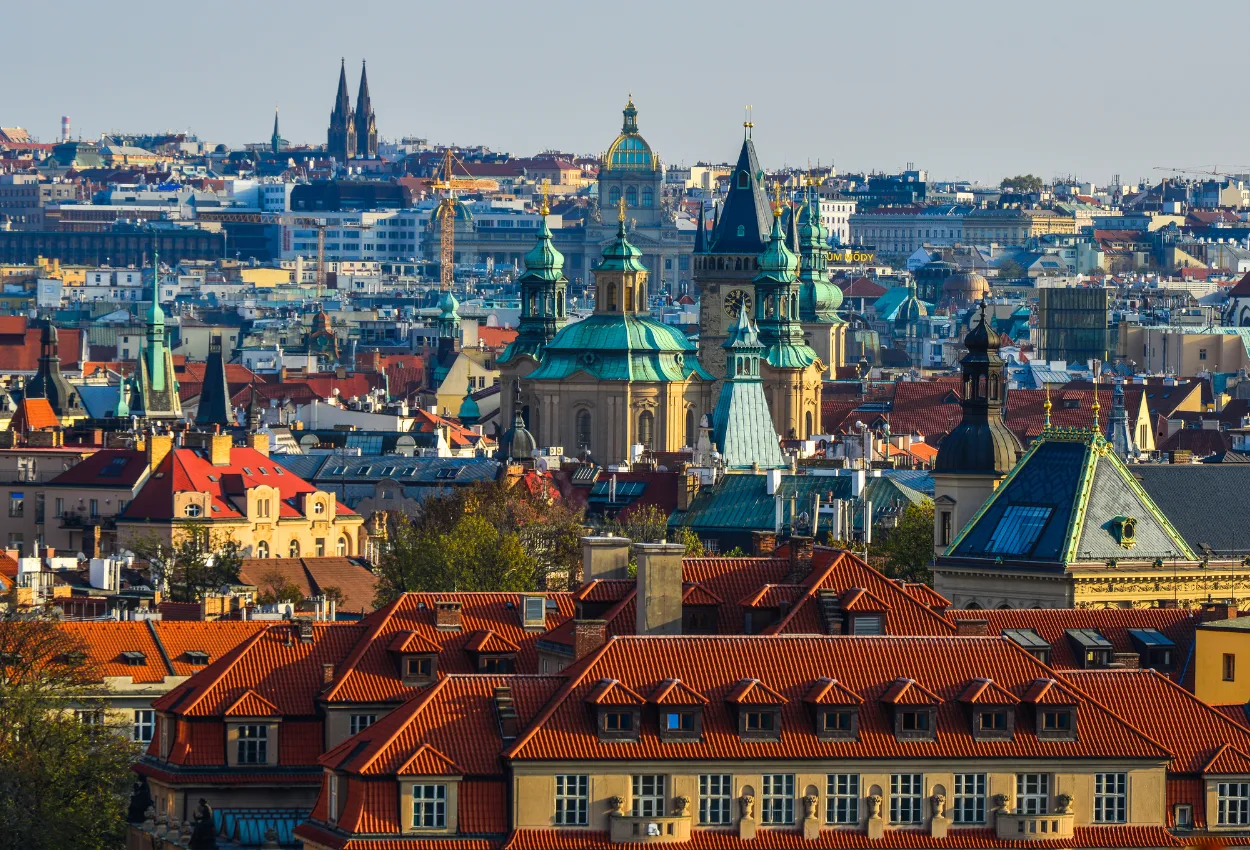
“The first, of course, getaway to Czechia is Prague. It always was, and it always will be forever,” Andelová said. She pointed to trips from Prague to spa regions, the Tisá Walls, Czech Switzerland, the Krkonoše mountains and South Bohemia.
Andelová said Czech Tourism data showed a change in the way visitors from Arab markets travel around the country. “According to our statistics, it’s visible that Arab clients are prolonging theire stay in Czechia, and are also exploring regions more than it was like two to four years ago.”
Spa demand has roots going back decades
Moreover, Andelová said demand for treatment at Czech spas was not a recent trend. “This trend has been there since a long time ago,” she explained, adding that the sector went beyond wellness.
She also compared Czechia’s treatment offering with Austria and Switzerland and said cost was part of its appeal.
“I don’t want to compare it to Austria or to Switzerland because there is no comparison. We are on the same level, very affordable. That’s important, of course,” she said, adding safety, halal food and Arabic-speaking staff are also part of the tourism offer.
“We are safe country, one of the eight most safest countries in the whole world. People can freely walk during the night outside – especially women and young people. There is no gun violence, and there’s also very less robbery.”
UAE, Saudi Arabia form Czech Tourism’s GCC data focus
Within the Gulf, Czech Tourism tracks the UAE and Saudi Arabia as markets in its data, Andelová said. “Actually, in the Gulf, we are officially tracking. We have a department for the data tracking only UAE and only Saudi,” she said, adding Qatar was not tracked in the same way because of the size of its national population.
Tourism statistics are also based on nationality rather than where a person lives, she said. “If you are travelling from the GCC region but with a different nationality, you will fall into to different category.”
Visitors who are not travelling for treatment or spa stays generally spend about three nights in Prague, Andelová said. “If people are not travelling for medical reasons or for the spa – it is a short stay. Sometimes they do a one-day trip somewhere very close, just around Prague, and that’s it.”
Many then continue to destinations including Austria or Hungary. However, treatment travellers follow another pattern, with some staying for weeks and travelling with family members.
Czech Tourism seeks to spread Prague visitors beyond the centre
Andelová said overtourism affected parts of Prague rather than the whole capital.
“Overtourism is a case of Prague, but not Prague as a whole city, rather the centre of Prague – such as the Old City, Charles Bridge, castle, and more,” she said.
Czech Tourism works with Prague City Tourism to draw attention to other parts of the city. “We work in close cooperation, and we are trying to, or we are educating our tour operators and media. If you are staying in Prague, it is not only walkable narrow streets and lanes.”
She cited Prague 7 and Holešovice, pointing to art, exhibitions, statues, restaurants, bars and nightlife, adding that these areas offered visitors places where residents also spend time.
Middle East crisis leads to about 30% drop
When asked about the impact of the war, Andelová said tourism traffic had fallen by about 30 per cent. “But it’s not so much compared to our neighbouring countries. But still, if one whole season is over, it’s very hard for suppliers, hotels, and the whole environment in general.”
The situation also forced Czech Tourism to reconsider spending and campaigns.
“We were changing our plans, like our marketing plans, and deciding whether to be more active, where to spend money, because no one knows how long it will take. I hope the next year is stable because it is still not very clear.”
Czech Tourism has begun preparing its plans for the following year during August and September. “Definitely, if ATM happens again, we will be there. And most probably, we will be also in Riyadh.”
The programme will continue to include workshops, media visits and work with tour operators as well as hotels, restaurants and other tourism businesses, she concluded.