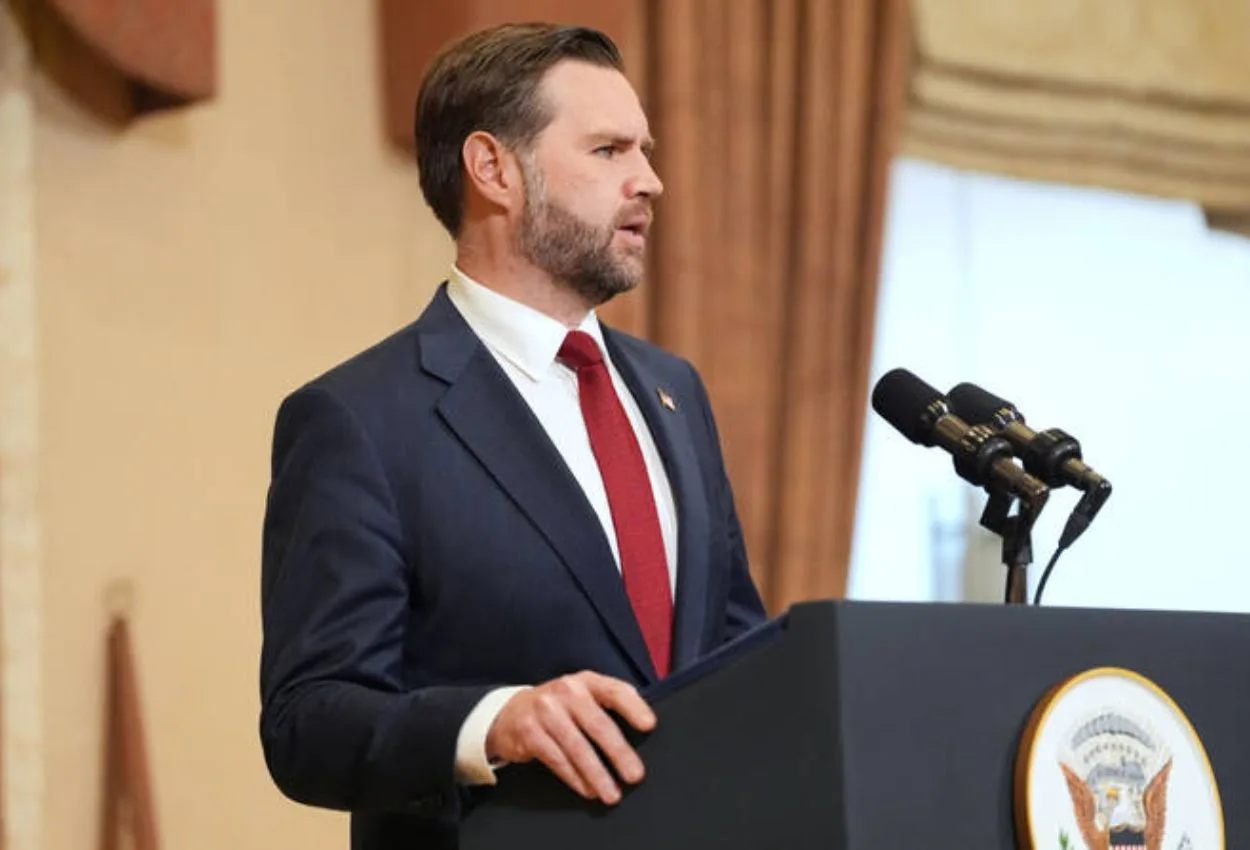
JD Vance arrived in Switzerland on Sunday morning to lead US negotiations with Iran, touching down at Emmen Air Base at 05:59 local time alongside Second Lady Usha Vance, as both sides attempt to build on an interim ceasefire agreement signed last Wednesday.
The talks follow a 14-point temporary deal brokered by Pakistan and signed by President Donald Trump and Iranian President Masoud Pezeshkian to end a conflict now approaching four months. The two delegations are expected to spend several days in discussions.
The timing is complicated. Iran’s Revolutionary Guard declared the Strait of Hormuz closed on Saturday, citing what it described as Israeli “crimes” in Lebanon that it said breached US ceasefire commitments. Iran’s Supreme Leader adviser Mohammad Mokhber accused Washington on X of failing to implement the first clause of the agreement, which calls for a ceasefire “on all fronts,” including Lebanon. He said energy flows in the Middle East would remain suspended for as long as the deal existed only on paper.
US Central Command pushed back, saying 55 commercial vessels carrying more than 17 million barrels of oil transited the strait on Saturday without incident. The command said American forces would continue to guarantee freedom of navigation.
Before departing, Vance told Fox News he had seen no evidence of an actual Hormuz closure and said he was confident the ceasefire would hold. Speaking to reporters at Joint Base Andrews in Maryland, he said talks would likely last “a few days” and that he hoped to make progress on both the nuclear file and the Lebanon ceasefire.
Trump, separately, left open the possibility of the United States imposing transit fees on the strait “in exchange for services rendered as the custodial nation of the Middle East” if no permanent deal is reached, while clarifying that no such fees would apply during the 60-day ceasefire period.
The Iranian delegation in Switzerland is led by chief negotiator Mohammad Bagher Ghalibaf and includes Foreign Minister Abbas Araghchi alongside senior officials from the security, oil, and central banking sectors. The American team, beyond Vance, includes envoys Steve Witkoff and Jared Kushner. Pakistan’s Prime Minister Shehbaz Sharif and army chief Asim Munir are also expected to attend sessions during the week, the Pakistani foreign ministry said.
Iran’s foreign ministry spokesperson Esmail Baghaei said Tehran would press in Switzerland for commitments to be honoured, noting a history of the other side failing to follow through on agreements.
The Lebanon ceasefire, meanwhile, remains fragile. Israeli forces and Iran-backed Hezbollah continued exchanging strikes, a dynamic Iran has cited as justification for its Hormuz declaration and the basis of its claim that Washington is in breach of the interim deal.