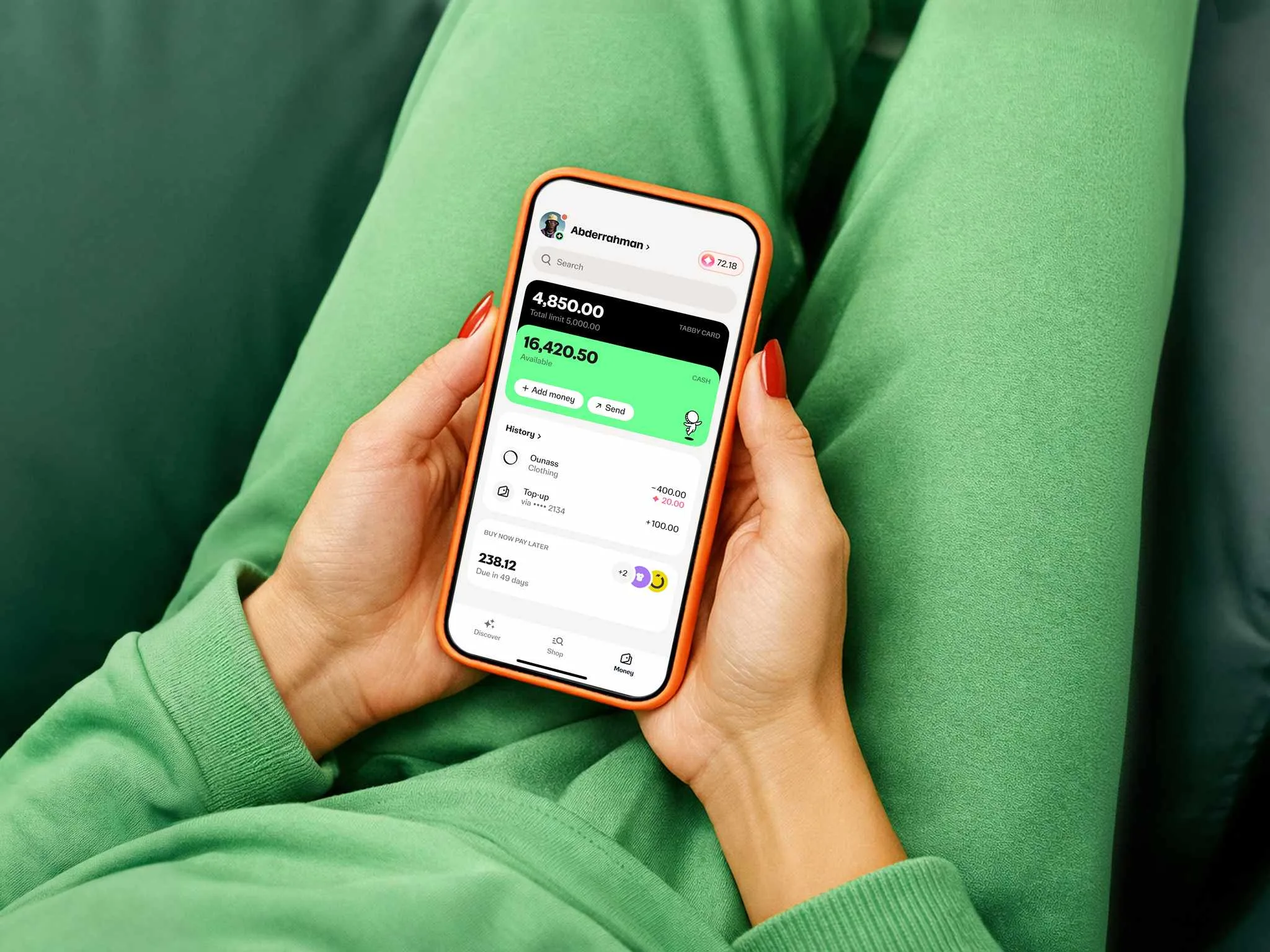
Tabby, the buy-now-pay-later platform used by more than 25 million consumers across Saudi Arabia, the UAE and Kuwait, has launched Tabby Cash, a fee-free account designed to compete with traditional current accounts and debit products.
The product arrives alongside a new brand identity, as the company formally shifts its positioning from flexible payments provider to a broader money management platform.
More than 150,000 people are already using Tabby Cash, with a full rollout to all UAE residents over 18 expected in the coming weeks. Those not yet onboarded can join a waitlist.
Tabby Cash is the first product built on the company’s Stored Value Facilities licence, granted by the Central Bank of the UAE. There are no account or card fees. Local transfers are free and unlimited, with international transfers described as coming soon.
The accompanying Tabby Cash Card earns 3 per cent cashback on chosen spending categories and all international transactions for Tabby Plus subscribers, or 1 per cent for standard users. As a launch offer, all cardholders earn the 3 per cent rate until November 1,2026.
“We started Tabby because we believed money should be flexible enough to work around your life, not the other way around. That belief hasn’t changed, but what we’re doing about it has. We’re building a place where people have full control over their money, with the same clarity and flexibility they’ve come to expect from us,” Hosam Arab, CEO and Co-Founder of Tabby said in a statement.
The pitch is partly built on the cost of incumbents. Credit cards in the UAE carry annual interest rates of 30 to 46 per cent, with interest compounding on unpaid balances. Standard current accounts often require minimum salary thresholds and charge fees for falling below balance limits. International transfers can cost AED 75 or more before exchange-rate markups are applied.
Tabby, which processes over $18 billion in annualised sales volume across its 65,000 retail partners, is positioning itself as a lower-cost alternative built on a tech-native infrastructure with no branches or legacy systems to absorb.