US-Israel war on Iran: Kuwait releases footage of drone strike; Prime Minister makes hospital visits; Latest updates
Follow live updates here

Follow live updates here
The Southern Transitional Council (STC) of Yemen expressed serious concern over renewed Iranian escalation in the region, including missile and drone strikes on Kuwait and Bahrain and threats to close the Strait of Hormuz.
In a statement by STC leader Aidaros Al-Zubidi, the council warned that Iran had for the first time publicly named the Bab al-Mandab Strait as a potential target, describing it as the most vulnerable point in regional maritime security.
Al-Zubidi said a security vacuum had formed along Yemen’s southwestern coast following the dismantling of STC forces as a result of a Saudi military campaign, leaving the area exposed at precisely the moment Iran was threatening to exploit it.
He called for a comprehensive response to counter Iran and its proxies across both the Red Sea and the Strait of Hormuz simultaneously, warning that securing one end of the strategic corridor while leaving the other unprotected would continue to give Iran and the Houthis dangerous leverage over global security and energy supplies.
The STC reaffirmed its position as the most credible force on Yemen’s southern coast and expressed readiness to play a role in protecting the waterway, stating it was intensifying engagement with regional and Western partners toward that goal.
Kuwait’s Prime Minister Sheikh Ahmad Abdullah Al-Ahmad Al-Sabah visited victims of the Iranian drone strike on Kuwait International Airport at Jaber Al-Ahmad Hospital on Thursday, accompanied by Health Minister Dr. Ahmad Abdulwahab Al-Awadhi.
He directed authorities to mobilise all available medical and technical resources to ensure the highest standards of care for the injured.
Sheikh Ahmad expressed his condolences over the death of one person in the attack and wished a speedy recovery to all those wounded.
The head of the UAE’s National Media Office, Abdulla Al-Hamed, issued a stark condemnation of Iran’s attacks on Kuwait and Bahrain, describing Tehran as standing at the forefront of global terrorism and the primary destabilising force in the region.
He said Iran’s targeting of civilian infrastructure and vital facilities exposed a regime built on chaos and violence rather than dialogue and diplomacy, and represented further evidence of its moral and political bankruptcy.
Al-Hamed argued that the attacks had made Gulf unity not merely desirable but an existential necessity and strategic imperative, stressing that the security of Gulf states was indivisible and that an attack on one was an attack on all.
He called for firm collective resolve to protect the shared destiny and developmental gains of GCC peoples, invoking the wisdom of the bloc’s founding leaders who established the council on the conviction that its members are bound together in security, interests, and fate.
Mojtaba Khamenei claimed that Iran’s armed forces had dealt a decisive blow to what he described as imperialist enemies led by the United States, and that the adversary was now experiencing deep humiliation both militarily and domestically.
He warned that the enemy had shifted its focus to hybrid warfare targeting two fronts: the resilience of the Iranian people and the decision-making of the country’s officials, using doubt, despair, fear, and discord as its primary tools.
He called on Iranians to counter this by maintaining unity, clear-sightedness, and avoiding what he characterised as the enemy’s narrative. He added that any action that discouraged or bred distrust among Iranians amounted to aiding the enemy.
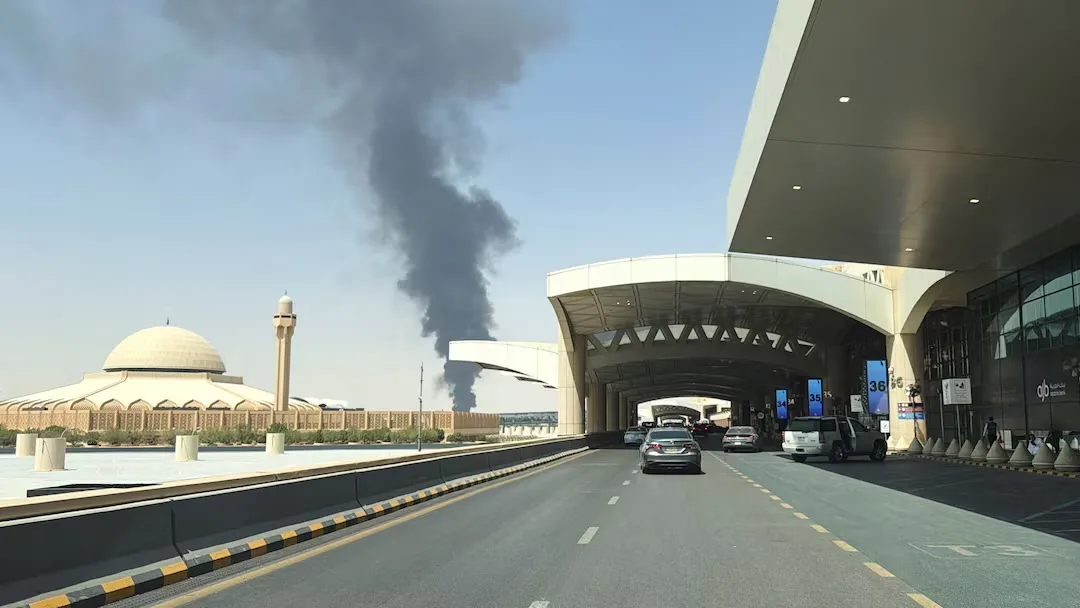
Kuwait’s Directorate General of Civil Aviation released footage capturing the first moments of the Iranian drone strike on Terminal 1 at Kuwait International Airport on June 3, 2026. The attack resulted in at least one death, serious injuries to a number of people, and extensive material damage to the terminal.
Subscribe to our free newsletter