
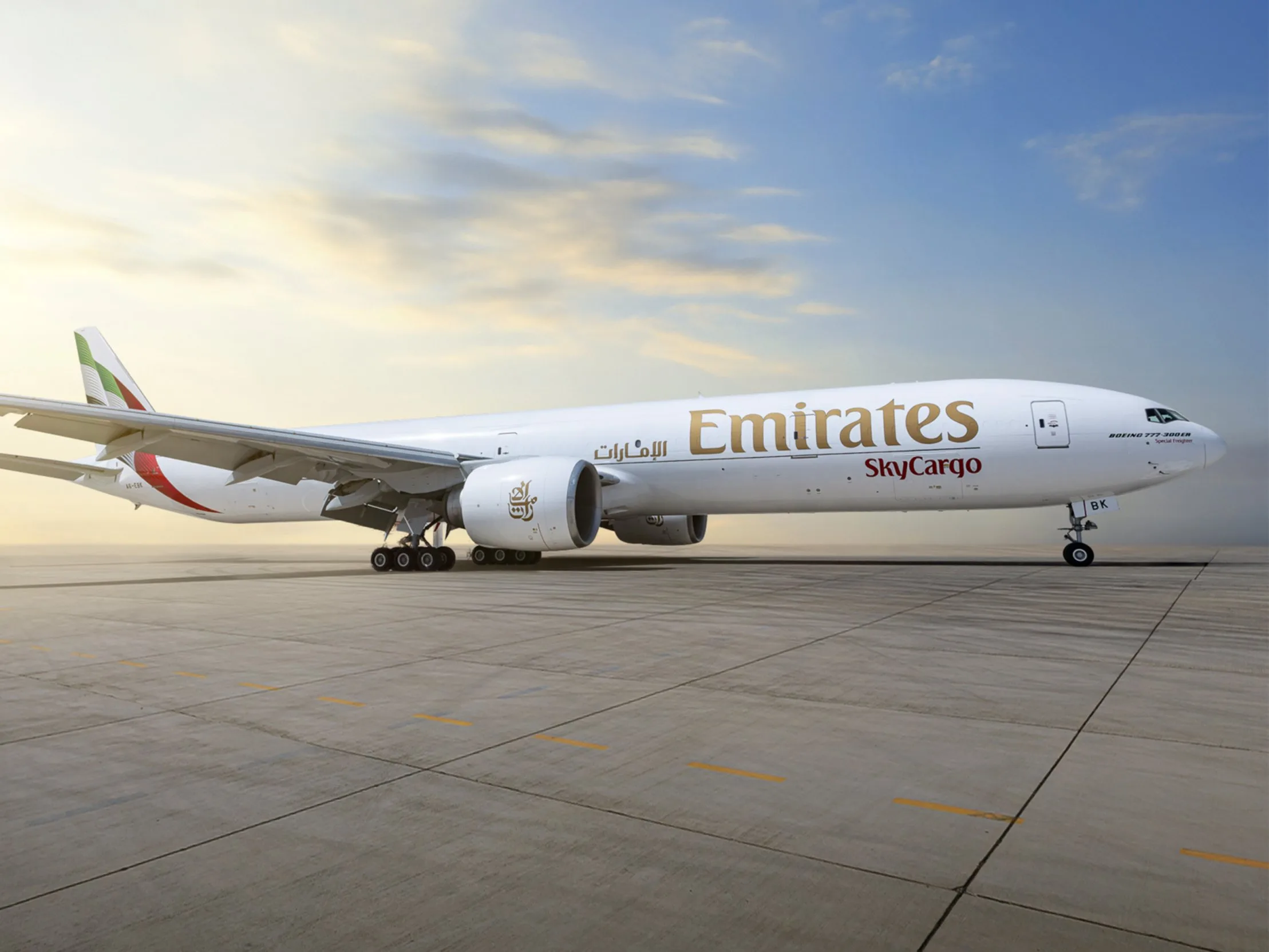
Emirates SkyCargo has become the first combination carrier to operate the Boeing 777-300ERSF, a passenger aircraft converted for freight use, with the inaugural commercial flight departing Hong Kong bound for Dubai carrying more than 100 tonnes of cargo.
The converted aircraft, registered A6-EBK, offers 100 tonnes of payload capacity and 811 m³ of cargo volume. That represents a 25 per cent increase in cargo volume compared with the Boeing 777-F production freighter, and the converted variant accommodates 47 pallet positions, ten more than the production model.
Emirates says the additional volume makes it well suited to e-commerce shipments, which currently account for around 20 per cent of global air cargo tonnage.
The 777-300ERSF is the sixth new freighter to join Emirates SkyCargo’s fleet since March 2026, following five Boeing 777-F production aircraft.
The carrier plans to take delivery of five more Boeing 777-Fs and one additional converted 777-300ERSF before the end of December 2026, and three further converted variants in 2027, bringing its total converted fleet to five aircraft by the close of next year.
“The induction of the first converted Emirates Boeing 777-300ERSF into operational service represents the next step in the expansion of our fleet and operational agility. We are optimising our fleet assets by converting older Boeing 777-300ER passenger aircraft to meet the growing demand for air cargo capacity to transport goods rapidly across the world. Combined with our growing fleet of Boeing 777-F production freighters, we have already been able to scale our global freighter network from just over 40 destinations in February this year to 62 destinations currently and growing. We are providing our global customers with scalable cargo capacity and ultimate flexibility and connectivity when moving cargo to and through our hub in Dubai,” Badr Abbas, Emirates SkyCargo’s Divisional Senior Vice President said in a statement.
Abbas added that the freighter build-up has already allowed the carrier to grow its global freighter network from just over 40 destinations in February 2026 to 62 currently, with further growth planned.