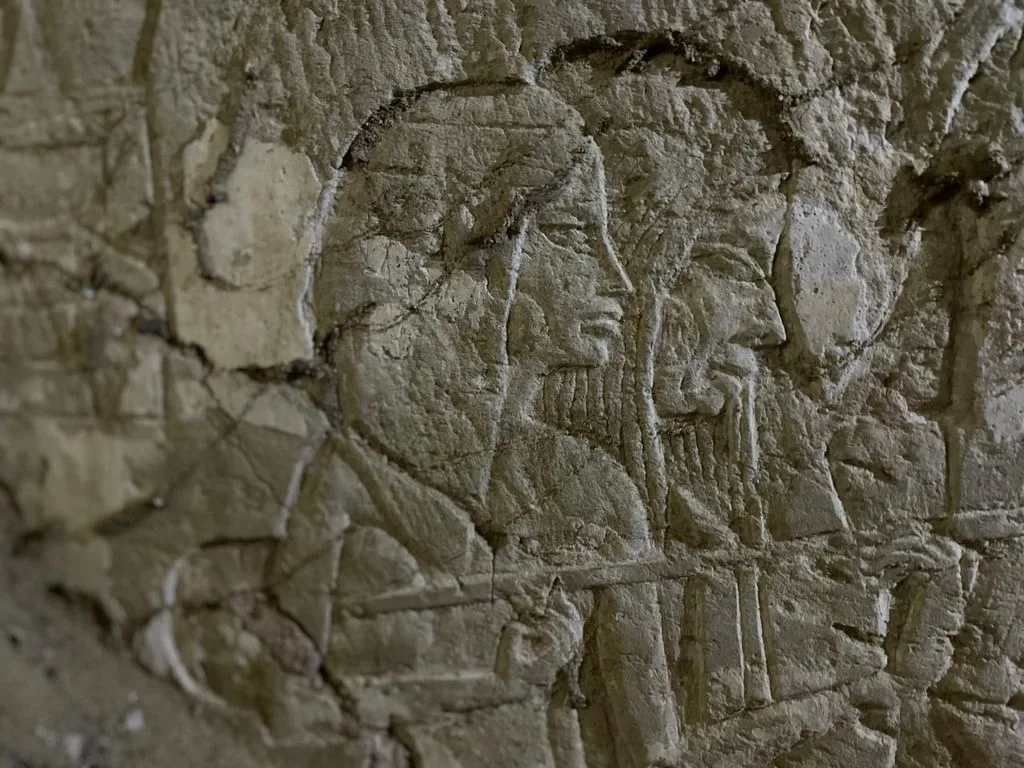
An Egyptian archaeological mission working at the Bubasteon necropolis in Saqqara has discovered three rock-cut tombs from the New Kingdom period, uncovered during excavations along the eastern edge of the site’s cliff face.
Egypt’s Minister of Tourism and Antiquities, Sherif Fathi, said the find adds to Saqqara’s standing as a site of continuous archaeological significance, contributing to the study of the Bubasteon necropolis and paving the way for further discoveries.
Each tomb belongs to a named individual. The first is attributed to Mentouhotep, who held titles including hereditary prince, mayor, and overseer of foreign lands and the army of the city of Khepeshet. The second belongs to a chief merchant of the House of Ptah named Pare-em-waya, also known as Samut, and includes references to his wife Tuy, his mother Atpiu, and his four sons. The third tomb, belonging to an overseer of the household named Nahsy, yielded a fragment of a column bearing a hieroglyphic text referencing the return of a military commander from the land of Naharin in northern Syria, which the ministry described as new evidence of Egypt’s relationships with Near Eastern territories during the New Kingdom.
The ministry said the discoveries enrich historical understanding of senior statesmen and members of Egyptian society during that period and revive knowledge of those buried at the ancient necropolis of Memphis.