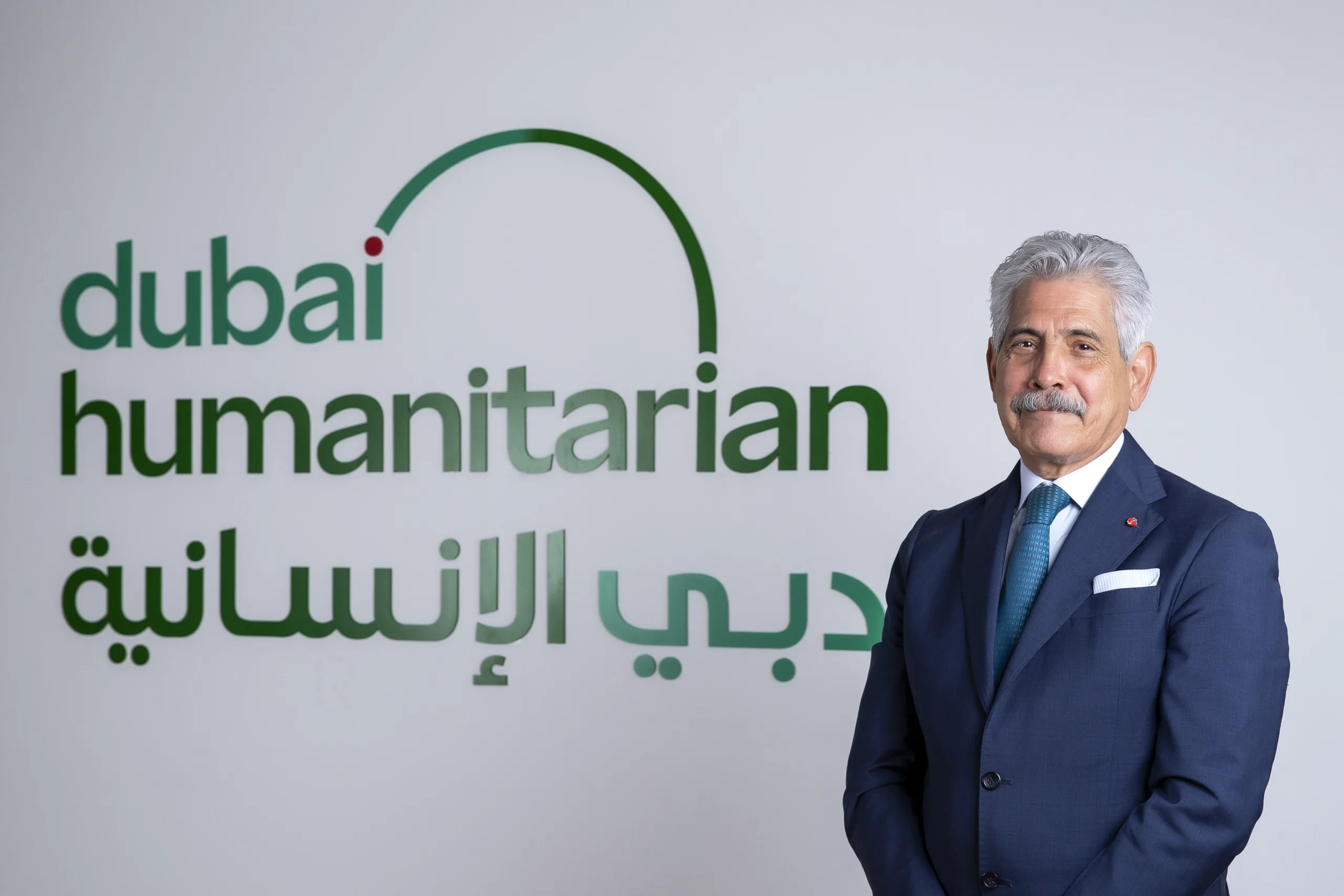
Humanitarian systems must be built to anticipate disruption rather than simply react to it once it arrives, according to Giuseppe Saba, the CEO of Dubai Humanitarian.
“No single organisation can achieve this alone. It requires coordinated global partnerships, shared responsibility and sustained investment to ensure that life-saving assistance continues to reach vulnerable populations, regardless of geopolitical developments,” he told Lana in an exclsuive interview.
Saba’s comments come at a time when ports across the region have closed or scaled back, airspace has tightened and insurers have raised premiums.
For Dubai Humanitarian, the hub that stores and dispatches aid on behalf of the United Nations and dozens of relief organisations, the task has been to keep that aid moving through the conflict regardless.
Saba spoke to Lana about the decisions his team has made since the conflict escalated, the volume of aid that has passed through the hub, and the parts of the humanitarian system he believes still need to change.
How the US-Iran war made humanitarian operations more complex
According to Saba, the conflict “has significantly increased the complexity of humanitarian operations across the Middle East and beyond.”
Disruptions to maritime routes and aviation corridors, he said, have led to “longer transit times, higher transport costs, higher insurance premiums and reduced supply-chain predictability.”
The effects, he said, are not confined to the countries directly touched by the fighting. “Because humanitarian logistics are globally interconnected, disruptions in one region often create ripple effects across multiple operations worldwide,” Saba said, adding that despite this Dubai Humanitarian has remained fully operational, working alongside humanitarian organisations, UN agencies, government entities and logistics partners to ensure supplies keep reaching people who need them.
However, when asked about the biggest obstacles his organisation currently faces, Saba pointed to the difficulty of “maintaining uninterrupted humanitarian access amid rapidly changing operational conditions.”
Route closures, airspace restrictions, maritime disruptions, longer transit times and evolving security risks, he said, all affect how quickly and predictably aid can move.
Cost is a parallel problem, Saba said, explaining that humanitarian organisations are operating “under mounting financial pressure,” with rising fuel prices, transport costs and insurance premiums straining budgets that were already stretched.
“Coordinating multiple stakeholders across borders, while ensuring customs clearance, regulatory approvals and secure last-mile delivery, has also become more complex, making close collaboration across the humanitarian ecosystem more important than ever,” he added.
Dubai Humanitarian reroutes aid through UAE and Oman ports
With familiar shipping routes disrupted, Dubai Humanitarian turned to alternatives.
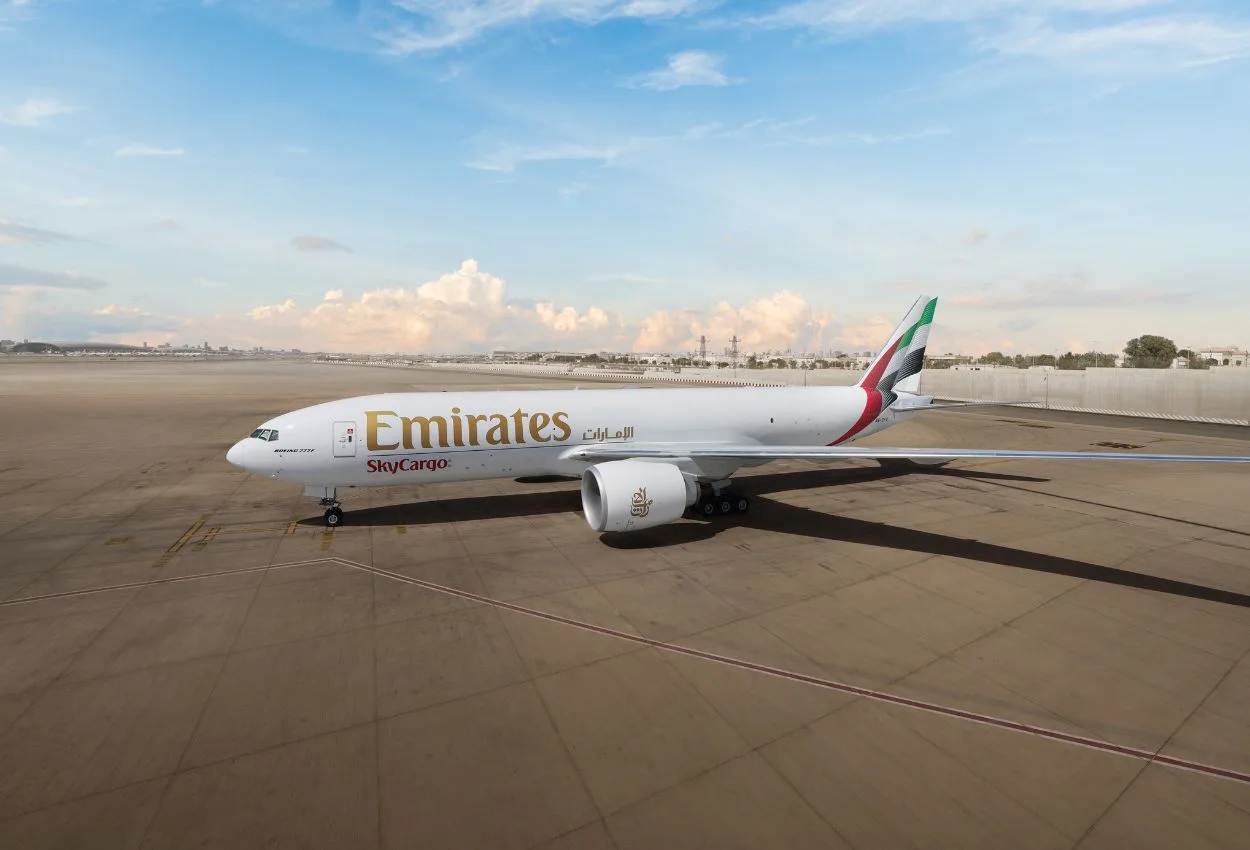
Saba said flexibility “has been absolutely essential in these circumstances, as in any crisis.” Cargo that could no longer move along traditional paths was rerouted through ports across the UAE and Oman, then carried overland to Dubai Humanitarian, in coordination with local and national partners, including DP World and customs authorities.
The organisation also broadened its use of multimodal logistics, combining sea, road and air transport depending on what a shipment required.
Overland convoys, Saba said, have become “particularly important” for reaching Gaza, Lebanon and Syria, while established aviation corridors continue to support urgent airlifts.
Behind these adjustments sits a system of ongoing monitoring, Saba said, which involves the continuous tracking of regional developments.
This allows Dubai Humanitarian to adapt its routing quickly, so that the flow of aid does not stop even as conditions on the ground change.
In addition, figures shared by Saba give a sense of scale. The international humanitarian community currently prepositions approximately $185 million of supplies at Dubai Humanitarian, stock that can be deployed rapidly whenever an emergency arises.
Between January and August 2026, 624 outbound shipments left the hub, reaching 92 countries.
Saba described the figure as evidence of “the resilience and adaptability” of the logistics network, achieved despite the disruptions that the conflict has caused to the import and export of aid.
Which countries have received aid from Dubai Humanitarian?
Dubai Humanitarian supports operations “wherever needs arise,” Saba said. Recent operations have supported communities in Gaza, Lebanon and Afghanistan, where conflict has driven the need for assistance. Aid facilitated through the hub has reached 92 countries so far this year.
The assistance, the Dubai Humanitarian chief said, supports displaced populations, healthcare facilities, families and communities affected by conflict, natural disasters and other emergencies, channelled through the programmes run by Dubai Humanitarian’s partners.
Not every shipment has been tied to the regional conflict. Saba said Dubai Humanitarian also facilitated assistance to Uganda, in support of the response to an Ebola outbreak, and to Nepal, following floods there. He pointed to both as evidence of the hub’s capacity to respond to different kinds of crises across multiple regions at once.
What Dubai Humanitarian has been shipping
Saba said the priority for Dubai Humanitarian is to deliver “life-saving humanitarian assistance quickly.”
“Recent shipments have included medicines and medical supplies, emergency health kits, trauma and surgical supplies, medical consumables, and other essential relief items, coordinated with organisations such as the World Food Programme, the UN Refugee Agency, the World Health Organization (WHO), UNICEF, the International Federation of Red Cross and Red Crescent Societies (IFRC), and Doctors without Borders (Medecins Sans Frontieres, MSF),” he said, adding that the supplies help sustain healthcare services, support emergency medical response and improve access to care for communities affected by conflict and displacement.
In addition, coordination sits at the centre of how Saba describes Dubai Humanitarian’s work. “Partnership and coordination are at the heart of our humanitarian response,” he said, noting that the hub brings together more than 80 humanitarian organisations, UN agencies, NGOs and private-sector partners to enable action.
Following the escalation of the conflict, Dubai Humanitarian activated its Emergency Taskforce, a body designed to strengthen coordination among humanitarian organisations, government authorities, customs agencies and logistics providers.
“We continue to work closely with partners, including our members at Dubai Humanitarian, to monitor risks in real time, streamline operational processes, optimise transport solutions and ensure that life-saving assistance reaches affected communities as efficiently as possible.”
However, rising fuel prices, transport costs and insurance premiums run through much of what Saba described.
He said the increases have raised the cost of humanitarian operations at a point when many organisations already face funding constraints, and that every rise in logistics costs eats into the resources available for programming unless additional support is found.
“This underscores the importance of efficient logistics, stronger public-private partnerships and innovative financing mechanisms. Through initiatives such as the Global Humanitarian Impact Fund, Dubai Humanitarian helps partners rapidly mobilise resources for critical airlifts and emergency overland operations when speed is essential,” he said.
How Dubai Humanitarian is preparing for future crises
When asked what measures are in place to ensure aid reaches people safely and quickly, Saba said preparedness is key along with
As Saba mentioned, by setting up its Emergency Taskforce early in the crisis, Dubai Humanitarian was able to set up continuous monitoring of regional developments, and diversified transport options through multimodal logistics.
Combining prepositioned stocks, flexible routing, coordination with government authorities and logistics providers, and collaboration with sister humanitarian hubs worldwide, Saba said, lets the organisation reduce delays and maintain what he called the rapid, safe and reliable delivery of aid, “even in highly complex operating environments.”
However, according to him, today’s humanitarian challenges require “stronger and more sustained international cooperation,” he said.
Governments, he explained, can help by safeguarding humanitarian corridors, establishing alternative supply routes, and reducing the regulatory bottlenecks that slow emergency response. He said approaches along these lines have already been put in place in the UAE and the wider region, and that there is scope to build on them.
Businesses, Saba added, can contribute logistics expertise, innovation, transport capacity and financial support. The international community, he added, should keep investing in preparedness, prepositioning, surge capacity and infrastructure built to withstand disruption.
“The recent crisis has also reinforced the strategic importance of neutral humanitarian hubs and prepositioned stockpiles. Humanitarian systems must evolve to anticipate disruption, not merely react to it,” he concluded.