Dubai’s Executive Council has approved a set of policies designed to align the emirate’s demographic expansion with its economic and urban development plans, covering urban centres, population planning, and digital government authorisation.
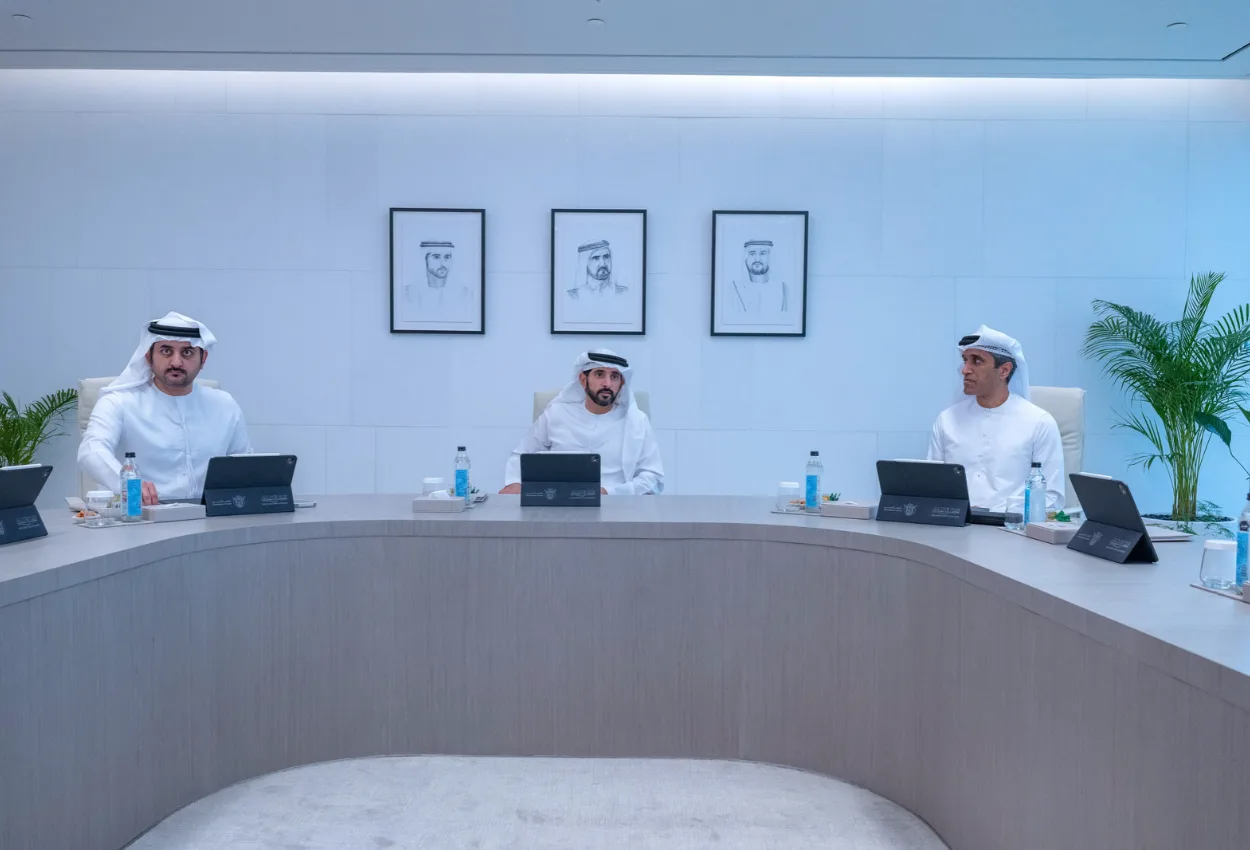
Sheikh Hamdan bin Mohammed bin Rashid Al Maktoum, Crown Prince of Dubai, Deputy Prime Minister and Minister of Defence of the UAE, and Chairman of The Executive Council of Dubai, chaired the meeting at Emirates Towers.
“Under the vision of Mohammed bin Rashid, Dubai has become an exceptional, inspiring, people-centric model. To sustain this model, we are investing in urban centres to develop integrated communities that meet people’s aspirations and support sustainable growth. The Urban Centres Development Plan, with a budget exceeding AED2 billion by 2040, will contribute to an increase in the real estate value of the targeted centres by AED20 billion, making them more vibrant places to live, work and invest,” he said in a statement.
The Urban Centres Development Plan, overseen by the Supreme Committee for Urban Planning and Dubai Municipality, covers six main urban centres and 42 supporting sub-centres, together accounting for 12 per cent of Dubai’s urban area.
With a budget exceeding AED2 billion, the plan is projected to raise the real estate value of targeted centres by AED20 billion by 2040. Its focus is on concentrating population and employment around mass transit nodes, diversifying land use, and reducing commute distances.
The share of residents living near metro stations is targeted to rise from 52 per cent to 74 per cent, while public services coverage is set to improve from 74 per cent to 85 per cent.
“This plan is an investment in Dubai’s future and the sustainability of its growth, strengthening its leadership across different domains and its position as a city that places people’s wellbeing at the heart of development. Dubai is a preferred city to live, work and invest, welcoming investors, entrepreneurs and talent, and home to a community of more than 200 nationalities. Today, we approved the Sustainable Population Planning Policy, which links population growth forecasts with our economic and urban plans and guides the development of services and infrastructure in line with residents’ needs. Our goal is for Dubai’s economic growth to keep pace with the aspirations of its citizens and residents, expand opportunities for individuals and families, and reinforce the emirate’s leadership in attracting and investing in talent and skills,” Sheikh Hamdan added.
The Council also approved the Sustainable Population Planning Policy, a framework that ties demographic forecasts to infrastructure and service planning.
The policy is designed to direct investment toward high-productivity sectors in line with the Dubai Economic Agenda D33, with the stated aim of raising average incomes and strengthening the city’s appeal to skilled workers.
A third initiative, the Digital Authorisation System, was approved to let individuals and companies delegate others to complete government transactions on their behalf, without requiring notarisation or legal attestation for low-risk services.
The system, developed and operated by Digital Dubai, uses UAE PASS for identity verification and targets a fully paperless process. The Council set a target of 100 per cent fraud prevention effectiveness and a 90 per cent score on the Customer Effort Index.
Sheikh Hamdan linked the approvals to Dubai’s ambitions in digital government, noting the emirate’s second-place ranking in the 2026 Smart City Index. “Our ambition is to set a global benchmark for digital government services in ease of access, efficiency and integration,” he said.