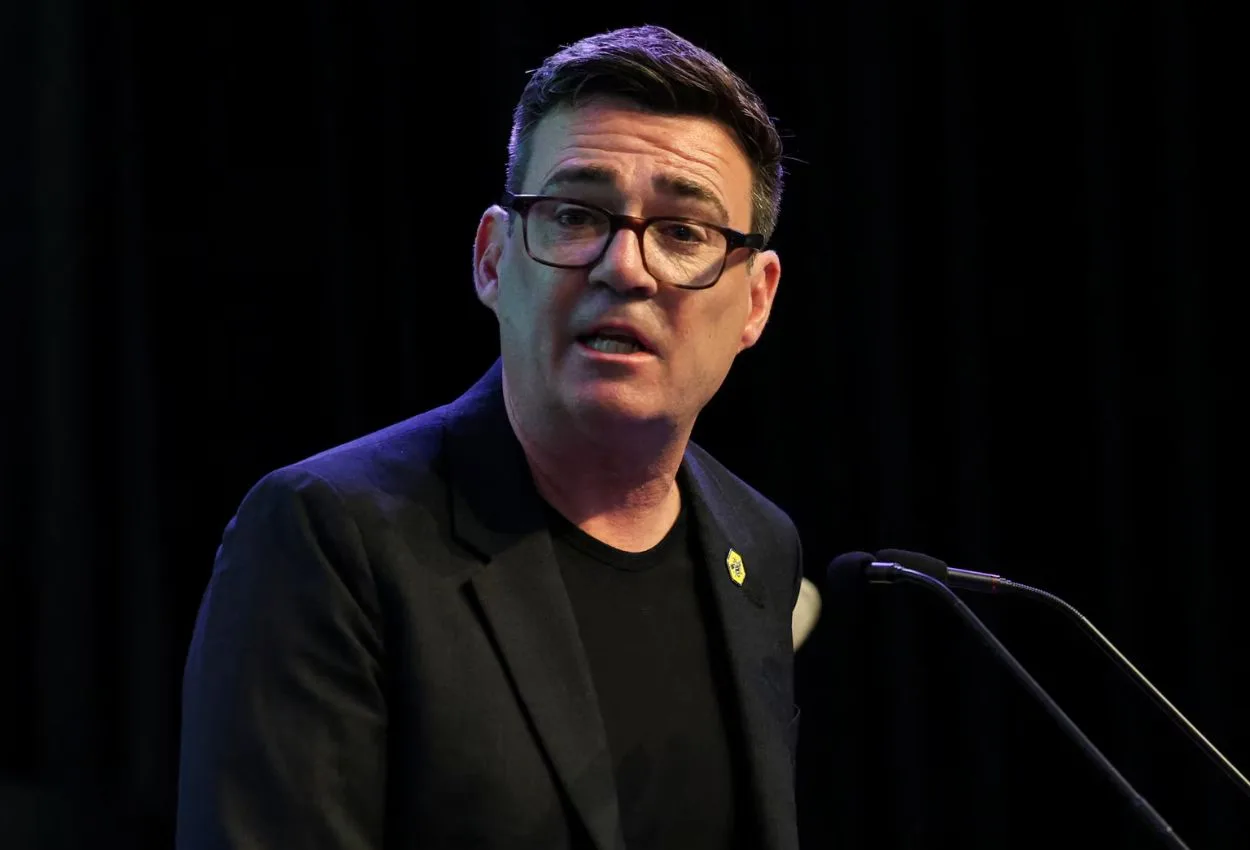
Andy Burnham has returned to Parliament with a path to the Labour leadership and, if he wins it, Downing Street.
Burnham, 56, won the Makerfield by-election on June 18, giving him a Commons seat after nine years as mayor of Greater Manchester. The result came after Josh Simons, the Labour MP for Makerfield, resigned on May 14 to give Burnham the chance to stand.
The win also ended Burnham’s time as mayor. Under rules covering Greater Manchester’s mayor, who also holds police and crime commissioner powers, Burnham could stand for Parliament while mayor but was disqualified from the mayoralty once he became an MP. Paul Dennett, the mayor of Salford, became acting mayor, and a Greater Manchester mayoral by-election must be held.
Burnham’s victory has moved the Labour leadership question from Westminster speculation to party process. Sir Keir Starmer has said he will step down as Labour leader and remain as caretaker prime minister until a successor is chosen. Nominations are due to open on July 9, with Labour expected to have a new leader in place by September 1.
Burnham enters Labour leadership race
Burnham has announced he will stand to become Labour leader and, by extension, prime minister. Rivals must secure 81 nominations, equal to 20 per cent of Labour MPs, to enter the contest.
His win in Makerfield followed a campaign built around the argument that Labour needed a change in direction. Burnham defeated Reform UK, taking 55 per cent of the vote to Reform’s 35 per cent.
In his victory speech, Burnham said Labour had “a final chance to change”. He added: “There will be no second chance.”
He also said the result showed that voters wanted “more power for the north and everywhere forgotten by Westminster”.
But, who exactly is Andy Burnham?
Burnham is not new to national politics. He was first elected as MP for Leigh in 2001 and served in government under Tony Blair and Gordon Brown.
His posts included Parliamentary Under-Secretary at the Home Office, Minister of State at the Department of Health, Chief Secretary to the Treasury, Secretary of State for Culture, Media and Sport, and Secretary of State for Health.
In opposition, he served as Shadow Health Secretary, Shadow Education Secretary and Shadow Home Secretary.
He has twice run for the Labour leadership. In 2010, he finished fourth in the contest won by Ed Miliband. In 2015, he lost to Jeremy Corbyn.
Burnham left Westminster in 2017 to become the first elected mayor of Greater Manchester. He was re-elected in 2021 and 2024.
As mayor, Burnham built his profile around devolution, transport, housing, skills and public services.
His mayoralty included work on the Bee Network, a transport system designed to integrate buses and trams under local control. He also set out plans on housing, technical education, health and community services.
Burnham has used Greater Manchester as proof of what he calls “Manchesterism”. He has described the approach as “business-friendly socialism”, with more public control over services, partnership between the state and business, and more power for regions.
He has said his politics would mean “the end of neoliberalism”.
Style and public image
Burnham is known by supporters as the “King of the North”, a nickname linked to his stance on regional power and his clashes with Westminster during the pandemic.
He has presented himself as a politician rooted outside London, despite his career in Parliament and government. His public style is built around direct videos, local campaigns and a less formal dress code than many Westminster figures.
He is often seen in T-shirts, jackets and a worker bee badge, a symbol associated with Manchester. Away from politics, he plays football and DJs 1990s music.
Policies and criticism
Burnham identifies as a democratic socialist. He has argued for public control in sectors such as transport and water, wider devolution, and a state that works with business to spread wealth.
He has also had to clarify or step back from earlier comments on the power of bond markets and his wish to see Britain rejoin the European Union in his lifetime.
Conservative and Reform critics have sought to portray Burnham’s programme as more interventionist. His supporters argue that his Greater Manchester record shows he can work with business, councils and voters outside Labour’s base.
Why Starmer is leaving
Starmer’s decision to resign follows pressure inside Labour and falling support outside it. He said the party had reached a view on whether he was best placed to lead it into the next general election.
“I have heard the answer,” Starmer said, “and I accept that answer.”
His government has faced criticism over growth, public services and living costs. Labour has also lost support to the Green Party and Reform UK.
Starmer has had more support for his work abroad, including backing Ukraine and managing foreign policy crises, but domestic pressure has ended his premiership timetable.
What happens next
Burnham’s next hurdle is the Labour leadership process. If no rival secures enough nominations, he could take the leadership without a contest. If there is a race, Labour MPs, members and affiliates will shape the result under party rules.
If Burnham becomes Labour leader while Labour remains the governing party, he would be invited to form a government and become prime minister.
That would complete a return that began with a by-election in Makerfield and now points to No 10.