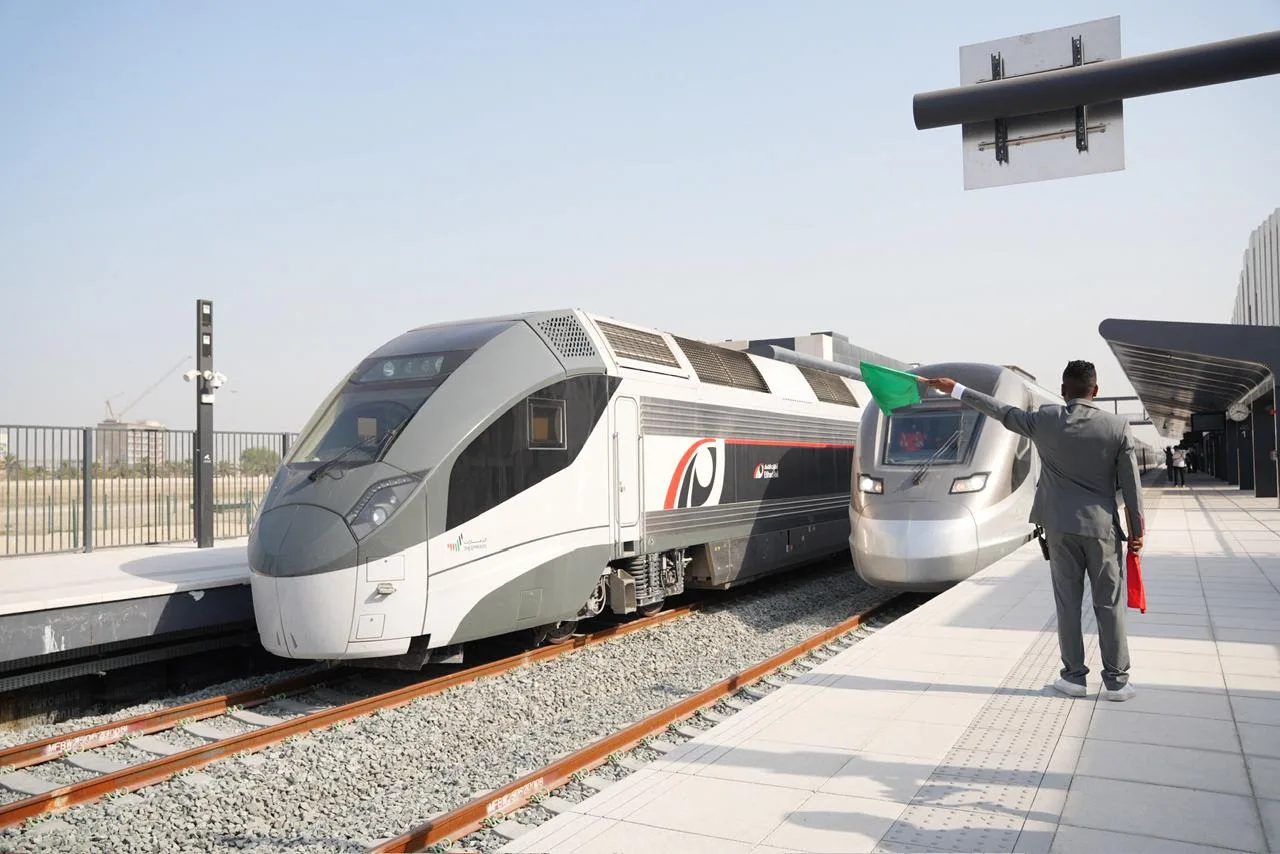
Etihad Rail’s passenger network launched in full on September 30, 2026, connecting Abu Dhabi to Dubai and Al Dhaid in Sharjah. The rollout came three months after the initial Abu Dhabi to Fujairah route opened in June, and it marks the moment the network crossed from infrastructure promise into daily utility.
For Abu Dhabi’s property market, the shift is less about headline prices than about how buyers and tenants now frame location decisions. Etihad Rail spent years as a fixture of masterplan renders. A published timetable changes that.
The network’s Abu Dhabi terminus, Mohamed Bin Zayed City Passenger Train Station, sits inside an established residential area – a working station embedded in daily life, not a future one pencilled into a site plan.
Property consultancy betterhomes argues that transit infrastructure tends to reshape buyer priorities before it moves transaction data. Enquiry patterns and viewing requests near stations are typically the earliest signal, with price movements lagging considerably and depending on factors well beyond transport access.
For the Abu Dhabi market, betterhomes expects that dynamic to play out around Mohamed Bin Zayed City and future stations along the route. Commute time to Dubai is no longer theoretical – it is a printed schedule. Station proximity is now a verifiable fact rather than a developer claim.
“Rail gives people certainty about the commute, and certainty is what buyers pay for. We expect to see it in rents near the stations first, with sale prices following as that demand settles in”, Nada Osman, director of betterhomes Abu Dhabi said.
The network is not yet complete. Additional stations are due through March 2027. But the Abu Dhabi to Dubai leg – the one that carries the most weight for commuter decisions – is no longer hypothetical. What the property market makes of that will take time to measure, though the questions buyers and tenants are asking have already shifted.