

Fractional has launched in the UAE with a model that gives SMEs access to C-suite executives on a part-time basis, as its co-founders point to company formation, demand for leadership and the movement of executives into the region.
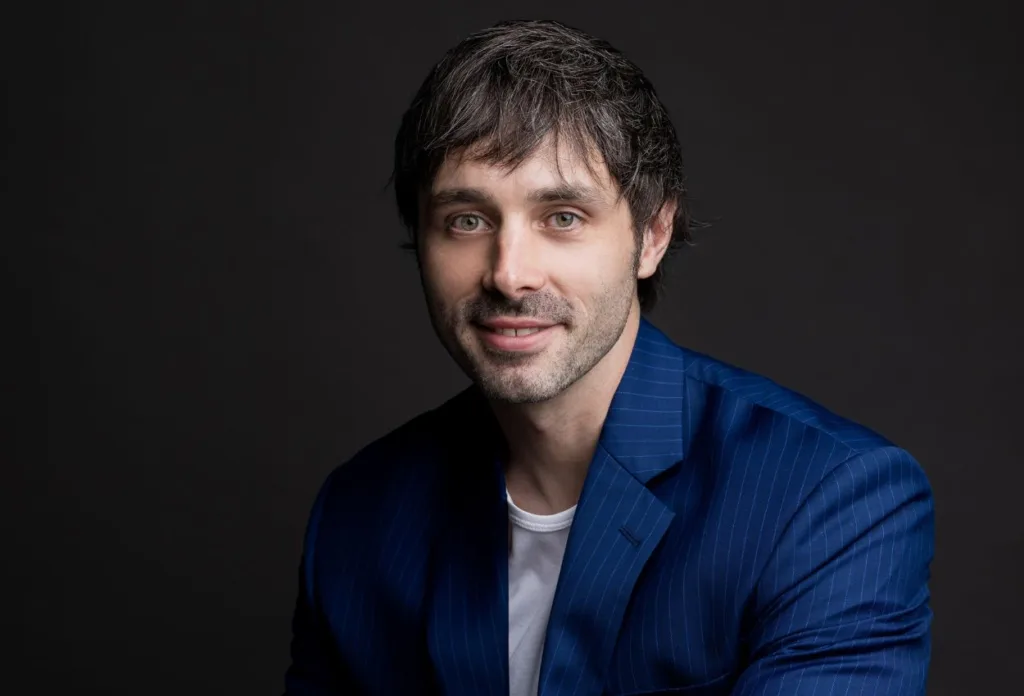
Rhys Holding and Sam Loyd, co-founders of Fractional, said the company is seeking to address the gap between the leadership needs of growing businesses and the cost or timing of hiring executives on permanent contracts.
Holding said the timing of the UAE launch reflects changes in both demand and supply.
“Two things are converging right now. Globally, on-demand senior leadership has moved from an interesting alternative to a serious consideration for scaling businesses: C-suite interim engagements are up 151 percent since 2021, and professionals listing fractional on LinkedIn have grown from around 2,000 in 2022 to more than 142,000 by early 2025,” he told Lana in an exclusive interview.
Holding also said executives are relocating to the region and choosing fractional work rather than full-time roles. “Demand and supply are meeting at the same point, which is why now is the moment to launch Fractional in the UAE,” he said.
SME growth puts pressure on founders
According to Holding, SMEs can reach a stage where growth moves ahead of the leadership available inside the business. A founder may be responsible for the CFO’s numbers, the COO’s operations and the CMO’s growth plan at the same time, while making decisions without someone at C-suite level to review them, he said.
“Traditional recruitment agencies solve for headcount, not for that specific gap. They place someone permanent regardless of whether the business needs that seniority five days a week, and the process itself can potentially be slow and costly. Consultancy models are advisory models, where a consultant typically advises and steps away. Having access to the best possible C-suite talent who advises and executes without paying the full cost of a full-time salary is an exceptional advantage for SMEs,” he said, adding that however, the model also differs from interim management and outsourced services.
An interim manager normally fills a vacancy for a set period until a permanent employee is hired, while an outsourced provider delivers a defined service and may operate at arm’s length from the company. Holding said the person delivering an outsourced service is also often not at C-suite level.
“A fractional executive holds the actual executive seat, with full seniority, authority and accountability at C-suite level, just on a part-time commercial basis. They advise and execute, carrying responsibility for outcomes the way a full-time hire would as part of the leadership team,” he explained.
Model targets companies at a point of change
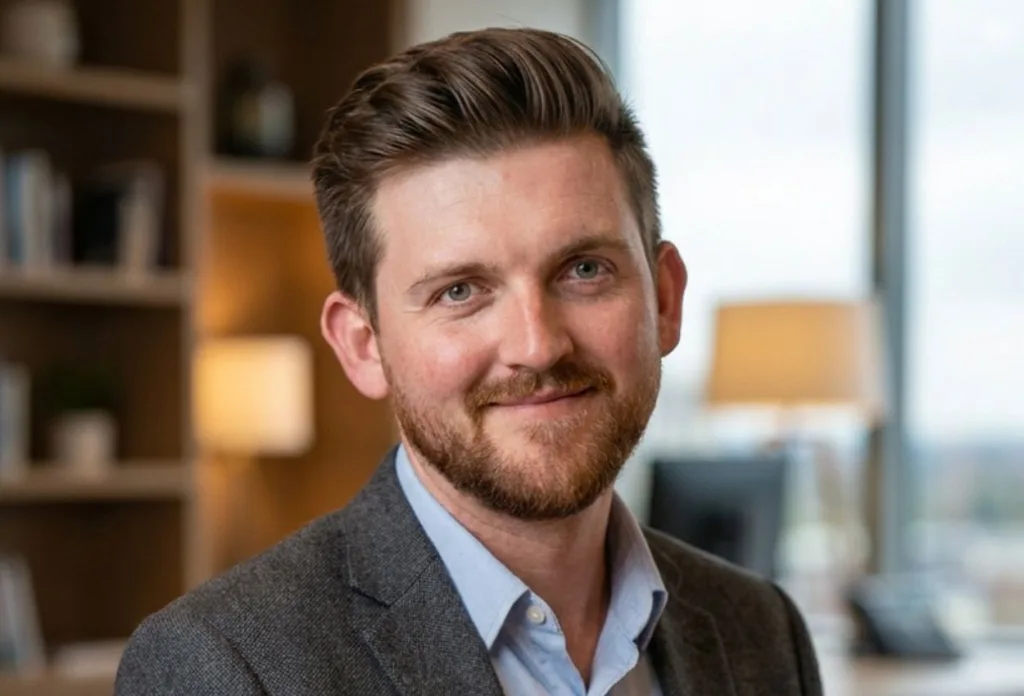
Loyd said companies should consider fractional leadership when they reach a point where they need C-suite input but a permanent appointment does not yet make sense.
That point may come before a funding round, when entering a market or when a founder finds that decisions above a certain threshold continue to pass through them.
“That’s usually the point where a full-time hire feels premature, but the gap in senior oversight is already showing. In practice, that tends to land with businesses around 10 to 200 employees and $2M to $40M in revenue, which is where founders need C-suite thinking but can’t yet justify a full-time hire,” Loyd told Lana in an exclusive interview.
Fractional starts its matching process with the issue facing the company rather than the executive job title, Holding said. Each SME goes through a discovery process, after which Fractional applies its scoring rubric to identify preliminary matches.
The company then conducts a manual review and one-to-one interviews with candidates before reducing the list to profiles that match the SME’s stage, sector and issue. Candidates then interview with the client, which makes the selection.
“We’re solving for fit,” Holding said, adding that each engagement is then set up with support, structure and governance for both the SME and the executive.
Collective includes 350 executives
Fractional has a collective of 350 executives.
Loyd said every member has experience in leadership, including executives with Fortune 500 backgrounds and others who have led SMEs through growth and periods of crisis. Members are also required to have a record of delivery in the positions they have held.
“Getting in isn’t automatic, and the bar stays high because we’re building a genuine working collective. Regular events, peer collaboration and shared learning keep every executive connected, exchanging what they’re seeing across different industries and staying sharp between engagements. We’re investing in our clients by investing in our collective,” Loyd said.
Holding said working part-time does not reduce the responsibility carried by a fractional executive. Once placed in a business, the executive operates as part of the leadership team and is responsible for the outcomes they have agreed to deliver.
“What flexes is the commercial shape, not the level of responsibility. If anything, accountability runs deeper here: it’s the executives’ own business and reputation on the line, and these are leaders already used to carrying that level of responsibility. Every engagement is also backed by a proposal and a statement of work that sets out the deliverables up front, and we track progress against those commitments for the life of the engagement” Holding said.
Loyd said results during the first three to six months depend on the Statement of Work developed by the executive and client during the scoping process.
The document sets deliverables around the issues identified by the client. The nature of those deliverables differs between companies and roles.
Loyd said a CFO could be brought into a business to establish finance control before a funding round, structure loans or support an asset purchase. A CTO could be appointed to scale a product and team in response to an increase in customers.
Most Statements of Work are divided into three- or six-month blocks so that deliverables can be defined for each period. Fractional remains involved during the engagement and conducts check-ins with the executive and client.
Contracts cover confidentiality and conflicts
Holding said confidentiality is included in the Master Service Agreement for every engagement and becomes a contractual term from the start. Cultural fit is assessed before an executive is placed through one-to-one interviews examining how the candidate works, as well as through contact within the Fractional collective and at its events.
The company also has rules covering conflicts. “On conflicts, we don’t place an executive into two businesses that compete with each other, and every engagement operates under its own dedicated terms. That same discipline extends to how much any executive takes on: two to three concurrent engagements is typical, and how many someone can responsibly carry depends on the nature of the roles involved,” he said.
Fractional targets UAE and GCC growth and explores Singapore
Loyd said Fractional’s aim is to change how SMEs in the UAE and wider GCC gain access to C-suite leadership. The company plans to build a collective of fractional executives and make the model part of how SMEs approach growth.
“By building the region’s strongest collective of curated fractional executives, we want to make fractional leadership a recognised, trusted and mainstream model for SME growth. Could it become the default model here in the UAE? The conditions are certainly already heading in that direction with enough scale in ambitious, fast-growing SMEs to get there,” he said.
Holding said demand is coming from both companies and executives. SMEs are seeking access to leadership, while executives are choosing fractional careers over permanent positions because of the variety of work and control over how they work, he said.
Fractional has also begun exploring opportunities outside the UAE after seeing demand in other business hubs, including Singapore. “Right now our focus is on building the strongest version of Fractional here and then extending that same model further afield when the time is right,” he concluded.