Four months after the outbreak of the US-Iran conflict, Dubai’s luxury residential market has largely defied the more pessimistic forecasts. Transaction volumes have continued at a measured pace, pricing in established villa communities has held or risen year-on-year, and buyer sentiment has been recovering steadily since March 2026, according to an analysis by property advisory BlackBrick.
The clearest outperformer has been the prime and super-prime villa segment. Rather than dampening demand, geopolitical uncertainty appears to have concentrated buyer activity in established communities with proven lifestyle credentials, a pattern BlackBrick describes as a flight to quality.
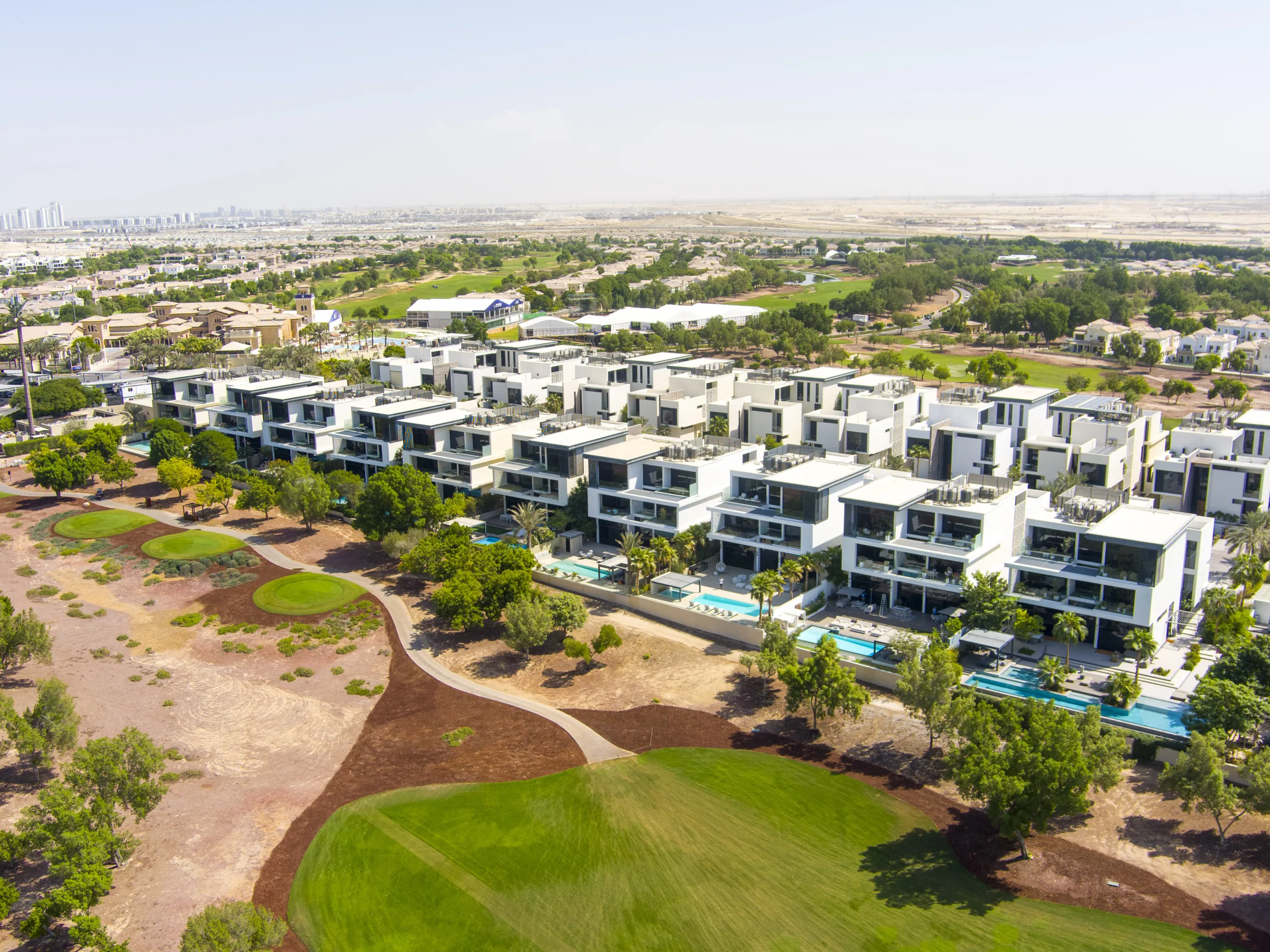
Communities including Jumeirah Golf Estates, Arabian Ranches, Victory Heights and Jumeirah Park have all recorded positive pricing increases compared with June 2025. In Jumeirah Golf Estates and Arabian Ranches, individual transactions this year have exceeded AED 40 million.
Within Emirates Living, BlackBrick reports competitive bidding in The Lakes and continued interest from ultra-high-net-worth buyers in Emirates Hills. Average leads per listing have risen across The Springs and The Lakes, with small to moderate upticks in demand across the sub-market as a whole.
The off-plan and investor-led segment presents a more mixed picture. Buyers are applying greater scrutiny to delivery timelines, projected returns and pricing assumptions than at any recent point. The market is no longer moving as a single entity: performance is increasingly determined by individual community supply dynamics, buyer profiles and lifestyle appeal rather than a broad tide lifting all assets.
Behaviourally, the most notable shift has been a lengthening of the due diligence process. Buyers are taking longer to transact, but BlackBrick notes that expectations around discounts are softening month-on-month, with fewer clients pushing for large price reductions. Instead, purchasers are prioritising communities with wellness amenities, larger plots, green space and turnkey specifications.
On the investor side, rental yields, service charges, future supply pipelines and maintenance considerations are playing a larger role in decision-making than they did during the speculative run-up of recent years.
BlackBrick’s guidance for end-users is to focus on established communities where supply remains constrained and to negotiate on fair market value rather than urgency. For investors, the firm advises concentrating on assets with genuine end-user demand and stress-testing return assumptions against future supply. Landlords are advised to price realistically and invest in presentation, which the firm says continues to generate meaningful premiums in villa communities. Tenants, meanwhile, have more choice in certain segments and are encouraged to factor in community quality and rental stability alongside headline rates.
The firm’s overall view is that the next phase of the market will be defined by stability rather than acceleration, driven by end-user demand and realistic pricing rather than speculative momentum.