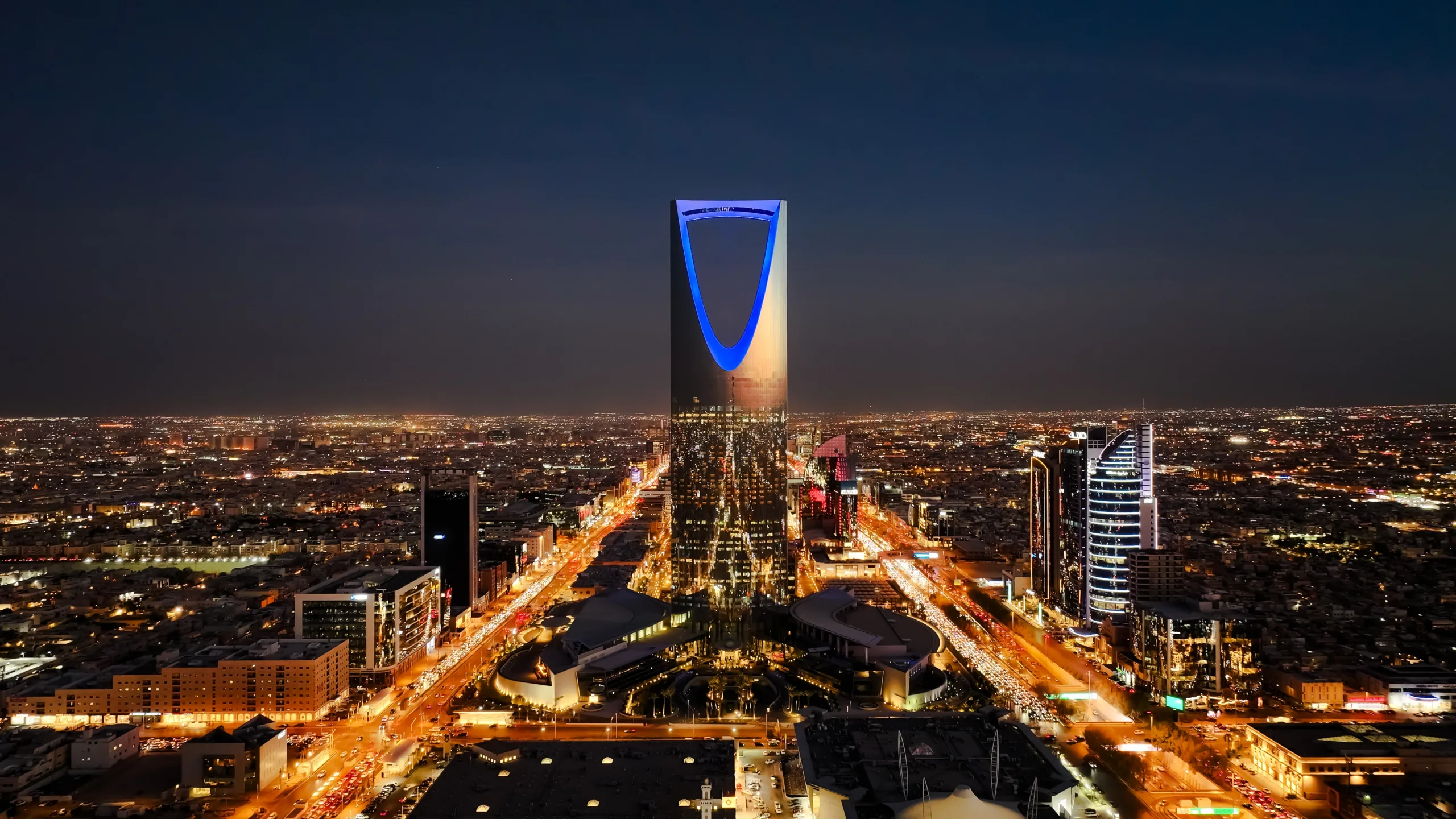
Saudi Arabia has reported progress across non-oil growth, employment, tourism, housing, healthcare, digital government and private sector development, 10 years after the launch of Vision 2030.
The programme was launched in 2016 to reduce reliance on oil, expand the private sector, improve public services, raise quality of life and position the Kingdom as a hub for investment, tourism, logistics and events.
A decade on, available figures show progress on several targets, with challenges remaining around fiscal pressure, oil revenue, state-led investment and delivery of large projects.
Non-oil activity rises as economy diversifies
Non-oil activities accounted for 55 per cent of real GDP, private sector contribution reached 51%, and GDP growth was 4.5%, according to Vision 2030 reporting.
The World Bank has described Saudi Arabia’s transformation as a shift away from oil towards a model based on productivity and a changing role for the state. It said the state’s role is moving from direct driver of growth towards enabler of private sector growth.
Non-oil activities grew 4.8 per cent in the first half of 2025, according to the Saudi Ministry of Finance.
The figures show that oil remains part of the economy, but that sectors including retail, hospitality, tourism, entertainment, logistics, finance, digital services, construction and industry now play a larger role than they did in 2016.
Jobs and women’s participation show labour market change
Saudi unemployment stood at 7.2 per cent in the fourth quarter of 2025, close to the original Vision 2030 target of 7 per cent. Female labour-force participation reached 34.5 per cent in the same quarter.
The International Monetary Fund said female labour-force participation had reached about 36 per cent and had doubled over the previous five years.
The IMF also said the next challenge was to shift labour policy from “quantity” to “quality”, including skills, job matching, productivity and private sector career paths.
Women are now more present in workplaces, retail, business ownership, public life and management.
Tourism has become one of the main areas of Vision 2030 progress. Saudi Arabia passed its original target of 100 million annual visitors ahead of schedule. The target has now been raised to 150 million visitors by 2030.
Search summaries of the 2025 annual report put total visitors at about 123 million in 2025, including 29.3 million inbound tourists. The number of Umrah performers from outside the Kingdom exceeded 18 million.
Entertainment has also expanded, with cinemas, concerts, festivals, sport events, heritage sites and events becoming part of the domestic economy.
Reuters reported that Saudi tourism policy is shifting beyond luxury projects towards mid-market and upper-mid-market visitors, as the 150 million visitor target requires broader affordability.
Saudi family home ownership rose to 66.24 per cent, up from 47 per cent at the launch of Vision 2030. Healthcare coverage reached 97.5 per cent. Life expectancy is approaching the 2030 target of 80 years.
Volunteering also increased. The number of volunteers rose from 22,000 to more than 1.75 million, exceeding the 2030 target early. These changes show the programme’s effect on housing, public services, lifestyle, sport, leisure and civic participation.
SMEs and foreign investment grow
The number of small and medium-sized enterprises has passed 1.7 million. SMEs employ 8.8 million people and contribute 22.9 per cent of GDP, according to reporting on the 2025 Vision 2030 annual report.
Vision 2030 reporting cited foreign direct investment of SR293.3 billion in 2025, up 119 per cent since 2017. The data points to a wider business base. However, the IMF has warned that state and Public Investment Fund interventions should “crowd in” private investment rather than crowd it out.
The IMF said such interventions should focus on market failures or areas where private investors are not yet active. Saudi Arabia has also reported progress in digital services, cybersecurity, artificial intelligence, e-government and data infrastructure.
The 2025 Vision 2030 reporting cited Saudi Arabia as ranking first globally in cybersecurity and third in a global AI index.
The World Bank said its Saudi partnership covers investment climate, education, health, labour markets, transport, energy, urban planning, economic management, public finance, digital economy, public-private partnerships and SME strategy.
The changes have supported Saudi Arabia’s positioning as a regional platform for technology, finance, events, investment and public sector modernisation. Vision 2030 has relied on public investment, Public Investment Fund spending, debt issuance and oil-linked fiscal capacity.
Reuters reported that Saudi Arabia posted a large deficit in the first quarter of 2026, with spending rising and oil revenues lower. The Kingdom had already exceeded its 2025 deficit expectations.
There has also been recalibration of large projects. Reuters reported that the PIF’s 2026-2030 strategy will focus more on domestic economic priorities and that The Line, part of NEOM, has been deprioritised.
Reuters also reported in late 2025 that the fund was preparing to shift focus away from real-estate-heavy large projects towards sectors including logistics, minerals and artificial intelligence.
The shift suggests Vision 2030 is continuing, but with more focus on project selection, financing and delivery.
What has been achieved
Ten years on, Saudi Arabia has made non-oil sectors a larger part of the economy.
It has increased women’s participation in the workforce, created a tourism and entertainment sector from a low base, raised home ownership, expanded healthcare coverage, increased volunteering, developed digital government and attracted companies, investors, visitors and events.
It has also changed the Kingdom’s international image from an economy centred on oil and religious tourism to one that includes investment, culture, sport, tourism and technology.