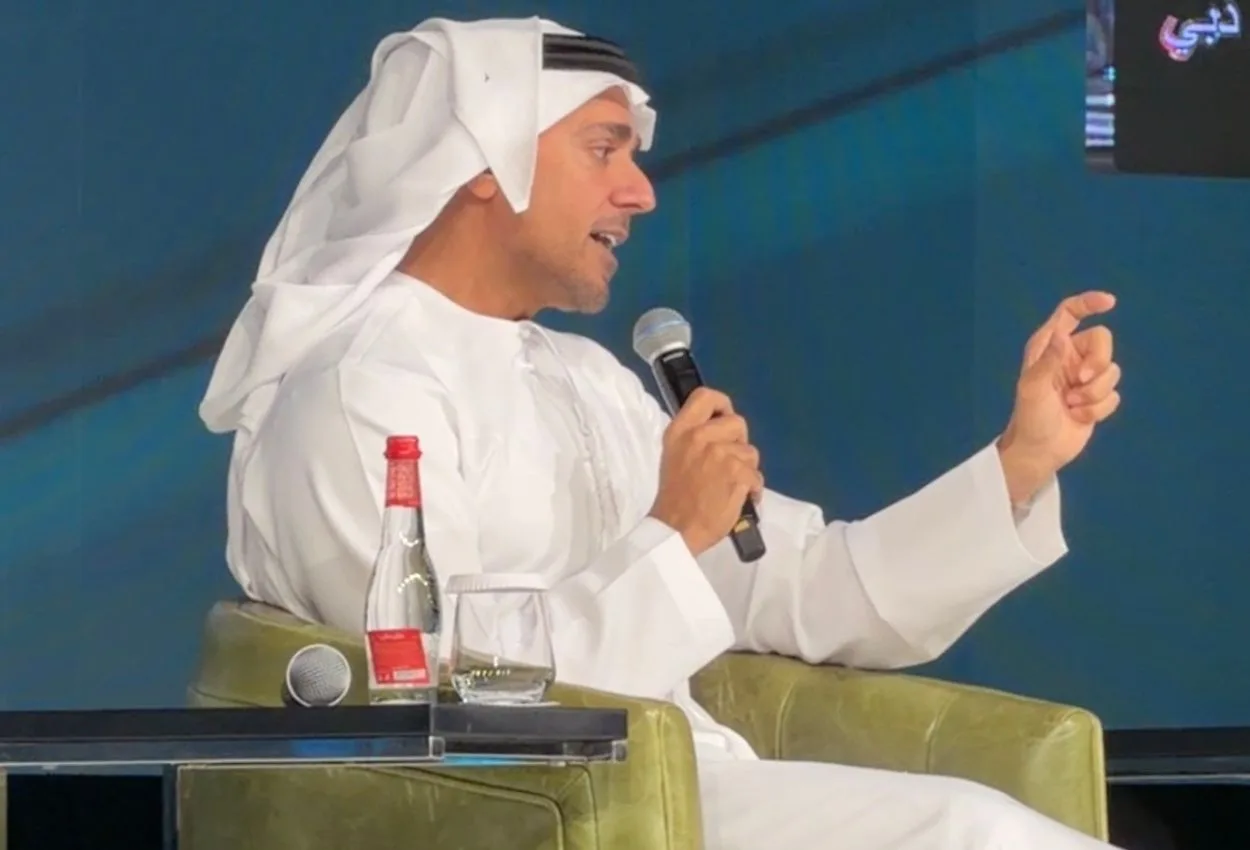
Twenty-five per cent of visitors to Dubai return to the emirate within 12 months, according to H.E. Issam Kazim, CEO of the Dubai Corporation for Tourism and Commerce Marketing (DCTCM), who said the focus of the city’s tourism strategy extends beyond increasing visitor numbers to the value tourists bring to the economy.
Speaking at RISE Summit 2026 at Dubai World Trade Centre on Wednesday, October 14, Kazim said returning visitors play a role in promoting Dubai through their experiences and recommendations.
“Twenty-five per cent of visitors who come to Dubai, by the way, are repeat visitors,” Kazim said, clarifying that the figure referred to visitors returning “in 12 months”.
He explained that the value of tourism should not be measured solely by the number of people visiting the emirate, but also by their spending and their ability to encourage others to visit.
Kazim described returning tourists as “genuine advocates of the city”, saying they understand what Dubai offers and can help communicate that experience to others.
His comments came in response to a question about whether Dubai would benefit more from attracting another million tourists or 500,000 visitors who spend more.
According to the Dubai Department of Economy and Tourism, the emirate welcomed 19.59 million international overnight visitors in 2025, compared with 18.72 million in 2024.
Kazim’s remarks also reflected Dubai’s focus on encouraging people to consider the emirate not only as a destination for holidays but also as a place to live, work, invest and establish businesses.
Dubai tourism marketing moves beyond Instagram and influencers
Kazim said Dubai had been changing its approach to tourism marketing over the past few years, moving beyond campaigns centred on Instagram, imagery and influencers towards engagement with people and businesses.
“The one to one and the one to many” approach had become part of the city’s marketing efforts, he said. “It’s a very different approach,” Kazim said, explaining that the focus was no longer solely on campaigns and influencers.
“They have a role to play,” he said, referring to influencers and marketing campaigns, before highlighting the contribution of public relations and events.
Kazim said communication through public relations should not be limited to mainstream media but should also involve groups and events that allow people to connect and share their experiences.
He explained that events held around the world provide opportunities to engage with people who can, in turn, communicate with others within their networks.
The approach, according to Kazim, is intended to build relationships with visitors, businesses and investors rather than rely solely on marketing messages.
Dubai D33 strategy focuses on logistics, manufacturing and investment
Addressing questions about investor confidence amid conflict and competition for capital, Kazim said Dubai was drawing on the experiences of businesses and individuals who had already established themselves in the emirate.
“They’re already convinced,” he said of investors who had operated in Dubai for years, adding that they were comfortable with the environment in which they conducted business.
He said Dubai was encouraging these investors to communicate with their peers and explain why they had chosen the emirate and what had worked for them.
Referring to the Dubai Economic Agenda D33, Kazim outlined the sectors that formed part of the government’s plans. “We talked about logistics, we talked about manufacturing, financial services, global HQs, tourism,” he said.
“None of these were new industries for us per se,” Kazim added, explaining that Dubai had maintained a presence in these sectors but had not always communicated the opportunities they offered.
He also highlighted the role of logistics amid disruptions affecting trade routes, saying Dubai was “doubling down” on the sector. Kazim referred to cooperation with DP World as part of efforts to support logistics and maintain Dubai’s role in trade and the movement of goods.
He explained that companies establishing headquarters in Dubai were not doing so merely to serve the emirate’s resident population.
Referring to a population of approximately 4.8 million, he said businesses operating from Dubai could access one-third of the world’s population within four hours and two-thirds within eight hours.
The geographical reach, he indicated, was part of Dubai’s proposition to companies seeking access to markets beyond the emirate.
Dubai property oversupply concerns raised at RISE Summit 2026
During the audience question-and-answer session, a real estate investor raised concerns about the number of property projects expected to be completed and handed over in Dubai and whether supply could exceed demand under the prevailing market conditions.
Kazim acknowledged the concern and said Dubai’s development had been guided by planning and demand. “For us, everything that we do over time has happened organically,” he said.
Recalling the period surrounding the financial crisis, Kazim said headlines had focused on property oversupply and raised questions about whether buildings under construction would be completed.
He said the discussion changed in subsequent years, when demand began exceeding supply, accommodation became harder to find and prices increased. “We never, ever built on a hunch,” Kazim said.
He explained that Dubai’s development had been based on strategies and plans established through coordination with the private sector.
According to Kazim, government entities conduct a “series of meetings” with businesses to understand the challenges they face and identify opportunities for growth.
He said the consultations help authorities determine what businesses require, how challenges can be addressed and where support can be provided.
Kazim did not provide a numerical forecast for property supply or demand during the discussion. His response focused on Dubai’s planning approach and its coordination with businesses.
AI investment and talent attraction part of Dubai’s growth plans
Kazim said Dubai’s economic strategy also included investment in technology and efforts to attract people with the skills required by businesses. He highlighted “investment towards AI” as an area that would have implications for industries across the economy.
The strategy, he explained, involved attracting companies that could create employment opportunities while bringing in people whose skills matched the needs of those businesses.
Kazim said government entities were working with the private sector to understand employment requirements and support the creation of opportunities.
He also stressed the need to attract talent to Dubai and ensure that people seeking employment could find opportunities within the industries operating in the emirate. The coordination between businesses, investment and recruitment, he said, was part of Dubai’s approach to growth under D33.
Dubai International Airport capacity among challenges to tourism growth
When asked what could hinder Dubai’s growth ambitions over the coming years, Kazim identified airport capacity and the availability of talent as concerns. “There are things like capacity, for example,” he said, referring to the tourism sector.
Kazim said searches for Dubai from around the world remained high, reflecting interest in visiting the emirate.
He said Dubai International Airport (DXB), which had retained its position as the world’s busiest airport for international passenger traffic for 12 consecutive years, needed more capacity to accommodate demand.
Kazim explained that tourism authorities were working with airport stakeholders to identify opportunities to increase passenger traffic. This included coordination with Emirates and flydubai to understand available capacity and opportunities for additional services.
He also said airlines from other markets could help address gaps in connectivity and that Dubai would support efforts to facilitate those services. The objective, according to Kazim, was to ensure that demand for travel to Dubai could be accommodated while capacity constraints were addressed.
Al Maktoum International Airport expansion to support Dubai tourism
Kazim also highlighted the expansion of Al Maktoum International Airport (DWC), which is being developed to accommodate passenger growth and support Dubai’s aviation sector.
“Everything is done organically,” he said, explaining that airport capacity would be introduced in phases as demand developed. He added the development would help address the capacity constraints facing Dubai International Airport.
Dubai Airports’ published plans put the final capacity of Al Maktoum International Airport at 260 million passengers annually, with the expansion taking place in stages. Kazim said accommodating even a portion of the passengers passing through the expanded airport would contribute to Dubai’s tourism targets.
He also highlighted Dubai’s position connecting the east and west, pointing to the role played by ports, airlines and logistics infrastructure in facilitating the movement of people and goods. Capacity, he indicated, remained an issue to address as demand continued.
Dubai talent demand: ‘How quickly can we get the talent?’
Beyond aviation, Kazim said attracting people with the skills needed by Dubai’s industries was another challenge. “How quickly can we get the talent?” he asked.
He said the need extended beyond tourism to other sectors, with authorities working alongside institutions and organisations to attract people with the skills required by employers.
Kazim also highlighted how people who arrive in Dubai intending to stay for a limited period often end up remaining in the emirate for much longer. He referred to residents who initially planned to stay for “two years” but had subsequently spent “20 years” in Dubai, with some families now entering a second generation of residence.
The experience, he indicated, reflected how employment and business opportunities could encourage people to establish their lives in Dubai.
The remarks reinforced his discussion of Dubai’s tourism strategy, in which visitors are increasingly viewed not only as tourists but also as people who may return, relocate, invest or establish businesses.
With Dubai working to expand airport capacity, attract companies and recruit talent, Kazim said coordination between the government and private sector would remain part of the city’s efforts to support growth.