
The US-Israel war on Iran weighed on business confidence across the Gulf. But Dubai has continued to maintain its position as a destination for global talent, said Trefor Murphy, CEO of Cooper Fitch, a recruitment firm that works with more than 500 organisations across the GCC.
“For anyone that has enjoyed a period of time here and seen how great Dubai is as a place to live – it’s not all roses, we know that – but it’s still, on balance, for me, the best city in the world,” to live and work in Murphy told Lana in an exclusive interview.
However, Murphy said Dubai had shifted from targeting the top 20 per cent of global talent to pursuing the top 1 per cent in recent years.
He described a state in which Dubai had created conditions where high earners could not only benefit financially but also access cultural infrastructure that mirrors their home countries.
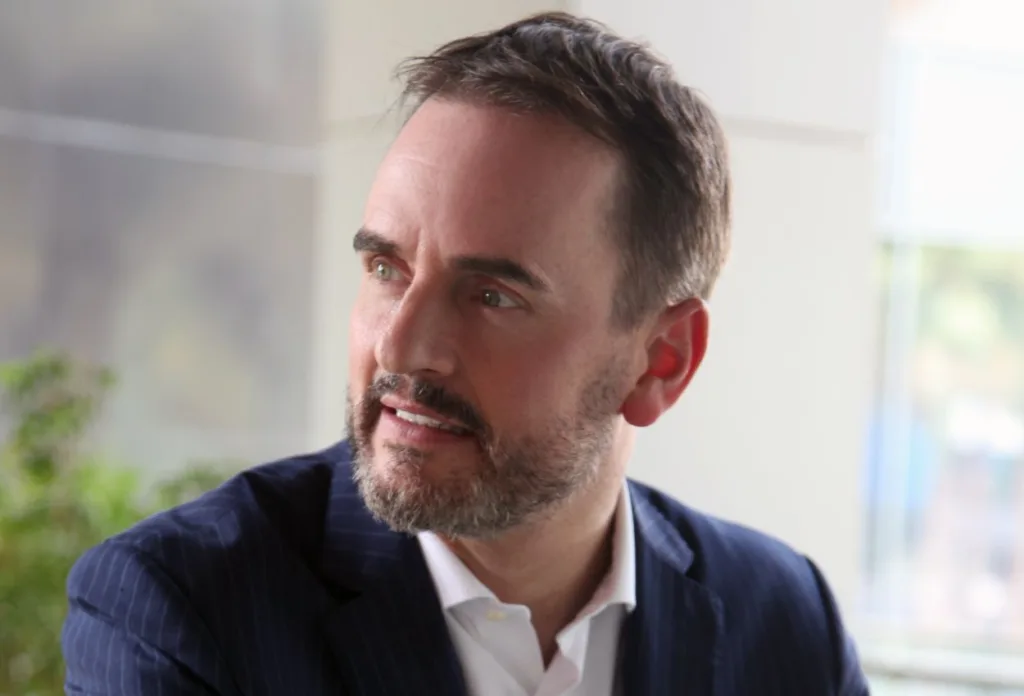
Dubai’s draw, he said, lies in the full package which includes financial opportunity, lifestyle, safety and tax efficiency.
“What drives you to move to a place like this are all the things that we’ve enjoyed for decades: safety, growth, the breathability and the livability of the city,” Murphy explained.
“And we need to do everything – us, the UAE government and everyone in between – needs to do everything we can to make sure that doesn’t get tarnished.”
Murphy’s comments came on the sidelines of the release of Cooper Fitch’s Gulf Employment Index Q1 2026.
GCC hiring grew 1 per cent, but March told a different story
According to the report, a 1 per cent growth was recorded in hiring across the GCC.
The report attributed the figure to a strong January and a February that saw business conditions in the UAE reach a 12-month high, followed by a March that was shaped by Ramadan, Eid and the onset of the war, which broke out on February 28 and was brought under a ceasefire on April 1.
“The reason that it’s just under 1 per cent growth is because January was very good. February was the best month on record in two years. And then, one bad month,” he said, adding that March alone saw a 12 per cent decline in hiring activity.
However, the report revealed that the UAE still recorded 1 per cent growth, Saudi Arabia posted 0.5 per cent, Qatar contracted by 1 per cent, and Kuwait, Oman and Bahrain held flat.
Which sectors grew and which declined
The index showed that HR and sales and marketing led sector performance, both up 9 per cent quarter-on-quarter. Supply chain and legal each rose 6 per cent, cybersecurity grew 6 per cent, and investments and software each increased by 5 per cent.
At the other end, energy fell 12 per cent, the largest decline of any sector. Banking dropped 6 per cent, mining fell 4 per cent and strategy declined by 2 per cent.
Murphy said that across the full quarter, sales, marketing, investments and real estate had continued to perform well. However, he added that since the conflict began, demand had shifted.
“What we’re seeing probably a greater increase on is supply chain, manufacturing, cybersecurity, and AI,” he said. “Which again probably makes perfect sense as you try to develop food security routes and supply chain routes.”
The report noted that supply chain hiring was driven by pressure on logistics, procurement and regional operations, with organisations prioritising continuity and disruption management.
Cybersecurity demand was focused on threat intelligence, identity management, application security and SOC functions.
Q2 could see a 4 to 5% decline
However, Murphy said that if conditions do not improve, Q2 figures could fall. “If we return to some level of conflict, I would say our Q2 numbers could be down 4 or 5 per cent on the overall,” he said, adding that the trends observed in March would likely continue, with manufacturing, supply chain, security, cybersecurity and minerals extraction remaining areas of activity.
He further explained that materials such as aluminium, palladium and steel are required globally regardless of the conflict.
“But if we don’t have oil or petrol, we won’t need as many cars. So it’s like this never-ending seesaw,” he said.
He pointed to the broader effects of the conflict on global supply chains: petrol prices had triggered strikes in Ireland, Vietnam plans to cancel internal flights due to fuel shortages, and the Philippines had declared a state of emergency weeks earlier with no resolution.
However, Murphy said sales and marketing would likely ease, as their Q1 performance was seasonal rather than conflict-related. Finance could increase, he said, and strategy consulting could see a resurgence towards the end of the year, though that would be driven by a market correction rather than the conflict.
On job cuts: ‘I would not judge anyone’
Beyond the hiring data, a number of companies have turned to job cuts and pay freezes since the conflict began. When asked if this was the right approach to sustaining a business under current conditions, Murphy did not criticise it.
“I think you do what you need to do to keep your business going. That’s the bottom line,” he said. “I would not judge anyone for making job cuts at the moment because ultimately if you don’t do that now, you run the risk of everyone losing their job.”
Murphy, however, said none of the clients Cooper Fitch works with had made such cuts. The firm’s clients are typically sovereign wealth funds, investment banks, manufacturing firms, pharmaceutical companies and banks.
He concluded by saying that his own firm had not reduced salaries and headcount either.